Why Does My Cat Lick Me?
If your cat has ever treated your hand, your arm, or even your hair like something that needed a good wash, you've probably wondered what they were thinking. The short answer is a good one: you're family. In almost every case, a cat licking you is a compliment, not a complaint.
Licking is how cats groom the members of their social group, and your cat has put you firmly inside that circle. There are a few exceptions worth knowing about, including taste, attention, and stress, but they rarely change the basic story. Here's what each kind of licking means, when it's just affection, and when it's worth discussing with your vet.
Key Takeaways
- Most licking is affection. Your cat is treating you the way cats treat trusted family members, through a behavior called allogrooming.
- Other common reasons include scent marking, taste (salt from sweat, lotions, food smells), attention-seeking, and self-soothing when stressed.
- A lick followed by a gentle bite is usually a sign of overstimulation, not aggression. It means "that's enough for now."
- Letting your cat lick you is fine in moderation, but avoid wounds, eyes, and your mouth, and wash the area afterward.
- Sudden, excessive, or compulsive licking, especially paired with other behavior changes, is worth bringing up with your vet.
Affection and Social Bonding
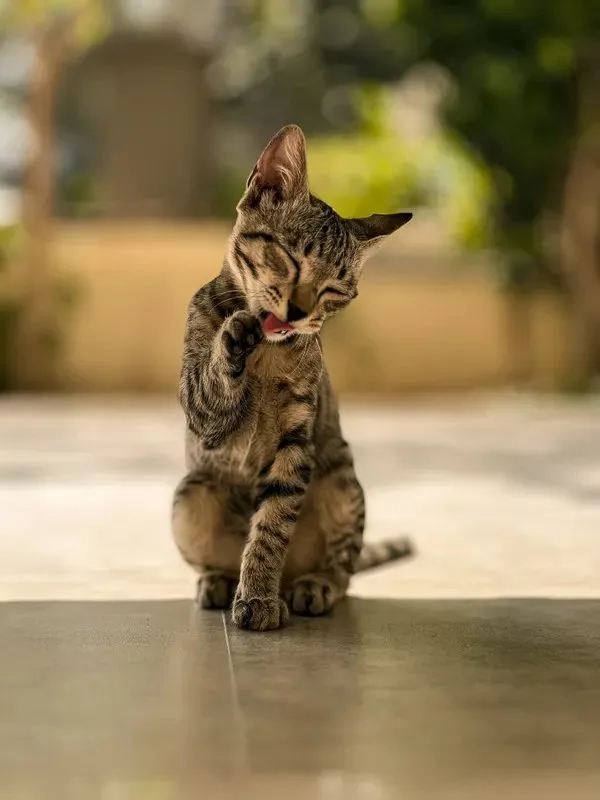
This is the biggest and simplest answer, and it's the one behaviorists point to first. Cats groom the other cats they trust, usually around the head and neck, and a cat licking you is an extension of that same behavior to a human family member. It's called allogrooming, and in the cat world it's one of the clearest signs of a bond.
Mother cats lick their kittens from birth, and that early experience ties licking to comfort and safety for life. When your cat licks you, they're recreating that feeling and offering it to you. If your cat is purring while they lick, you can be especially confident about what it means: this is a relaxed, contented cat.
Marking You as One of Theirs
Licking isn't just about feelings; it has a practical side too. When cats groom each other, they also share scent, which helps every member of the group recognize who belongs. Your cat is doing the same thing to you.
This is why the licking often ramps up at specific moments. If you've just come home, changed your clothes, or stepped out of the shower smelling like soap instead of yourself, don't be surprised if your cat gives you a thorough once-over. They're essentially re-marking you as familiar. It's the feline version of saying you belong here.
You Taste Interesting
Sometimes the motivation is more straightforward: you taste good. The salt from sweat is the classic example, and it's why so many cats develop a fondness for licking arms after their owner comes home from a workout. Lotion, sunscreen, and food smells work the same way.
One caution here matters. If you've applied sunscreen, insect repellent, essential oils, or any topical medication, don't let your cat lick that skin until the product has fully absorbed or been washed off. Some of these ingredients are unsafe for cats to swallow. When in doubt, the boring option is the safe one: wash your hands and let the licking happen on clean skin.
They're Asking for Something
Cats are quick learners, and licking is a behavior that reliably gets a reaction. If licking your hand in the morning has consistently led to breakfast being served five minutes earlier, your cat has filed that away. The same goes for attention: if licking makes you look up from your phone, you've taught your cat a trick.
This is also why licking often follows a schedule. Many cats are most active at dawn and dusk, and a lot of owners report a nightly licking ritual right before bed. These patterns usually mean the licking has become part of the routine, not that anything is wrong.
Temperaments differ a lot between individual cats, and some breeds are famously more hands-on and social than others. Our cat breeds guide breaks down how affection levels and personality traits vary from breed to breed, if you're curious where your cat's behavior comes from.
Licking to Self-Soothe
Grooming releases feel-good hormones in a cat's brain, which is why licking is also a comfort behavior. A cat that licks you during a thunderstorm, after a move, or when the house is full of guests may be calming themselves down the same way they'd calm themselves by licking their own paws.
Kittens carry a version of this into adulthood. Cats that were weaned early sometimes keep a licking or suckling habit, especially with soft blankets, simply because it recreates the nursing experience. If your cat licks you most when they're sleepy, that's often what you're seeing: a bedtime comfort ritual, not a demand.
The Lick-Then-Bite: What It Really Means
One pattern confuses owners more than any other: the cat is licking sweetly, purring, everything is lovely, and then they bite. It feels like a betrayal, but it almost never is. The bite is a signal that says "that's enough for now," not a sign of aggression.
What happens is overstimulation. The petting and licking were genuinely enjoyable right up until they weren't, and the cat's threshold got crossed. You'll often see the warning signs just before it happens: the tail starts to flick, the ears shift, or the purring stops. When you notice that, pull your hand away calmly rather than yanking it back, which can turn the whole thing into a game.
Reading the rest of their body helps a lot here. Our guide to cat tail language shows exactly what to watch for when a cuddle session is starting to run hot, so you can end it gracefully before the teeth come out.
When Licking Becomes a Red Flag
Here's where the tone of the licking matters more than the fact of it. Occasional, relaxed licking paired with purring or kneading is the normal kind. What deserves a closer look is licking that looks anxious, repetitive, or compulsive: frantic licking with no trigger, licking that goes on far longer than usual, or a sudden jump in how often it happens.
The same applies when your cat turns the licking inward. Cats that over-groom their own belly, legs, or flanks, sometimes to the point of thinning hair, may be dealing with stress, itchy skin, or something internal. Repeated lip licking paired with drooling or a reduced appetite can signal nausea. And any sudden behavior change in a cat that was fine before is simply information worth sharing.
None of this is a reason to panic. It's a reason to pay attention and, when something looks off, to bring it up with your vet. You know your cat's normal better than anyone, and noticing the change is the valuable part.
Should You Let Your Cat Lick You? How to Respond
In most cases, yes, occasional licking is completely fine and even worth enjoying. A cat's mouth does carry bacteria, though, so use common sense: don't let them lick open cuts, your eyes, or inside your mouth. Washing the area with soap and water afterward is a simple habit, and it's especially worth doing for kids or anyone with a weakened immune system.
If the licking is driving you up the wall but your cat is otherwise happy and healthy, discourage it gently. Never punish a cat for licking or shove them away; they won't understand what they did wrong, and it damages the trust the licking was built on. Instead, redirect: offer a toy, brush them (many cats accept a brush as a stand-in), or wear long sleeves when you know the licking is about to start. If the tongue feels like wet sandpaper and it's getting intense, calmly end the interaction before the overstimulation bite arrives.
Frequently Asked Questions
Why does my cat lick me and then bite me?
This is the overstimulation pattern. The licking is genuine affection, and the bite is your cat's way of saying the session has gone on too long. Watch for the tail flick or ears shifting just before it happens, and calmly withdraw your hand then. It's communication, not aggression.
Is it okay to let my cat lick my face?
Occasional face licking is fine for most healthy adults, but keep them away from your eyes and mouth, and wash up afterward. Never let your cat lick you right after you've applied sunscreen, insect repellent, or topical medication, since some ingredients are unsafe for cats to ingest.
Why does my cat lick me more at night or first thing in the morning?
Cats are naturally most active around dawn and dusk, and their wake-up window often overlaps with yours. Nighttime licking is frequently a bedtime ritual, while morning licking is often tied to hunger or wanting attention before your day starts. Once the ritual ends, how your cat sleeps can tell you just how relaxed they really are.
My cat licks me constantly. Should I be worried?
Frequency alone isn't the whole story; look at the quality of the licking. Relaxed licking with purring is fine even if it's frequent. What warrants a vet conversation is a sudden increase, licking that leaves skin raw, or an anxious, repetitive pattern, especially if it comes with other changes in appetite, energy, or behavior.
Does it mean my cat loves me? What if my cat never licks me?
If your cat licks you, yes, it usually means they trust you and count you as family. But if your cat never licks you, don't read it as rejection. Licking is just one of many ways cats show affection; sitting with you, slow blinking, headbutting, and playing with you all say the same thing in a different dialect.
Our Take
Here's our honest opinion: take the licks as a win. Cats are famously selective about who gets their affection, and being chosen as a grooming partner is one of the highest honors your cat can hand out. Enjoy it when it happens, set a boundary when it gets to be too much, and only reach for the phone to call the vet when the pattern itself changes.
And if you're still getting to know your new family member, including what to call them, our cat name hub has ideas for every kind of personality, from the gentle head-licker to the midnight nibbler.
By Sierra Garcia