Cat Tail Language: What Every Tail Position Means
Your cat's tail is one of the clearest windows into how they feel. A tail held high usually means a confident, friendly cat. A puffed tail means fear. A fast side-to-side swish is irritation, not happiness the way a dog's wag is. Those three rules cover most of what you'll see day to day.
But tails don't speak in simple code. The same position can mean different things depending on the cat's ears, eyes, body posture, and what just happened around them. So use this guide as a starting translation, then always read the whole cat before you decide what to do.
Key Takeaways
- A tail held straight up with a relaxed body is the classic friendly greeting: your cat is confident and glad to see you.
- Puffed (bottle-brush) tails mean fear or defensiveness; tucked tails mean anxiety. Both call for space, not comfort-petting.
- A fast-swishing tail is the opposite of a happy dog wag. It usually means irritation or overstimulation: stop touching and give the cat room.
- Tail positions are a first clue, not a diagnosis. Always read them together with ears, eyes, posture, and the situation.
- Where behavior sources disagree (a wrapped tail, a quivering tail), this guide says so and tells you what to check.
Cat Tail Positions at a Glance
Use this quick reference when you need an answer fast. The full explanations below it cover the nuance each position deserves.
| Position | What it usually means | What to do |
|---|---|---|
| Tail straight up | Confident, friendly greeting | Greet calmly; offer a finger to sniff |
| Up with a curve (question mark) | Playful, curious, happy to see you | A good time to play or pet |
| Upright and quivering | Excitement; in intact males it can accompany spraying | Enjoy the greeting; never punish spraying |
| Gentle U shape | Relaxed and comfortable | Nothing; all is well |
| Held low | Cautious or unsure; can reflect pain if persistent | Give space; let the cat approach you |
| Tucked under the body | Fear or anxiety | Reduce noise; offer a hiding spot |
| Puffed (bottle brush) | Frightened or defensive | Back off; remove the trigger if you can |
| Slow swish | Focused and curious, or mildly conflicted | Watch and wait; check the ears too |
| Fast lash or thump | Irritated or overstimulated | Stop petting; give the cat room |
| Tip twitching | Interest, or the first flicker of irritation | Notice what just changed |
| Wrapped around the body | Relaxed; or self-soothing when uneasy | Read the rest of the body first |
| Wrapped around you | Affection | Enjoy it |
The Tail Positions, One by One
Tail straight up
This is the position owners hope to see. When a relaxed cat walks toward you with its tail held upright, the message is generally positive: confidence, friendliness, and a willingness to interact. Researchers who observed cats approaching people found this tail-up display showed up very commonly, often right before the cat rubbed against the person.
What to do: Greet your cat calmly. A finger held out for a sniff, or a scratch under the chin if they lean in, is usually welcome.
Tail up with a curved tip (the question mark)
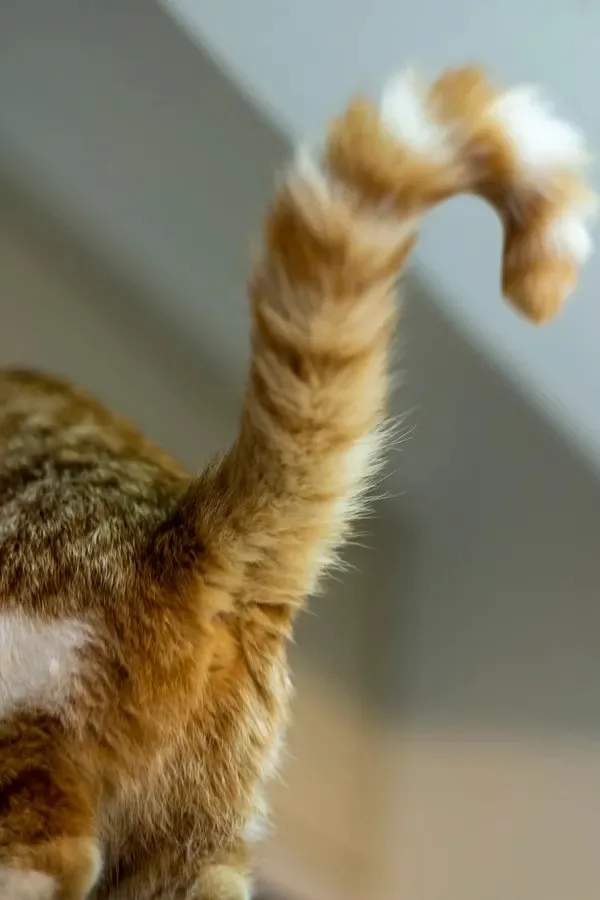
A tail held high with the tip curving over, like a question mark, is the upright greeting with extra enthusiasm. It usually signals playfulness, curiosity, or a cat that is especially glad to see you. Kittens use it often, and many adults keep it for life.
What to do: This is a fine time to play or pet. Your cat is in a social mood.
Tail upright and quivering
A slight trembling of the upright tail usually means excitement, most often during an enthusiastic greeting. If your cat quivers their tail at you while purring or head-butting, they are genuinely thrilled you are there.
One exception matters: intact male cats sometimes quiver their upright tail while urine marking. If the quiver happens against a wall or furniture, especially in an unneutered male, it may be spraying rather than greeting. Do not punish the behavior; talk to your vet about neutering and marking triggers.
A gentle U shape
A tail that curves down and then back up, like a soft U or a smile, belongs to a relaxed and comfortable cat. It is the neutral cruising position of a cat that feels safe in its surroundings.
What to do: Nothing. Everything is fine. Carry on with whatever you were doing.
Tail held low, parallel to the ground
A tail held low, neither tucked nor high, usually signals caution or uncertainty. The cat is unsure about the situation and is holding back while it decides. If this position persists for hours or comes with hiding, appetite changes, or lethargy, it can also reflect pain or illness, and a vet visit is sensible.
What to do: Give the cat space and let them come to you. Do not reach for a low-tailed cat the way you would for a high-tailed one.
Tail tucked under the body
A tucked tail is a fear signal. The cat is anxious, frightened, or feeling threatened, and is trying to make itself smaller. You will often see it paired with crouching, flattened ears, or an attempt to hide.
What to do: Reduce noise and commotion, offer access to a hiding spot, and let the cat retreat. Comfort-petting a frightened cat usually makes things worse, not better.
Puffed tail (bottle brush)
When a cat is startled or frightened, the fur along the tail stands on end (piloerection), making the tail look like a bottle brush. The point is to look bigger and more intimidating to whatever scared them. The body fur may puff too, the back may arch, and hissing or growling often follows.
What to do: Back off and remove the trigger if you can. A puffed cat is a defensive cat, and defensive cats bite. Kittens sometimes puff up during wild play; that version comes with bouncy sideways hops and is over in seconds.
Slow, lazy swish
A slow, wide sweep of the tail is one of the trickiest signals because sources genuinely disagree. It often means the cat is focused or curious, watching something with full attention. In other moments the same movement signals mild internal conflict: interested but not sure.
What to do: Watch and wait. Check the ears and body: forward ears and a loose body mean curiosity, while tense posture suggests unease. Let the cat finish deciding.
Fast lashing or thumping
A tail whipping side to side, especially with force, means rising irritation, overstimulation, or frustration. This is the warning people most often misread. Unlike a dog's happy wag, a cat's fast tail means the opposite of happiness.
What to do: If you are petting the cat, stop. Give them space before the warning becomes a swipe or a bite. Many "out of nowhere" bites were preceded by minutes of tail lashing.
Tip twitching
A twitch confined to the tail tip is a milder signal than a full swish. It can mean interest in something the cat just noticed, or the first flicker of irritation. Which one it is depends on what changed a second ago.
What to do: Notice what just happened. A new sound or movement usually explains it, and no action is needed unless it escalates.
Tail wrapped around the body
A cat sitting or lying with its tail curled neatly around itself can be simply resting, conserving warmth, and content. But the same position is also a self-soothing posture in an uneasy cat. This is one of the spots where a single position truly has two readings.
What to do: Read the rest of the body before you approach. A soft face and slow blinks mean relaxation. A tense crouch with the tail clamped tight means the cat wants to be left alone.
Tail wrapped around you or your leg
When a cat winds its tail around your arm, your leg, or another cat, it is a social gesture. It reads as affection, the feline equivalent of putting an arm around someone. Closely bonded cats sometimes walk with tails entwined.
What to do: Enjoy it. You are being included.
A note on short or missing tails
Cats with naturally short or absent tails, like the Manx, still signal with what they have: tail-base position, body posture, and the rest of the language still apply. If you are curious which breeds look like what, our cat breeds guide profiles the ones readers ask about most.
Reading the Whole Cat
The tail is a strong first clue, but it is never the whole message. A puffed tail on a cat with forward ears and a bouncy body is play; the same puffed tail with flattened ears and a sideways stance is fear. Check these three things before you act:
- Ears: forward and relaxed is good; swiveled sideways signals caution; flattened back means fear or aggression.
- Eyes: soft, slow blinks signal trust and relaxation. Hard staring or huge dilated pupils in bright light signal arousal or fear.
- Situation: what just happened explains most signals. A new guest, a loud noise, or a long petting session reframes everything the tail says.
Tail signals disagree with each other sometimes, and that is normal. When they do, the body and the situation are the tiebreakers.
Frequently Asked Questions
Is a wagging tail on a cat happy like on a dog?
No, usually the opposite. A dog's wag generally signals excitement and friendliness. A cat's fast side-to-side swish usually signals irritation, overstimulation, or intense focus on prey. Treat a thrashing cat tail as a "back off" signal, not an invitation.
Why does my cat's tail puff up?
The fur stands on end (piloerection) when the cat is startled or frightened, making them look bigger to a threat. It is an involuntary fear response, often paired with an arched back and flattened ears. Give the cat space and let them calm down on their own.
Why does my cat's tail quiver when they see me?
Usually excitement. An upright quivering tail during a greeting, often with purring or rubbing, means your cat is genuinely happy you are there. The exception is intact male cats, who may quiver while urine marking, so context matters.
What does it mean when my cat wraps its tail around me?
Affection. Wrapping the tail around your arm or leg is a social, bonding gesture. Closely bonded cats do it to each other too.
Why does my cat's tail twitch when I pet them?
It can mean mild irritation building, especially if the petting has gone on a while. Or the cat simply noticed something interesting nearby. Watch whether the twitch grows into a full swish: if it does, stop petting.
Can I trust tail signals on their own?
Not fully. Tail positions are reliable first clues, but the safest reading combines the tail with the ears, eyes, body posture, and what just happened. Two cats can hold the same tail position for different reasons.
Keep Reading Your Cat
Once you start noticing tail positions, you will see them everywhere: the high-tail greeting at the door, the slow swish at the window, the question-mark curve when dinner appears. The skill is not memorizing a chart. It is watching one signal, checking the rest of the cat, and responding to what you actually see.
If you are on a behavior streak, our guide to cat sleeping positions decodes what those curled-up and sprawled-out poses mean, and why your cat licks you explains the grooming habit that confuses so many owners. And if you have not named your new cat yet, browse the cat name ideas while they supervise from the sofa.
By Sierra Garcia