Cat Sleeping Positions & What They Mean
Key Takeaways
- Most sleeping positions signal comfort, warmth, or trust. A single position is rarely a warning sign.
- The more exposed the belly and limbs, the safer your cat feels in that moment.
- Curled up usually means staying warm; belly-up usually means deep trust (and sometimes cooling off).
- The loaf and half-open eyes are light rest, not deep sleep. Your cat is still half aware.
- What matters more than any one position is a sudden change in your cat's normal sleep pattern.
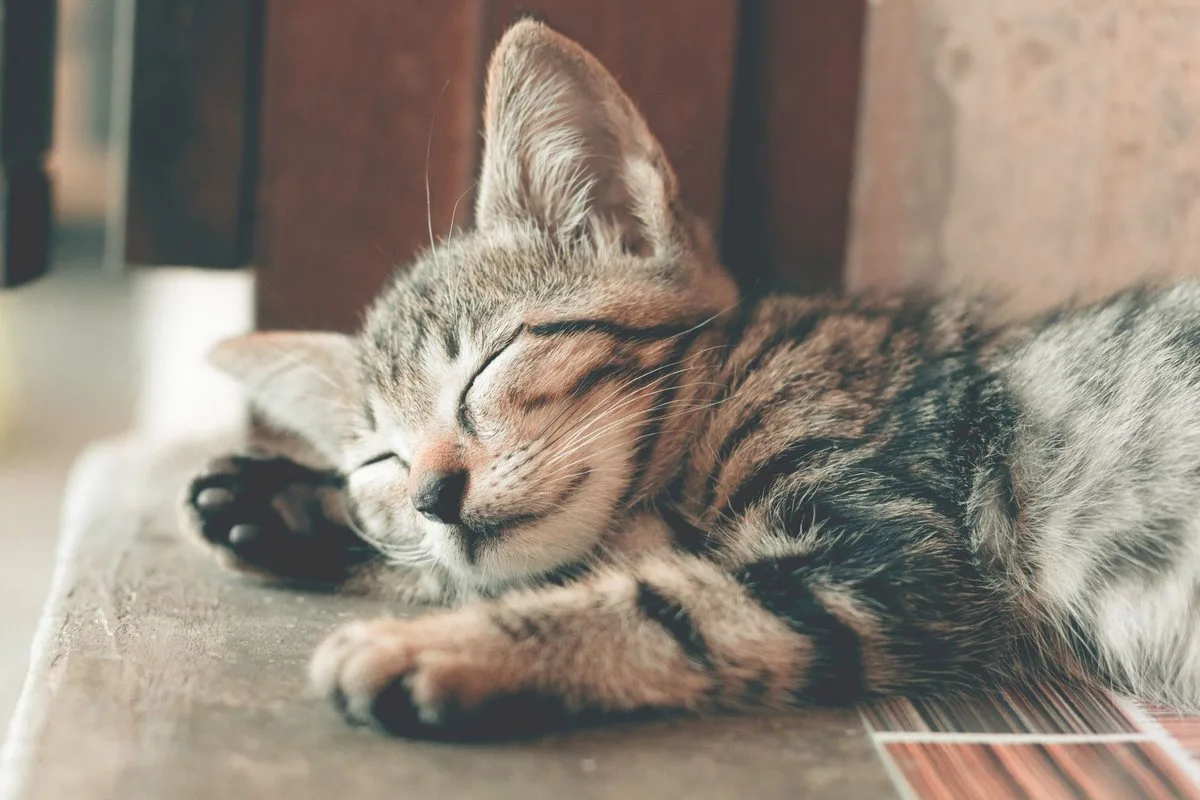
Cats sleep around 12 to 16 hours a day, so you get plenty of chances to study the poses. The short answer to what they mean: almost every position is your cat telling you something about warmth, safety, or how deeply they are resting. A tight ball keeps heat in. A belly-up sprawl says this home feels safe enough to be completely vulnerable.
One honest note before the rundown. These meanings are tendencies, not diagnoses. Cats are individuals, and context matters more than the pose itself. A curled cat in a cool room is just warm-seeking. A cat that suddenly hides to sleep when it never did before is telling you something different, and that is the part worth paying attention to.
Quick Reference
| Position | Usually means | Comfort level |
|---|---|---|
| Curled ball | Conserving warmth and feeling secure | Cozy, light to medium sleep |
| Loaf (paws tucked) | Relaxed but alert, resting not deep sleep | Comfortable, ready to move |
| Side sleeper | Deep relaxation, feels safe | Very comfortable, deep sleep likely |
| Belly-up | Maximum trust, feels completely safe | Deeply relaxed (belly rubs not included) |
| Superman (paws forward) | Relaxed and cooling off, light sleep | Comfortable, playful mood |
| Crescent (half-curl) | Settling in or cooling down | Relaxed, unhurried |
| In a box or tight space | Seeking security and privacy | Secure, wants quiet |
| On their human | Bonding, warmth, and trust | Deeply bonded |
| Paws over face | Blocking light, settling into deeper sleep | Content |
| Eyes half-open | Light dozing, staying aware | Resting, alert |
| Twitching in sleep | Likely REM sleep and dreaming | Normal deep sleep |
The Main Positions, Explained
The Curled Ball
This is the classic: nose tucked toward the tail, paws folded in, body a tight circle. Cats curl up mainly to conserve body heat and protect their belly, which is where the vital organs are. You will see it most in cooler rooms, in drafty spots, and in new or slightly uncertain environments where a smaller profile just feels safer.
A tail wrapped tight around the body at rest sends a different message than a tail flicked while your cat is awake. If you want the full vocabulary, our cat tail language guide breaks down what each tail move means.
The Loaf
Paws tucked neatly under the chest, body upright like a loaf of bread. The loaf is the pose of peaceful alertness. Your cat is comfortable enough to close its eyes, but it is not in deep sleep. It is resting while staying ready to react, which is why you see it so often during daytime naps in busy households.
Think of it as meditation rather than sleep. If you walk over, most loafing cats will open their eyes and greet you instead of startling.
The Side Sleeper
Stretched out on one side with legs extended or slightly bent. This is deep relaxation. A side sleeper has decided there is nothing to guard against, and the loose, open body means the muscles have fully let go. Cats often land in this position after a good play session or a meal, when they are ready for genuinely restorative sleep.
If your cat used to sprawl on its side and suddenly avoids it, that can hint at discomfort, especially in older cats. More on that in the vet section below.
Belly-Up
On the back, belly fully exposed, paws in the air. This is the highest-trust pose a cat has. The belly is the most vulnerable area, so a cat only sleeps like this where it feels completely safe. It can also be a cooling strategy, since the fur on the belly is thinner.
One important caveat: belly-up is not an invitation for belly rubs. It signals trust in the environment, not a request to be touched there. Most cats will grab your hand if you take the offer, so admire it and let them be.
The Superman
Front paws stretched forward, back legs extended behind, chest flat on the floor. Kittens do this constantly, and relaxed adults do it too. It usually means your cat is comfortable and a little warm, since maximum contact with a cool floor sheds heat. It is also a light sleep pose, the kind a cat can launch out of straight into play.
The Crescent
A loose half-curl, not tight like the ball and not stretched like the side sleeper. The crescent is a transition pose. Your cat is settling down for a nap or cooling off after being curled up. Either way it reads the same: relaxed, unhurried, and content to stay put for a while.
In a Box or Tight Space
Boxes, laundry baskets, drawers, the gap behind the sofa. Cats love enclosed spaces because they offer warmth, privacy, and a hidden vantage point all at once. A cat napping in a box is a cat that has found its idea of a safe room.
The exception is sudden, constant hiding. If a normally social cat starts spending all day under the bed and will not come out, that is a change in pattern, not a position, and it deserves attention.
On Their Human
Your lap, your chest, your feet, your pillow. Sleeping on you is about warmth, your familiar scent, and genuine bonding. Cats choose the warmest trustworthy surface in the house, and often that is you.
Some of this is breed-leaning. Lap sleeping is practically a personality trait in Ragdolls, while more independent breeds prefer nearby rather than on top. Our cat breeds guide notes which breeds tend to be the cuddlers. And if yours is new to the family and you are still deciding what to call them, our cat names hub has plenty of ideas to browse while they nap.
Eyes Half-Open
Dozing with the eyes at half mast, sometimes showing the pale third eyelid. This is light sleep, not a problem. Your cat is resting while keeping one eye, literally, on the room. It is the same reason cats can go from dozing to fully alert in a second when the treat bag rustles.
Twitching in Sleep
Paws paddling, whiskers flicking, ears twitching, sometimes a quiet chirp or squeak. This usually happens during REM sleep, the dreaming phase, and it is completely normal. Kittens twitch the most, and it tends to decrease a bit with age.
Do not wake a twitching cat suddenly. A loud noise or a shake can startle them badly. If you need them up, call their name softly first. Many cats run a little bedtime routine of grooming before they settle, and if licking you is part of that ritual, our guide on why cats lick explains what that habit is about.
When a Change in Sleep Habits Is Worth a Vet Visit
Positions themselves are rarely the issue. Patterns are. Call your vet if you notice any of these changes, especially more than one at once:
- A social cat suddenly hiding to sleep all day
- Sleeping much more than usual, with low energy when awake
- Eating less, drinking much more or much less, or losing weight
- Breathing with the mouth open, or visibly labored breathing while resting
- Avoiding favorite spots, stairs, or jumping, or flinching when touched
- Confusion or restlessness at night in a senior cat
None of this is said to alarm you. Cats are good at hiding discomfort, so sleep is often where the first quiet clue shows up. A quick call to the vet is cheap reassurance, and catching things early is always easier than catching them late. This guide is written from research and experience, not as a substitute for veterinary advice, and no veterinarian has reviewed it.
How to Give Your Cat Better Nap Spots
You do not need to buy much. Cats mostly want choices.
- Offer one warm soft bed, one enclosed spot like a box with a blanket, and one elevated perch. Different moods want different places.
- Keep beds away from washing machines, loud speakers, and front doors. Sudden noise ruins naps.
- Use washable bedding. Familiar smells are comforting, but dirty bedding is not.
- Respect the hiding spots. A cat that can retreat on its own terms is a calmer cat.
- For seniors, keep beds low and warm, and add a ramp or step if jumping has become work.
Frequently Asked Questions
Why does my cat sleep in such weird positions?
Because it can. A cat's spine is extraordinarily flexible, and once a cat feels safe, comfort beats dignity every time. Contorted, pretzel-like poses are usually a sign of deep relaxation, not a problem.
Is it normal for a cat to sleep belly up?
Yes, and it is a compliment. Belly-up sleepers feel completely secure in their home. Not every cat does it, and some breeds and personalities never will. That is normal too.
Why does my cat sleep on me instead of its bed?
You are warm, you smell familiar, and your breathing is steady. Sleeping on a trusted human combines heat, scent, and security in one place. Take it as the compliment it is.
Do cats dream when they twitch in their sleep?
Most likely, yes. The twitching lines up with REM sleep, the phase associated with dreaming in mammals. Researchers believe cats dream about their daily experiences, much like we do. Let them finish the dream.
My cat suddenly started sleeping in a new spot. Should I worry?
Not automatically. Cats rotate favorite spots with the seasons, the sunlight, and their mood. Worry when the change comes with other signs: hiding constantly, eating less, low energy, or avoiding touch. Then call your vet.
Why does my cat sleep with its eyes open?
It is probably not fully asleep. Half-open eyes with the third eyelid showing is classic light dozing. The cat is resting while staying aware of the room. Fully open staring with no blinking, or eyes that look glazed, is different, and worth mentioning to a vet if it is new.
If you take one thing from this guide, let it be this: the "meaning" of a sleeping position is really a measure of how safe your cat feels with you. A cat that sprawls belly-up on your sofa, or one that simply chooses your lap over every bed you bought, has run the calculation and decided your home is the safe place. That trust was earned slowly, nap by nap. In my opinion, there is no better review a cat can give you.
By Sierra Garcia