
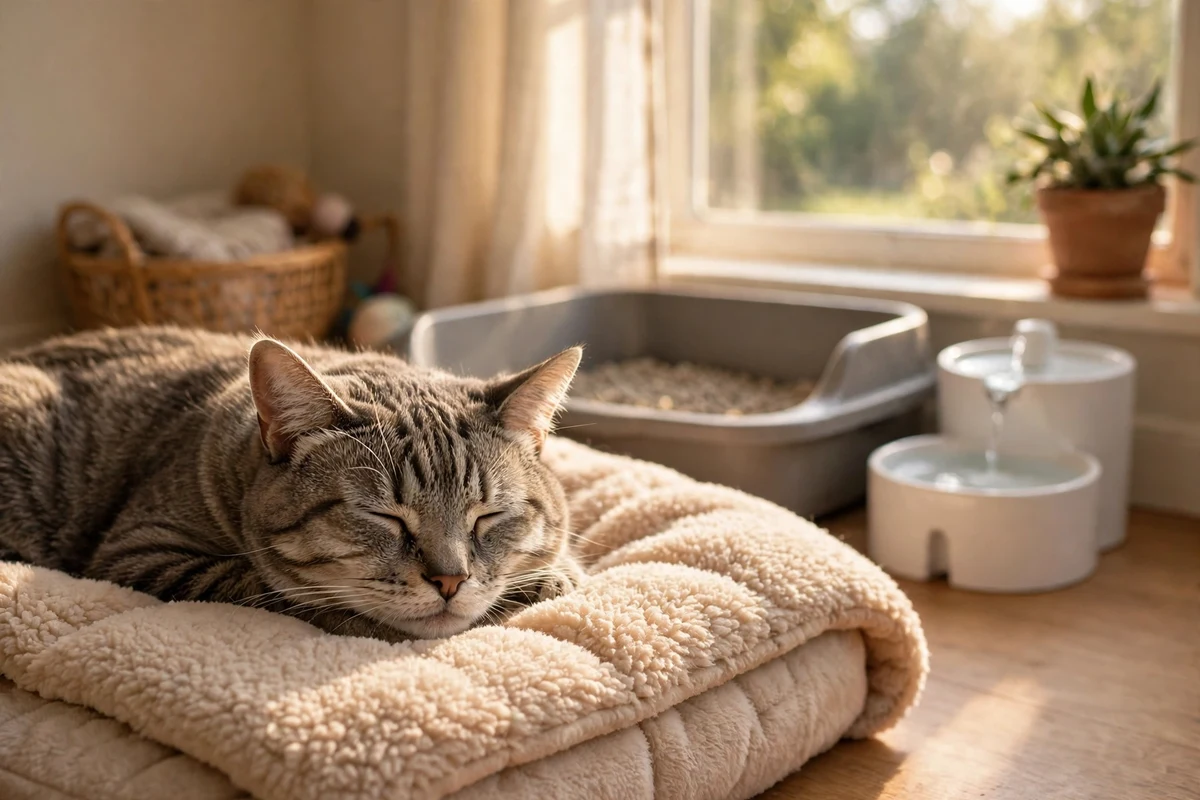
Senior Cat Care: What Changes After Age 10
Your cat turns ten, and on paper nothing changes. The same cat, the same routine, the same spot on the sofa. Underneath, though, the tenth birthday marks a real line. The 2021 AAHA and AAFP feline life stage guidelines define a cat as senior from over ten years of age, with seven to ten counting as mature adult, and fifteen and over as geriatric. After ten, the common diseases of older cats become more likely, the body recovers more slowly, and small changes in behaviour, appetite or litter tray habits become the earliest signs that something needs attention. Senior cat care is not a different kind of cat ownership. It is the same care, done more carefully: more frequent vet checks, closer watching, a home that is easier to move around in, and a faster response when something changes.
The Short Answer
After ten, take your cat to the vet at least every six months, weigh it regularly, and treat new behaviour as information, not as just old age. The most common senior conditions are kidney disease, arthritis, hyperthyroidism, dental disease, diabetes and cognitive decline, and all of them are easier to manage when they are found early. Feed a good quality, easily digestible diet, encourage drinking, keep the litter tray low and easy to reach, and add ramps and steps where jumping has become hard. If your cat stops eating, loses weight, drinks far more than usual, or changes its litter tray or sleep habits, ask a vet. This article is general information only and is not veterinary advice.
When Is a Cat Senior, and What Actually Changes
The life stage bands are a guide, not a birthday alarm. A ten year old cat is roughly comparable in age to a person in their mid fifties, and from there cats age the equivalent of about four human years per cat year. But cats are individuals, and they age at their own pace. Cornell Feline Health Center notes that many cats begin to show age related changes between seven and ten years of age, and most do by the time they are twelve. Some cats are still leaping onto the top of the wardrobe at thirteen, and some are slowing down at nine. Breed, size, weight and health history all shift the timing.
What changes, in general, is the margin for error. The kidneys filter less efficiently, the gut absorbs nutrients less well, muscle is lost more easily, the senses dull, and the immune system responds more slowly. None of that is a disease on its own, and old age is not a disease. But it means a senior cat has less reserve to cope with illness, dehydration, or a missed meal, and it means the early signs of disease are subtler. That is why the senior years reward watching: the owner who notices a change early is the owner whose cat gets help early.
The Six Conditions to Know About
Most of what changes in the senior years comes down to a small group of conditions. Knowing their early signs is the single most useful thing a senior cat owner can do, because the signs are often easy to miss or easy to dismiss as just getting old. Cornell Feline Health Center puts it directly: never assume that changes you see in your older cat are simply due to old age and therefore untreatable.
Chronic kidney disease. The kidneys gradually lose their ability to filter waste and concentrate urine. It is one of the most commonly diagnosed diseases in older cats, and Cornell notes it may affect up to 40 percent of cats over ten, and up to 80 percent of cats over fifteen. Early signs are increased thirst and urination, weight loss, a duller coat, a pickier appetite, and sometimes vomiting. It progresses gradually and is often silent in the early stages, which is why blood and urine checks at the vet matter.
Arthritis and joint disease. Degenerative joint disease is very common in older cats, and it is frequently missed because cats rarely limp in an obvious way. A landmark study of 100 cats over the age of twelve found that 90 percent showed evidence of degenerative joint disease on X-ray. What you are more likely to notice is a cat that stops jumping onto the counter, hesitates at the bottom of the stairs, sleeps in lower spots, grooms less, or becomes irritable when handled. Overgrown, thick back claws are another clue, because the cat can no longer scratch them down properly.
Hyperthyroidism. The most common hormone disorder in older cats, usually caused by a benign overgrowth of the thyroid gland. Cornell describes the signature as weight loss despite increased appetite, with increased thirst and urination. Other signs include increased vocalisation, especially at night, restlessness, a poor coat, and vomiting. It is treatable, and the options include daily medication, a dietary approach, radioactive iodine, or surgery, depending on the cat and the vet’s advice.
Dental disease. Periodontal disease is common in senior cats and can cause pain, appetite loss, and, through chronic inflammation, problems elsewhere in the body. Look for bad breath, red or bleeding gums, tartar along the gum line, drooling, dropping food, or a sudden preference for wet food. Brushing helps, but a cat with established dental disease needs a vet assessment first. Ask your vet to examine the mouth at the next visit.
Diabetes. Senior cats are more prone to diabetes, often linked to excess weight. Signs include increased thirst and urination, weight loss despite a good appetite, and lethargy. Keeping a senior cat at a healthy weight is one of the best ways to reduce the risk, and any sudden weight change is worth mentioning to a vet.
Cognitive dysfunction. A gradual decline in brain function, sometimes compared to dementia in people. Roughly a quarter of cats between eleven and fourteen show signs, and by fifteen and over it is around half, according to commonly cited figures. Signs include disorientation, staring at walls, getting stuck in corners, changes in sleep patterns, loud yowling at night, litter tray accidents, and reduced social interaction. These signs overlap with pain and medical illness, so a vet should check for other causes first.
The New Vet Cadence: Every Six Months
The 2021 AAHA and AAFP guidelines recommend that a healthy senior cat be examined at least every six months, and more often if it has a chronic condition. Past fifteen, the interval may be shorter still. Six months is a long time in a cat’s life: a small change in weight, a new heart murmur, or a shift in blood values can appear and progress in that window, and catching it early is the whole point.
A senior wellness visit usually includes a full physical examination, a weight check on the same scale each time, blood tests, a urine test, and a blood pressure check. Blood pressure matters because high blood pressure is common in older cats and can damage the eyes, kidneys, brain and heart without obvious signs. Weigh your cat at home too, at least every two months, on the same scale, and keep a note of the weight. Weight change is one of the earliest indicators of disease, in either direction: some senior cats gain weight as they become less active, and many cats over twelve become underweight as they lose muscle and digest less efficiently. A steady weight is reassuring. A loss of more than a small amount over a few months is worth a vet visit, even if the cat seems otherwise well.
Keep a simple log between visits: appetite, water intake, litter tray habits, sleep, mobility, and any new behaviour. A short note once a month, or a photo of the litter tray clumps if you are tracking output, turns a vague worry into something a vet can work with. Bring the log to the visit. Vets see the cat for fifteen minutes; you see it every day.
Food and Water After Ten
Nutritional needs change with age, and they change in both directions. Some senior cats need fewer calories because they move less, and some need more because they digest less efficiently and lose muscle. Older cats tend to lose muscle mass, a process called sarcopenia, and enough good quality dietary protein helps slow that loss. Many older cats also digest fat and protein less efficiently than they did, and their sense of smell and taste dulls, which can make food less appealing.
What helps most owners is a steady, practical approach. Feed a complete, high quality, easily digestible food, and feed little and often, four to six small meals a day as a starting point, in a quiet area where the cat is not distracted. Warming the food slightly can help a cat whose sense of smell has faded. Offer wet food as well as dry, because wet food is roughly three quarters water by weight compared with about ten percent in dry food, and that extra water helps a cat that may not feel as thirsty as it should. Encourage drinking with fresh water in several places, a water fountain if the cat likes moving water, and a bowl kept away from the litter tray and the food bowl. For cats with a diagnosed condition such as kidney disease, a vet may recommend a specific diet, such as a renal diet lower in phosphorus, but do not switch to a prescription or senior diet without vet advice, because the right diet depends on the individual cat. Our best cat food guide explains how to judge a food, and our wet versus dry cat food guide covers the water question in detail.
Making the Home Easier to Live In
Small changes around the house make a large difference to a senior cat. The goal is a home where the cat can reach everything it needs without jumping, climbing or squeezing, and where it can rest warmly and undisturbed.
- Litter tray: a low entry tray on every floor the cat uses, in a quiet, easily reached spot. If arthritis makes stepping into a high sided tray painful, the cat may start going elsewhere, and the problem is the tray, not the cat.
- Steps and ramps: a ramp or a set of pet steps to the bed, the sofa and the favourite window sill, so the cat can still reach its places without a jump it can no longer make comfortably.
- Warmth: a heated bed or a warm blanket in a draught free spot. Older cats feel the cold more, and a warm resting place helps stiff joints.
- Food and water: bowls raised slightly off the floor, so the cat does not have to crouch to eat and drink, and placed where the cat does not have to cross a busy room to reach them.
- Grooming help: older cats groom themselves less effectively, which can lead to matting, skin odour and inflammation. A gentle brush every one to two days, and a comb check for mats, replaces the grooming the cat can no longer do. Our complete guide to cat grooming covers the gentle technique senior cats need.
- Routine: keep the furniture, the food, the water and the litter tray in the same places. A senior cat with fading sight or hearing, or with cognitive changes, relies on a stable layout.
- Night light: a low light on the route to the litter tray can help a cat with fading vision or with night time disorientation.
Keep other pets and young children from crowding the senior cat, and give it a quiet retreat where it can rest undisturbed. A senior cat that hides more than usual may be in pain, may be anxious, or may simply need more rest, and the difference is worth watching.
Behaviour Changes: What Is Normal, What Needs a Vet
Some behaviour changes are a normal part of ageing. Older cats hunt less, spend less time outside, sleep for longer, play less, groom less, and may be fussier with food or more vocal. Those changes are gradual, and the cat is otherwise well. Other changes are not normal ageing, and should not be filed away as just getting old.
See a vet promptly for loss of appetite or weight loss, increased thirst or urination, vomiting or diarrhoea, difficulty breathing, a new limp or reluctance to move, crying out when touched, litter tray accidents in a cat that was previously reliable, new confusion or disorientation, or a sudden change in how much the cat sleeps, eats, or interacts with you. Behaviour changes in a senior cat are often medical until proven otherwise, and the list of possible causes is long: pain, kidney disease, thyroid disease, diabetes, dental pain, high blood pressure, and cognitive decline can all look like behaviour first. A cat that starts yowling at night, for example, may be disoriented, in pain, hard of hearing, or hyperthyroid, and the treatment is different in each case. The vet’s job is to sort out which one it is, and the owner’s job is to notice it early and describe it clearly.
Comfort, Pain and Quality of Life
Senior cats are good at hiding pain, and they rarely limp in the way a dog would. The signs of pain in a cat are usually subtler: less jumping, less grooming, more sleeping, a hunched posture, flinching when touched, a change in appetite, or a cat that stops coming to greet you. If you suspect pain, do not give human painkillers at home: many human medicines, including common painkillers, are toxic to cats. Ask your vet, who can assess the cat and discuss options, which may include prescribed pain relief, joint support, weight management, and environmental changes such as ramps and heated beds.
As the cat gets older, the question of quality of life becomes part of the conversation. Veterinary oncologist Dr Alice Villalobos developed a scale, known as the HHHHHMM scale, that scores Hurt, Hunger, Hydration, Hygiene, Happiness, Mobility and More good days than bad. It is a structured way to think about how the cat is doing, and it is worth discussing with your vet if the cat has a chronic condition. The aim is not to count good days against bad days in the abstract, but to notice the trend, and to make decisions with the vet while the cat still has comfort and dignity. That conversation is hard, and it is better had early, calmly, and with the vet who knows the cat, than in a crisis.
Senior cat care is, in the end, an exercise in attention. The vet visits are more frequent, the home is a little easier to move around in, the food is a little more carefully chosen, and the watching is a little closer. In return, you get more good years with a cat you already know well, and you get to spot the problems that are treatable while they are still small. Ten is not the end of a cat’s story. For many cats, with the right care, it is the start of a long and comfortable second act. Our cat age calculator can help you work out where your cat sits in its life stages, and our new cat owner starter kit is a useful refresher on the basics if you are caring for a senior cat for the first time.
Frequently Asked Questions
When is a cat considered a senior?
The 2021 AAHA and AAFP feline life stage guidelines define a cat as senior from over ten years of age, with seven to ten counting as mature adult and fifteen and over as geriatric. Cats age at their own pace, though, and some show age related changes earlier or later. What matters more than the birthday is how the cat is doing: its weight, mobility, appetite and behaviour.
How often should a senior cat see the vet?
At least every six months, according to the AAHA and AAFP guidelines, and more often if the cat has a chronic condition. A senior wellness visit usually includes a physical examination, a weight check, blood tests, a urine test and a blood pressure check. Weigh the cat at home at least every two months on the same scale, and keep a note of the weight.
What are the most common health problems in senior cats?
The most common are chronic kidney disease, arthritis, hyperthyroidism, dental disease, diabetes and cognitive dysfunction. Early signs are often subtle: weight loss, increased thirst and urination, less jumping, less grooming, a duller coat, more night time vocalisation, or litter tray accidents. None of these should be dismissed as just old age without a vet check.
Should I change my senior cat’s food?
Not without vet advice. Nutritional needs change with age, and some senior cats need more protein to slow muscle loss, while others need fewer calories, and cats with a diagnosed condition such as kidney disease may need a specific diet. Feed a complete, high quality, easily digestible food, offer wet food for extra water, and feed little and often. Ask your vet before switching to a senior or prescription diet.
How can I make my home comfortable for an older cat?
Use a low entry litter tray on every floor, add ramps or steps to the bed and sofa, provide a warm draught free bed, raise food and water bowls slightly, and keep the layout stable. Brush the cat gently every one to two days, because older cats groom themselves less well. Keep a night light on the route to the litter tray, and give the cat a quiet retreat where it can rest undisturbed.
Is my senior cat in pain if it has stopped jumping?
It may be. Cats rarely limp obviously when they are in pain; instead they jump less, hesitate before stairs, sleep in lower spots, groom less, or become irritable when handled. Arthritis is very common in older cats and is frequently missed. Do not give human painkillers at home, as many are toxic to cats. Ask your vet to assess the cat and discuss pain relief and home changes.