
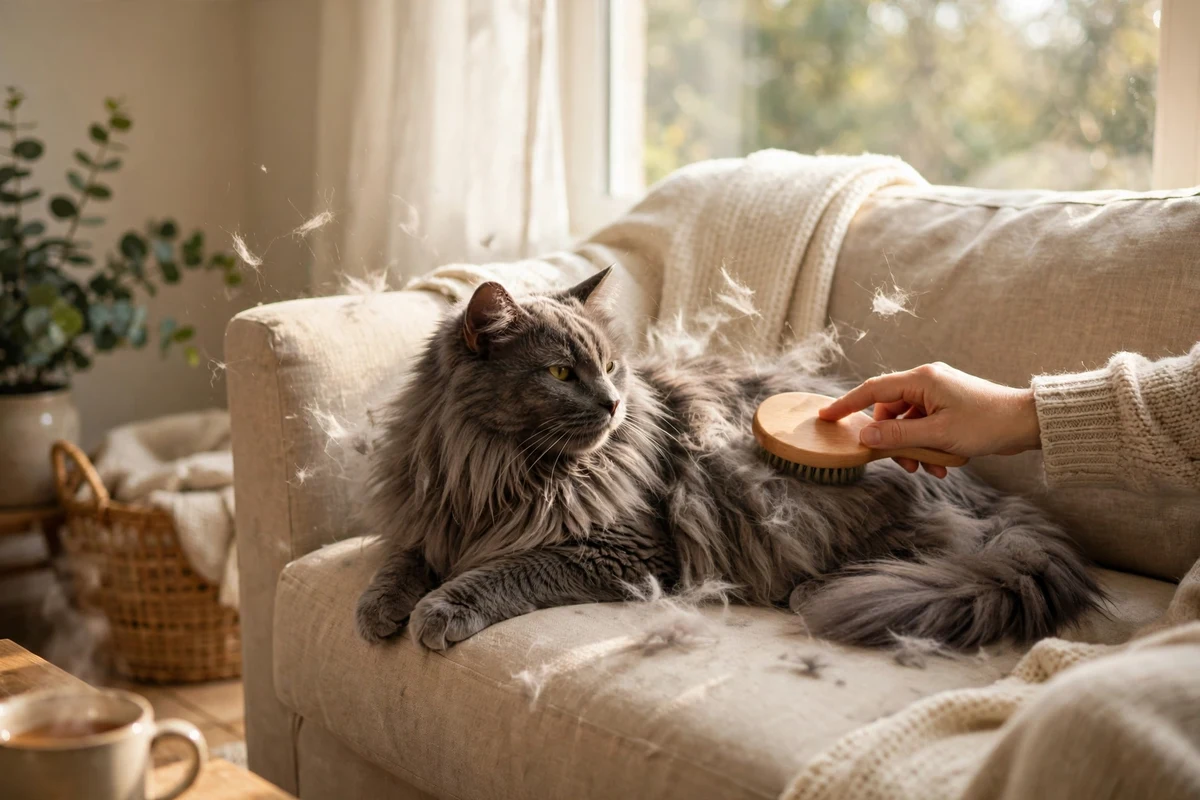
Cat Grooming: The Complete Guide
Cats spend a large part of their day grooming themselves, which makes it easy to assume they need no help at all. In practice, most cats benefit from a little human assistance: brushing removes loose hair before it becomes a hairball, nail trims stop overgrown claws curving into paw pads, and regular checks of ears, teeth and skin catch small problems early. This guide covers the whole routine, what to do, how often, and when to hand the job to a vet or groomer.
This article is general information only and is not veterinary advice. If you find a wound, a painful mat, a sore mouth, or a sudden change in coat or grooming habits, contact your vet rather than working through it at home.
Key Takeaways
- Brushing is the foundation. Short coats usually need it once or twice a week, long coats need it daily or almost daily, and the areas that mat first are behind the ears, under the legs, and around the tail base.
- Most cats rarely need a bath. Bathe only when your cat is genuinely dirty, greasy, has a skin problem your vet is managing, or cannot groom itself well.
- Trim only the sharp, clear tip of each claw, never the pink quick inside it, and check nails weekly even if you trim less often.
- Never cut a tight mat with scissors close to the skin. Cat skin is thin and folds into mats easily, so a bad cut is a real risk.
- A sudden change in grooming, either much less grooming or frantic overgrooming, is information, not just a habit change, and it deserves a vet conversation.
- Short, calm sessions beat long battles. A few good minutes, ended before your cat loses patience, build a routine that lasts for years.
How Often Should You Groom?
| Task | Typical rhythm | Notes |
|---|---|---|
| Brushing, short coat | Once or twice a week | More often during heavy shedding seasons. |
| Brushing, long coat | Daily, or almost daily | Use a wide tooth comb after brushing to catch early tangles. |
| Bathing | Only when needed | Some long coats and hairless breeds are exceptions, as explained below. |
| Nail check | Weekly | Trim every few weeks as needed, or ask a groomer or vet to show you first. |
| Ears and eyes | Check weekly, clean only if needed | Healthy ears usually need little cleaning, and overcleaning can irritate them. |
| Teeth | Daily if your cat accepts it | Cat toothpaste only, never human toothpaste, and build up gradually. |
These are starting points, not rules for every cat. Coat density, age, weight, arthritis and your cat’s own grooming ability all shift the right rhythm. A senior cat that can no longer twist to groom its back needs more help than a flexible young adult, whatever the coat length.
Brushing: The Skill That Prevents Most Problems
Start with the right tool for the coat. A soft bristle brush or grooming glove suits most short coats, while long coats usually need a wide tooth comb plus a slicker brush or pin brush for the undercoat. Brush in the direction of hair growth, with light, even strokes, and go gently over the belly, chest and tail, where many cats are sensitive. Work through the whole coat rather than only the easy parts: behind the ears, under the front legs, along the thighs and around the tail base are where mats form first, because those are the spots a cat cannot easily reach itself.
For long coats, brush first, then comb. If the comb snags, you have found a tangle before it became a mat. Tease small knots apart with your fingers or a wide tooth comb, starting at the outer edge of the knot and working inward. If a tangle resists gentle work, stop and read the mats section below rather than forcing it. During shedding seasons, a few extra sessions a week make a visible difference to the amount of hair on your furniture, and to the number of hairballs your cat brings up.
Brushing is also a health check in disguise. While you brush, feel for lumps, scabs, dry patches, parasites or sore spots, and look at the skin where the coat parts. A cat that suddenly resents being brushed in one area may be telling you that area hurts, which is worth mentioning to your vet.
Bathing: Only When Necessary, and Done Calmly
Most cats never need a routine bath, because their own grooming handles everyday dirt. A bath becomes sensible when your cat has rolled in something sticky or dirty, has grease built up in a long coat, has a skin condition your vet is treating with medicated baths, or is elderly, overweight or unwell and can no longer groom effectively. Hairless breeds are a special case, since skin oils build up without fur to absorb them, and many need a bath about once a week, with guidance from their vet or breeder on the right product.
Prepare everything before the cat goes near water: lukewarm water, a cat specific shampoo, towels, and a non slip mat in the sink or tub. Wet the coat gently without soaking the head, work a small amount of shampoo through the coat, rinse thoroughly, and dry with warm towels. Leftover shampoo irritates skin, so rinsing matters more than lathering. Never use human shampoo, which can dry out cat skin, and keep water out of the ears and eyes. If your cat panics badly, stop. A half washed cat is better than a terrified one, and a groomer or vet clinic can finish the job safely.
Nail Trimming Without the Drama
Pick a moment when your cat is relaxed, and start with one paw only if that is all your cat tolerates. Press the pad gently to extend the claw, and look for the pink quick inside the nail, which carries blood vessels and nerves. In light nails it is easy to see; in dark nails, trim only the very tip and stop early rather than guessing. Cut only the sharp, hooked tip, at a slight angle, with clippers made for cats. If you nick the quick, stay calm, apply gentle pressure with a clean cloth, and use styptic powder if you have it. Bleeding from a nick usually stops quickly, but if it does not, or your cat is in clear pain, call your vet.
Check nails weekly, including the dewclaws on the inner front legs, which do not wear down by scratching and are the ones most likely to overgrow unnoticed. Older cats and indoor cats wear their claws down less, so their nails can curve toward the paw pad if checks lapse. If your cat will not tolerate trims at all, a vet or groomer demonstration is worth more than a dozen online videos, because the handling technique is the part most owners struggle with.
Ears, Eyes and Teeth: Small Jobs With Outsized Payoffs
Ears. Healthy cat ears need little routine cleaning. Once a week, look inside the ear flap for redness, dark debris, a bad smell, or sensitivity when touched. If the visible outer ear is dirty, wipe it gently with a cotton ball or pad dampened with a vet approved ear cleaner. Never push a cotton swab into the ear canal, since it can injure tissue or pack debris deeper. Redness, discharge, odour, head shaking or scratching at the ears all deserve a vet visit, since ear infections and mites need proper diagnosis rather than home cleaning.
Eyes. Wipe away small amounts of normal tear staining with a soft, damp cloth, using a fresh area of cloth for each eye. Persistent squinting, discharge, cloudiness, redness, or an eye that suddenly stays closed is a prompt vet matter, not a grooming task.
Teeth. Dental disease is common in cats and easy to overlook, since cats keep eating through considerable mouth pain. Ideally, brush daily with a cat toothbrush and cat toothpaste, building up over days from a taste on the finger to a brief brush of the outer tooth surfaces. If daily brushing is unrealistic, a few times a week still helps. Never use human toothpaste. Dental treats and diets can support, but do not replace, brushing. Bad breath, drooling, dropping food, or reluctance to eat dry food should be raised with your vet.
Dealing With Mats Safely
Mats form when loose hair tangles and tightens, usually in the spots a cat cannot reach. Small, loose tangles can be teased apart with fingers or a wide tooth comb. Tight mats that sit close to the skin are a different problem: cat skin is very thin and often folds up into the mat, so cutting with scissors can slice skin that looks like fur. Do not pull a tight mat, and do not cut it blindly. If a mat cannot be gently combed apart, ask a vet or an experienced groomer to remove it. They can work it out safely, or clip it with proper tools and restraint.
Mats that appear suddenly in a cat that previously kept a tidy coat are worth a vet conversation, because pain, arthritis, obesity, dental disease or another illness can all reduce self grooming. Treat the mat and the cause together, or the mats will keep coming back.
Grooming Senior Cats, Kittens and Special Coats
Senior cats. Arthritis, stiffness, weight gain and dental pain all make self grooming harder, so older cats often need shorter, gentler sessions more often. Keep sessions brief, support the body rather than holding a sore joint at an awkward angle, and groom on a low, stable surface your cat can step onto. Greasy fur over the back, mats near the hips, or a dirty rear end in a senior cat are common early signs that grooming help, and possibly a vet check, are needed.
Kittens. Start early and keep it tiny: a few strokes with a soft brush, a treat, and done. Early, positive sessions are how a kitten grows into an adult that tolerates grooming. Handle paws gently from the start so nail trims later are unremarkable.
Long coats and hairless breeds. Long coats need daily attention and a real comb, not just a surface brush, or mats will form underneath a coat that looks fine on top. Hairless breeds need regular skin care instead of coat care, including baths and ear cleaning on a schedule your vet advises, plus protection from sun and cold.
When Grooming Reveals a Vet Visit
Book a vet appointment if grooming turns up bald patches, sores, lumps, heavy dandruff, a wound, a painful mat, inflamed ears, a sore mouth, or overgrooming that has thinned the coat. The same applies to a cat that has stopped grooming, since a cat that stops caring for its coat is often a cat that is unwell or in pain. Grooming changes are among the earliest visible clues cats give, and they are easy to miss if nobody is regularly running hands through the coat.
For new owners, our new cat owner starter kit lists the brush and nail clippers among the genuine week one essentials, and explains why a vet or groomer demonstration before the first trim is worth arranging. And if your cat grooms itself into a nap afterwards, our guide to cat sleeping positions explains what the resting pose that follows usually means.
Frequently Asked Questions
How often should I brush my cat?
Short coats usually need brushing once or twice a week, and long coats usually need it daily or almost daily. Adjust for shedding season, age and mobility: a senior or less mobile cat needs more help regardless of coat length.
Do cats need regular baths?
Most cats do not. Baths are for genuine dirt, grease, vet managed skin problems, or cats that cannot groom themselves well. Hairless breeds are the main exception and often need regular bathing.
How do I trim my cat’s nails without hurting it?
Trim only the sharp, clear tip, staying well clear of the pink quick inside the nail. On dark nails, take only the very tip. If you are unsure, ask your vet or groomer to demonstrate on your cat first.
Can I cut a mat out with scissors?
Not a tight mat close to the skin. Cat skin folds into mats and cuts easily, so a mat that will not comb apart gently should go to a vet or experienced groomer for safe removal.
Why has my cat stopped grooming?
Pain, arthritis, obesity, dental disease, stress and illness can all reduce grooming. A cat that stops grooming, or starts overgrooming one area, deserves a vet conversation, especially if the change is sudden.
Please note: this article is general information only and is not veterinary advice. If grooming reveals pain, a wound, or a sudden change in coat or behaviour, contact your vet.