
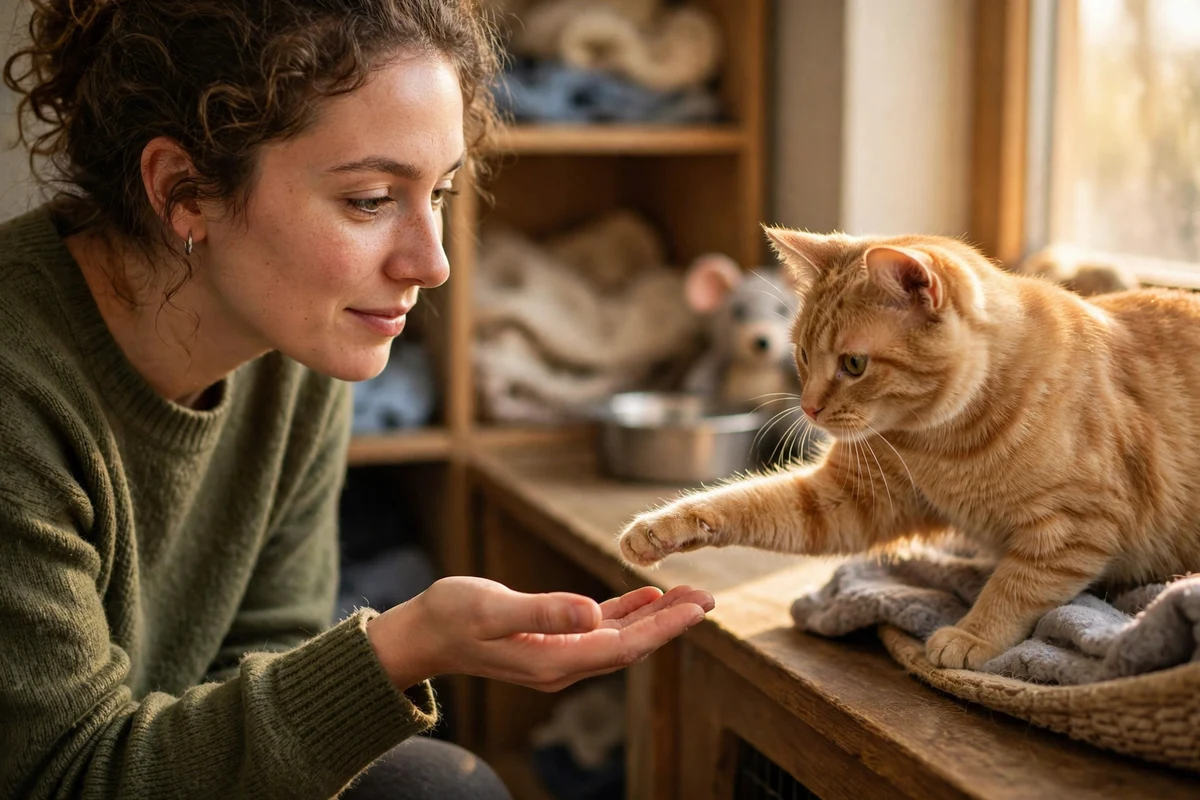
Should You Adopt a Cat? Making the Commitment
Adopting a cat is one of the easiest decisions to make with your heart and one of the hardest to make well. A cat at a shelter window is hard to resist, and that is exactly why the decision deserves a slow look before you sign anything. A cat can live 15 to 20 years. It will need you every single day of that life: for food, clean water, a clean litter box, vet care, play, and company. It will need you when you move house, when you change jobs, when you have a baby, and when it grows old and slow. If that sounds like a promise you can keep, then a cat may be one of the best decisions you ever make. If it sounds like a stretch, waiting is kinder than adopting and then giving the cat up.
Most failed adoptions are not caused by bad cats. They are caused by good people who adopted at the wrong time, picked the wrong cat for their life, or underestimated the cost and the daily work. The good news is that all three mistakes are easy to avoid. A short honest check of your time, money, home and household, a clear idea of which cat fits your life, and a plan for the first month will put you ahead of most first time owners. The sections below give you that check, with real numbers, real questions to ask at the shelter, and a day by day plan for the first 30 days.
This is general information only and is not veterinary advice. If a cat you are considering has a known health condition, ask your vet about the care it will need before you commit.
Key Takeaways
- A cat is a 15 to 20 year commitment. Think about where your life will be in five, ten and fifteen years, not just about this weekend.
- Budget honestly before you browse. The first year typically costs $800 to $1,500 plus emergencies, and the costs continue for the whole life of the cat.
- Every adult in the household must agree, and the landlord must agree in writing if you rent. A cat adopted over someone’s objection becomes a source of conflict.
- Adult cats are often the better match for a first time owner. Their personalities are settled, they are usually calmer, and they are litter trained already.
- Ask the shelter specific questions about history, health, temperament, diet and the return policy. Vague answers are a warning sign.
- Expect the 3-3-3 pattern: about three days of hiding, three weeks of cautious exploring, and three months before the cat shows its full personality.
- Adopting to try it out is unfair to the cat. If you are not sure, foster first or wait until you are.
The Readiness Check: Answer Before You Browse
Do not start by browsing cats. Start by answering twelve questions honestly, and count how many you answer with no. If you count three or more, wait. The cats will still be there when you are ready, and a cat adopted into a ready home stays in that home.
One, can you afford $60 to $100 a month for food, litter and routine care, plus an emergency fund of at least $500? Two, can you pay a vet bill of $500 or more without going into debt, or do you have insurance that would cover it? Three, do you have 30 to 60 minutes a day for feeding, cleaning, play and company, every day, including weekends and holidays? Four, can you arrange care when you travel, and can you afford a sitter or a cattery? Five, does everyone in your household want a cat, including children old enough to have an opinion? Six, does your landlord allow cats, and do you have that permission in writing?
Seven, can you cope with cat hair on clothes and furniture, scratched furniture, and the occasional hairball or accident? Eight, is anyone in the household allergic to cats, and have you checked with a doctor rather than guessing? Nine, are you prepared for a cat that may not be cuddly, may hide for weeks, and may take months to trust you? Ten, can you keep a cat indoors, or provide safe outdoor access if you plan to let it out? Eleven, are you ready to care for a senior cat one day, with more vet visits and possibly medication? Twelve, if your life changes, a new job, a move, a baby, will the cat still have a home with you?
Be honest with yourself about the answers. A no on money is the most common reason cats are given up, and it is also the most avoidable. A no on time matters less than people think, because cats are more independent than dogs, but a cat left alone for 12 hours a day with no play and no company will grow bored, stressed and destructive. A no on allergies is the one to test properly: spend time with cats before adopting, and talk to a doctor, because discovering an allergy after adoption is painful for everyone.
Commitment, Cost and Care: The Three Cs
Adoption counsellors often frame the decision around three Cs: commitment, cost and care. Commitment comes first, because it carries the other two through hard times. A committed owner finds a way through a vet bill, a house move, or a new baby. An uncommitted owner finds a reason to give the cat up. Commitment means thinking of the cat as family, not as a trial or a decoration. It means planning for the cat when you plan a holiday, a move or a new job.
Cost is the practical side of commitment. The adoption fee is the smallest part of it. Municipal shelters often charge $25 to $100, private rescues $100 to $250 for kittens, and fees commonly include spay or neuter surgery, core vaccines, deworming, a vet exam and a microchip. Bought separately, those services often cost $400 to $800, so the fee is usually good value. But the fee is only the start. Starter supplies cost $150 to $300, a first wellness exam $60 to $200, food $25 to $60 a month, and litter $15 to $30 a month. The first year typically totals $800 to $1,500, and an emergency, a broken tooth, a swallowed string, a urinary blockage, can add hundreds or thousands more. Read whether pet insurance for cats is worth it before you decide how to cover those bills.
Care is the daily reality. A cat needs fresh food and water every day, a litter box scooped daily and washed weekly, play every day, grooming for longhaired cats, and vet visits at least once a year. Kittens need far more: near constant supervision, extra vet visits and vaccines, socialisation, and careful kitten proofing. Senior cats need more vet visits too, and sometimes daily medication. The work is not heavy, but it is daily, and it does not pause for holidays or busy weeks.
The Honest Pros and Cons
Cats make wonderful companions. They are affectionate in their own way, they purr, they greet you at the door, they sit on your lap on a cold evening, and they make a quiet house feel alive. They are relatively low maintenance next to dogs: they groom themselves, use a litter box, do not need walks, and can be left alone for a working day. They suit flats and small homes, they entertain themselves and you, and they keep a home free of mice and insects. Many owners say a cat gives their day structure and their home warmth, and that the companionship is worth every cost.
The cons are real and worth weighing. Cats scratch furniture and carpets. They shed hair, they bring in dirt, and they sometimes vomit hairballs on the rug. The litter box needs daily cleaning, and a cat that dislikes its box will find somewhere else to go. Vet bills can be large and sudden. Travel needs planning and a sitter. Allergies affect a significant number of people, and cat allergy can be severe. Cats are independent, which is a pro for many people and a con for anyone who wants a pet that obeys commands or seeks attention on demand. And a cat lives a long time, so the commitment outlasts many jobs, relationships and homes.
Kitten, Adult or Senior: Which Cat Fits Your Life?
Kittens are irresistible and exhausting. They need near constant supervision, they climb curtains, chew cables, wake you at night, and need a series of vet visits and vaccines in their first months. They also need socialisation: gentle handling, exposure to normal household sounds, and play that teaches them not to bite hands. A kitten is a good choice if you work from home or have plenty of time, and if you want to shape a cat from the start. Two kittens together are often easier than one, because they burn off energy on each other and learn bite control from each other. Many shelters offer two for one kitten deals for exactly that reason.
Adult cats are the best choice for most first time owners. Their personalities are already settled, so what you see at the shelter is close to what you get at home. They are usually calmer, they are litter trained, and they settle into a routine faster. An adult cat that headbutts the shelter staff and purrs when handled is likely to do the same at home. Adult cats also wait longest for adoption, because most visitors ask for kittens, so choosing an adult cat genuinely helps the shelter.
Senior cats are the most overlooked and often the most rewarding. A cat over seven years old is usually calm, affectionate, and happy with a quiet home and a warm lap. Seniors need more vet care and sometimes daily medication, and their time with you will be shorter, which is painful to think about. But a senior cat that has lost its home and finds a kind one again is a bond that owners describe as extraordinary. If your home is quiet and your budget allows for extra vet care, ask the shelter about their seniors. Many shelters discount or waive the fee for older cats.
Shelter, Rescue or Breeder: Where to Get Your Cat
Animal shelters are the most common route, and a good first stop. You can meet many cats in one visit, the screening is usually straightforward, and many shelters allow same day adoption. Fees are lower than rescues, and the fee usually covers the basics. The trade-off is that shelter staff may know less about a stray cat’s history, and a cat that hides at the back of a cage may be a perfectly social cat having a terrible week. Ask to meet the cat in a quiet room away from the cages. That tells you far more than the cage does.
Rescue groups often keep cats in foster homes, so they can tell you how the cat behaves in a real house: with children, with other pets, at night, at mealtimes. Fees may be higher, but they often cover more vet care, and the matching process is more careful. Some rescues ask for a home check and references, which takes longer but leads to better matches. If you have other pets or children, a foster based rescue is often the best route, because the foster carer has already seen the cat live with others.
Breeders make sense only if you want a specific breed for a clear reason, such as a known temperament or a lower shedding coat, and only if the breeder is reputable.
Questions to Ask Before You Sign
Interview the shelter as much as they interview you. The answers will tell you whether the match is right, and they will tell you whether the organisation is careful. Ask these ten questions, and write the answers down.
What is the cat’s history, and why was it surrendered? How old is the cat, and how was the age estimated? Does the cat have any health issues, ongoing medication, or known conditions? Which vaccines, deworming and tests are complete, including FeLV and FIV testing? Is the cat spayed or neutered, and is a microchip included? How does the cat behave with handling, carriers and visitors? What litter and food is the cat using right now, so you can avoid changing everything at once? Has the cat lived with other cats, dogs or children? What is the return policy if the match genuinely fails, and how long does it last? What support do you offer after adoption if problems come up?
Watch how the staff answer. Specific answers, honest uncertainty where the history is unknown, and a clear return policy are good signs. Vague answers, pressure to decide today, or a refusal to discuss health history are reasons to walk away. A good shelter wants the match to last, and will be glad you asked.
Preparing Your Home Before Adoption Day
Set up the home before the cat arrives, not after. Choose one quiet room as the cat’s base for the first days, with a door that closes. Put a litter box, food and water bowls, a bed, a hiding place such as an open cardboard box, a scratching post, and a few toys in that room. Keep the food and water away from the litter box, because cats prefer not to eat beside their toilet. A cat tree or a high perch in the room gives the cat a safe view of its new territory.
Buy the basics before adoption day: a sturdy carrier, a litter box and litter, food and water bowls, a bed, a scratching post, a few toys, and the same food and litter the cat is already using. Changing food suddenly can upset a cat’s stomach, so switch gradually over a week if you want a different brand. Our new cat owner starter kit lists every item in one checklist. Book a vet visit in the first week before the cat arrives, so the appointment is ready.
The First 30 Days: The 3-3-3 Pattern
New cats follow a rough pattern that shelter workers call 3-3-3: about three days of hiding, three weeks of cautious exploring, and three months before the cat shows its full personality. It is a guide, not a rule, and every cat moves at its own pace. A confident cat may explore on day one. A shy cat may hide for two weeks. Both are normal.
Days 1 to 3 are for hiding. Put the cat directly into its base room, open the carrier, and leave. Do not pull the cat out, do not crowd it, and do not invite visitors to meet it yet. Sit quietly in the room for short periods, read or talk softly, and let the cat come to you. Keep food, water and the litter box available, and check that the cat is eating and using the box, even if it only does so at night. If the cat has not eaten for more than 24 hours, call your vet.
Days 4 to 21 are for exploring. Open the base room door and let the cat explore the rest of the home at its own pace, with the base room left open as a safe retreat. Keep the routine steady: same feeding times, same food, same litter, same quiet voice. Start short play sessions with a wand toy, and begin gentle handling only when the cat seeks it. Book the vet visit in this window for a full check, and ask the vet about the vaccination and worming schedule.
Days 22 to 30 are for settling. The cat should be eating, playing and using the litter box reliably. You can start introducing the cat to more of the household, including children and other pets, slowly and with supervision. Keep the base room available for another few weeks. By the end of the first month, most cats have chosen their favourite sleeping spots, learned the household routine, and started to show their real personality. The full picture takes about three months, so be patient with a cat that is still shy at week four.
What If It Does Not Work?
Sometimes, despite honest preparation, the match fails. The allergy is worse than expected, the cat and the resident dog cannot live together, or the cat’s needs are beyond what the household can give. If that happens, the kindest step is to contact the shelter or rescue first. Most have a return policy, and many will take the cat back at any point in its life. Returning a cat to the shelter is painful, but it is far kinder than passing the cat to a stranger, abandoning it, or keeping it in a home where it is unhappy.
Making the Decision
Go back to the twelve questions at the start. If you answered yes to most of them, if the costs are budgeted, the household agrees, and the idea of 15 years of litter boxes, vet visits and purring company feels right, then you are ready to visit a shelter. Take your time there. Meet several cats. Sit with them in a quiet room. Ask your ten questions. Choose the cat that fits your life, not the one that pulls hardest at your heart in the first five minutes.
Then go home and prepare the base room, book the vet visit, and bring your cat home to a house that is ready. Once your cat is settled, choosing a cat name is a good way to start the bond, and you can browse cat names for ideas. The first days will be quiet and a little uncertain. The first weeks will bring surprises. By three months, you will know the cat, and the cat will know you. That is when the commitment stops feeling like a decision and starts feeling like family.