
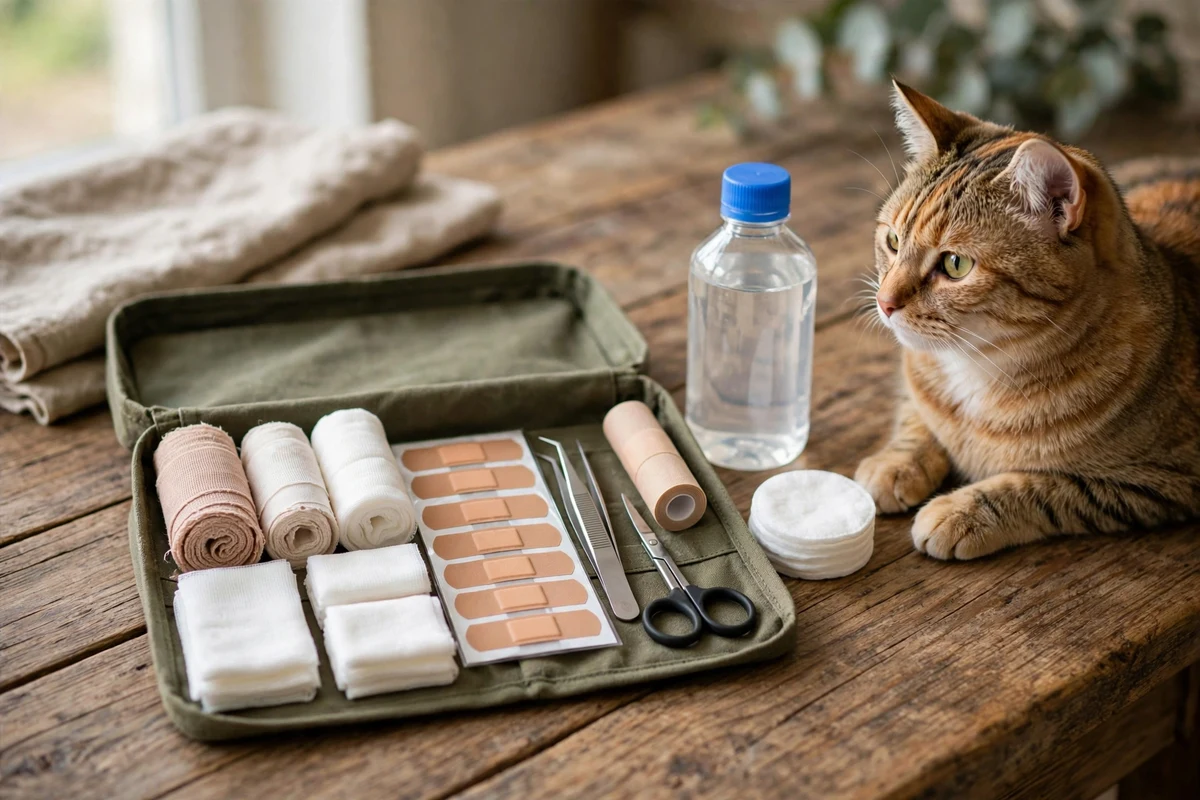
Pet First Aid Kit for Cats
The worst time to discover you are out of gauze is while your cat is bleeding on the kitchen floor, or while you are trying to remember which emergency vet is open at midnight. A pet first aid kit for cats is not a small vet clinic in a box. It is a small collection of supplies that helps you control a few immediate risks, protect yourself and your cat, and reach professional care more safely. Building one takes an afternoon and a modest spend, and it is the kind of preparation you only regret not having done.
First aid for a cat is mostly about stabilisation and safer transport. That may mean applying pressure to external bleeding, flushing contamination out of a wound, preventing further exposure to a toxin, keeping an injured cat still, or protecting yourself from a frightened animal in pain. It is not meant to diagnose internal injuries, treat poisoning from an internet recipe, replace surgery, or delay a trip to the emergency clinic while you try every item in the bag. A useful rule is the kit to clinic principle: if an item helps control an immediate problem or makes transport safer, it belongs in the kit. If using it requires you to diagnose the condition, calculate a dose, or decide whether a drug is appropriate, get veterinary guidance first. Our new cat supplies checklist covers the everyday items a cat needs, and the kit below is the emergency version of that thinking.
The Complete Checklist
Start with a sturdy, water resistant container that adults can reach quickly but pets and young children cannot. A small toolbox, a lunchbox with a latch, or a zippered pouch all work, as long as everything fits without being crushed and you can carry it with one hand while holding a carrier with the other. Keep the kit in one fixed place in the house, and make sure every adult in the household knows where it is. A smaller duplicate kit is useful for travel, but avoid storing medicines or other temperature sensitive supplies permanently in a hot car.
1. Emergency contacts and medical records
This may be the most valuable part of the kit. Keep a printed card inside the lid with your regular vet, the nearest emergency vet hospital, and an animal poison control service. Add your cat’s current medications, important medical conditions, known allergies, approximate current weight, and microchip number. Save the same information on your phone, but keep the printed card as well, because a phone can run flat at the worst moment.
Two widely used 24 hour veterinary poison resources are ASPCA Poison Control at 888-426-4435 and the Pet Poison Helpline at 855-764-7661. Consultation fees may apply to both. Tape these numbers inside the kit lid so they are visible the moment you open it. Also write down your vet’s after hours number now, while you are calm, rather than searching for it while restraining an injured animal.
2. Wound care and bandaging
Pack 10 to 12 sterile gauze pads in 2 by 2 inch and 4 by 4 inch sizes, two rolls of gauze bandage, non stick pads, self adhering veterinary wrap, and a roll of medical tape. For active external bleeding, the most useful first aid action is steady direct pressure. Place clean gauze, a non stick pad or a clean towel over the wound and press firmly. Keep the pressure continuous rather than lifting the material again and again to check, because disturbing the forming clot can restart the bleeding. If blood soaks through, add more clean material over the existing layers while you arrange vet care.
Self adhering wrap can hold a dressing in place without sticking to fur, but it is easy to misuse. A wrap applied too tightly can restrict circulation, so keep it snug but loose enough to slip a finger underneath. If you are not confident about applying a safe bandage, steady direct pressure with clean material during prompt transport may be safer than constructing a tight wrap. Heavy bleeding is an emergency: spurting blood, rapidly soaked dressings, very pale gums, marked weakness, collapse, or bleeding that does not slow with sustained pressure all need urgent vet care.
3. Cleaning and flushing supplies
Plain sterile 0.9 percent saline is one of the most versatile liquids in a kit. Keep a bottle of it for flushing wounds and debris, plus a large needleless syringe to direct the flow gently. Clean water works when saline is not available. For ordinary wound first aid, do not automatically reach for hydrogen peroxide, rubbing alcohol, essential oils, concentrated antiseptics or household cleaners. Saline or clean water is a safer general first step unless your vet gives different instructions.
If a chemical gets into your cat’s eyes, begin flushing promptly with clean water or saline while you get product specific vet or poison control advice. Save the original container or photograph the label, and do not put ordinary skin antiseptics into the eyes. Keep a small bottle of dilute chlorhexidine solution at 0.05 percent concentration for skin cleaning if your vet has approved it, and never use it at full strength on a cat.
4. Tools
Pack blunt tip scissors for cutting gauze, tape and wrap with less risk around moving skin. Add fine tip tweezers or forceps for obvious superficial debris, some splinters, or tick removal. A small flashlight helps you inspect a paw, a wound hidden under fur, or a carrier at night, so check its batteries whenever you inspect the rest of the kit. A digital rectal thermometer with water based lubricant can give useful information when your cat is stable enough to tolerate the procedure safely, but temperature is optional information during a true emergency. Do not wrestle with a frightened, painful, collapsing, seizing, severely bleeding or distressed cat just to get a number. A cat’s normal rectal temperature is about 100.5 to 102.5 degrees Fahrenheit.
Do not probe deeply into wounds or remove an object deeply embedded in the chest, abdomen, skull or another major body area. Pulling out a penetrating object can worsen bleeding or internal injury, so leave it in place, cover it loosely, and get to a vet.
5. Restraint and transport
Keep a secure carrier readily available near the kit. It is your best tool for restraint and transport, and a cat that is hurt or frightened is far easier to move in a carrier than in your arms. Pain and fear can change behaviour quickly, even in a normally gentle cat, so do not assume your cat will stay calm. If major trauma is suspected, minimise unnecessary movement of the head, neck and spine. A rigid support or a sturdy blanket may help move a larger cat when used carefully and with enough people to avoid twisting the body.
For cats, a towel and a secure carrier are generally more practical than attempting to improvise a muzzle during an emergency. A large clean towel can gently contain a frightened cat, apply pressure over bleeding, provide padding during transport, or keep an injured cat warm when warming is appropriate. Do not tightly wrap a cat that is struggling to breathe, and do not deliberately warm a cat with suspected heatstroke. Our guide to choosing the best cat carrier covers sizes and styles, and our travel guide for cats in carriers, cars and planes covers longer trips.
6. Comfort and protection
Pack clean towels and a lightweight blanket, disposable gloves, and an instant cold pack. Gloves protect you from blood, vomit, chemicals, contaminated wounds and other bodily material. An instant cold pack can help cool a sprain or a bump, wrapped in a towel so it never touches skin directly. An Elizabethan collar, the cone, in the correct size prevents a cat from licking a wound during transport. Add a familiar scented item, a small toy or a piece of fabric, to reduce stress during treatment, and a portable water bowl for the trip to the clinic.
Useful extras include a tick removal tool, styptic powder for minor nail bleeding, copies of vaccination or medical records for travel, and a small supply of any medication already prescribed specifically for that cat, kept clearly labelled with the cat’s name and current instructions. An emergency can change whether a normally prescribed medication should be given, so ask your vet when there is any doubt.
What to Leave Out
Some items look like first aid supplies but can make a cat emergency worse. Leave them out unless your vet has specifically told you to keep them.
Hydrogen peroxide is the most common mistake. Do not use it as a routine wound cleaner, because it can damage healthy tissue and delay healing. Do not give hydrogen peroxide to a cat to make it vomit. Poison control guidance warns that it is too irritating to feline stomach and oesophageal tissue, and vomiting a caustic substance can cause more harm.
Human pain medication is another danger. Do not give ibuprofen, naproxen, acetaminophen, aspirin or another human pain reliever to a cat. Cats process medicines differently from people, and common human pain relievers can cause gut, kidney, liver or red blood cell injury. Acetaminophen is particularly dangerous to cats and can be fatal at small doses.
Activated charcoal is not a universal poison antidote. It may be appropriate for some toxins and inappropriate or dangerous for others, particularly when aspiration is a concern. Use it only when a vet or veterinary poison professional specifically recommends it for that exposure. Rubbing alcohol and concentrated antiseptics also stay out of the kit, because they damage tissue and cause pain on open wounds.
How to Use the Kit: The Common Emergencies
Bleeding
Apply steady direct pressure with clean gauze or a towel and hold it without peeking. If the wound is on a leg, you can add a loose bandage over the gauze to hold it in place while you travel. Keep the cat still and calm, and get to a vet promptly. Do not apply a tourniquet unless a vet on the phone tells you to, because it can cut off circulation to healthy tissue.
A wound with dirt or debris
Flush gently with saline or clean water using the needleless syringe, working from the centre of the wound outward. Remove only obvious surface debris with tweezers. Cover the wound loosely with a non stick pad and gauze, and let the vet handle deeper cleaning. Deep bite wounds can hide damage far beyond what is visible at the skin, so even a small puncture deserves a vet check.
A broken nail
A torn nail bleeds more than most owners expect. Press styptic powder or a clean pinch of cornstarch onto the tip and hold pressure for a few minutes. Keep the cat still and check that the bleeding stops. If it does not stop, or the nail is hanging loose, call your vet.
Something in the eye
Flush the eye gently with saline or clean water for several minutes. Do not rub the eye and do not put ointments or drops in unless your vet advises it. Eye injuries can worsen quickly, so treat any eye problem as urgent.
A suspected poisoning
Do not start by searching the kit for an antidote. Stop further exposure when it is safe to do so, check breathing and responsiveness, and save evidence: packaging, medication bottles, pesticide labels, plant material, ingredient lists, or remaining food. Estimate the approximate amount and the time of exposure, then call your vet, the emergency hospital, ASPCA Poison Control, or the Pet Poison Helpline promptly. Do not wait for symptoms after a potentially significant poisoning simply because your cat currently looks normal. Our guide to keeping your cat calm at vet visits also covers how to handle the trip itself once you are on your way.
Heatstroke
A cat with suspected heatstroke needs cooling and a vet, not a warm blanket. Move the cat to a cool place, offer water if it can drink, and dampen the paws and belly with cool, not icy, water while you travel. Do not use ice baths, and do not force water into a cat that cannot swallow.
When the Kit Is Not Enough
A first aid kit should never delay transport for a life threatening problem. Seek immediate vet care for difficulty breathing, blue or grey gums, loss of consciousness, ongoing seizures, severe or uncontrolled bleeding, collapse, profound weakness, major trauma, suspected fracture or spinal injury, serious eye injury, significant poisoning, severe pain, heatstroke, or rapid deterioration. If your cat is unstable, getting safely to professional care matters more than trying to use every item in the bag.
Call the vet hospital while you prepare transport when possible, so the staff can advise you and be ready for your arrival. Keep the carrier, the kit and the emergency card together by the door on the way out, and bring the medication list and any evidence from a poisoning with you.
Storage, Checks and Practice
Keep supplies in a secure, water resistant container that adults can reach quickly but pets and young children cannot. Check the kit several times a year and replace expired products, opened or contaminated saline, damaged packaging, used or depleted gauze and gloves, dead flashlight batteries, outdated emergency clinic information, and old medication lists. Saline, cornstarch and comfort items generally need replacing about every 6 months once opened.
Run a simple grab check every few months. Imagine you need to leave for the emergency clinic immediately. Can you find the kit, the carrier, the emergency clinic information, and your cat’s medications within about a minute? Fix whatever slows you down before a real emergency tests the system. Pet first aid and CPR training can teach bleeding control, safe restraint, CPR, emergency transport and other skills far more effectively than trying to learn them for the first time during a crisis. The safest emergency habit may be one you practiced before anything went wrong. Pet insurance can also soften the cost of an emergency visit, and our guide to pet insurance for cats weighs whether it is worth it.
Frequently Asked Questions
What should be in a cat first aid kit?
Emergency contacts and medical records, gauze and non stick pads, self adhering wrap and tape, sterile saline and a needleless syringe, blunt tip scissors and tweezers, a digital thermometer, gloves, a flashlight, clean towels and a blanket, a secure carrier, styptic powder, and an Elizabethan collar.
Can I use hydrogen peroxide on a cat wound?
No. Hydrogen peroxide can damage healthy tissue and delay healing. Use sterile saline or clean water instead, and never give hydrogen peroxide to a cat to make it vomit.
Can I give my cat human pain medicine?
No. Ibuprofen, naproxen, aspirin and acetaminophen can seriously harm cats, and acetaminophen is particularly dangerous. Ask your vet before giving any medicine to a cat.
What is a cat’s normal temperature?
A cat’s normal rectal temperature is about 100.5 to 102.5 degrees Fahrenheit. Take a temperature only when the cat is stable enough to tolerate it safely.
When should I skip first aid and go straight to the vet?
Go straight to the vet for difficulty breathing, blue or grey gums, collapse, seizures, severe bleeding, major trauma, serious eye injury, significant poisoning, or severe pain. First aid should buy safer time on the way to treatment, not replace it.
How often should I check my cat first aid kit?
Check it several times a year. Replace expired products, opened saline, used supplies, dead batteries and outdated contact or medication information, and run a 60 second grab check to confirm you can reach everything fast.