
7 Signs Your Cat Is Getting Sick (And When to Call the Vet)
Cats are experts at hiding illness. In the wild, showing weakness made an animal a target, and the instinct never left. A sick cat rarely looks sick. It looks like a cat that started sleeping somewhere new, eating a little less, or grooming a little differently. The 7 signs in this guide are the changes owners notice first, and each one comes with a clear vet call threshold, so you know when to watch, when to call, and when to go now.
The short answer is that no single sign on this list is a diagnosis, and a single quiet evening means nothing. What matters is a change from your cat’s own normal, especially a change that lasts more than a day or arrives with a second sign. If your cat has eaten nothing for 24 hours, call your vet. If it has eaten nothing for 48 hours, or it is straining to urinate with nothing coming out, that is an emergency.
Everything below is general information only and is not veterinary advice, and it cannot diagnose your cat. Our guide on when to take your cat to the vet covers the same thresholds in a shorter form.
Key Takeaways
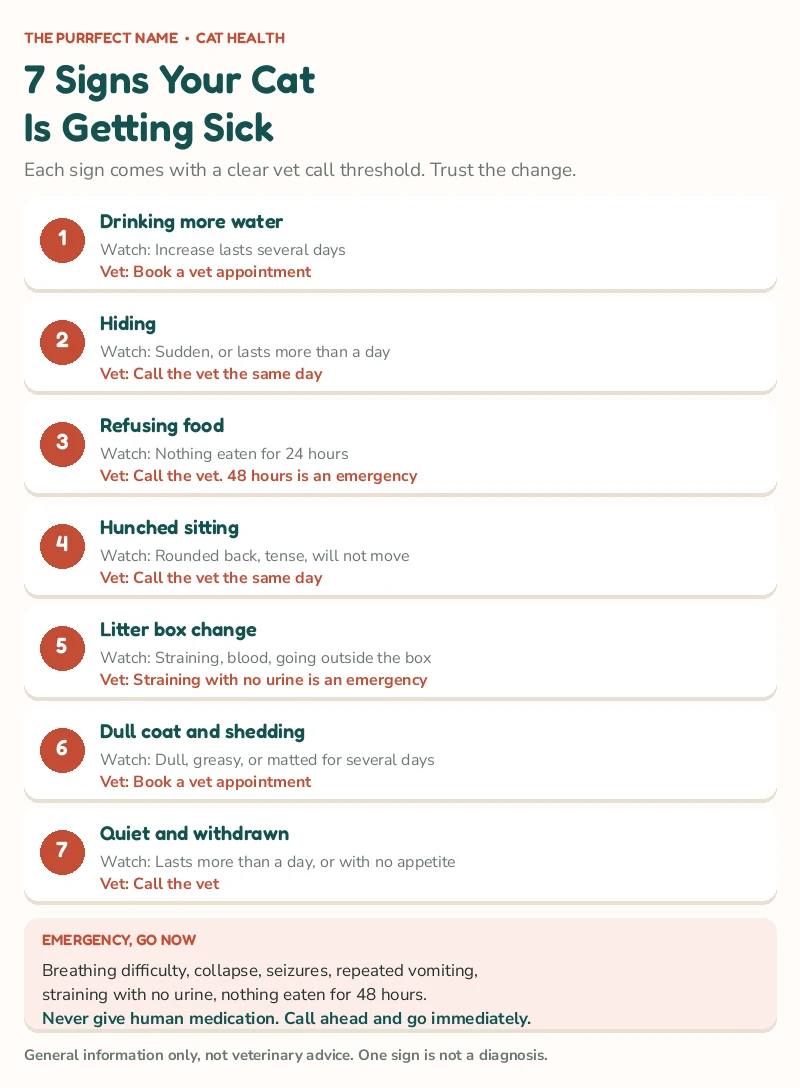
- 7 signs make the list: drinking more water, hiding, refusing food, hunched sitting, a litter box change, a dull coat with shedding, and going quiet and withdrawn.
- The most urgent threshold is food: nothing eaten for 24 hours means a vet call, and 48 hours without food is an emergency.
- A male cat straining in the litter box without producing urine is an emergency measured in hours.
- A mild, isolated change with no red flag signs can be watched at home for 12 to 24 hours, then needs a vet call if it does not improve.
- Never give a cat human medication. Acetaminophen and ibuprofen are highly toxic to cats.
- Write down what changed and when. A dated note is the most useful thing you can bring to the vet.
Why Cats Hide Illness
A cat that feels unwell does not complain. It withdraws, sleeps more, grooms less, and carries on as if nothing is wrong, often until a condition has progressed a long way. That is why the signs in this guide are all changes in routine: where the cat sleeps, how much it eats and drinks, how it uses the litter box, how its coat looks, and how it holds its body.
You are the only one who knows your cat’s normal, which makes you the only one who can spot the change early. Compare against your own cat, not against an average. A cat on dry food drinks more than a cat on wet food, a senior cat sleeps more than a young one, and a shy cat hides more than a bold one. The signal is the change.
The 7 Signs
| Sign | What to watch for | Call the vet when |
|---|---|---|
| Drinking more water | More trips to the bowl, the tap, or the shower | Increase lasts several days, book an appointment |
| Hiding | New hiding places, staying there for hours | Sudden or lasting more than a day, or with not eating, call same day |
| Refusing food | Skipping meals, refusing a favorite food | Nothing eaten for 24 hours, call; 48 hours, emergency |
| Hunched sitting | Rounded back, paws tucked under, tense and still | Hunched and not moving, or with other signs, call same day |
| Litter box change | Frequency, straining, going outside the box, blood | Straining with no urine, emergency now; other changes, call promptly |
| Dull coat and shedding | Dull, greasy, or matted coat, clumps of loose hair | Lasts several days, or with other signs, book an appointment |
| Quiet and withdrawn | Less greeting, less play, avoiding touch | Lasts more than a day, or with appetite change, call |
1. Drinking More Water Than Usual
One of the few early signals that is genuinely easy to observe is a cat that starts visiting the water bowl, the tap, or the shower far more than usual. Increased thirst, often together with more urination, is a classic presentation of chronic kidney disease, diabetes, and hyperthyroidism, all of which are common in middle aged and older cats and all of which are better managed when caught early.
Call the vet when: the increase lasts several days, or it comes with larger urine clumps, weight loss, or eating more while losing weight. A cat that is suddenly ravenous but losing weight should also be seen, because hyperthyroidism is a common cause in older cats.
Do not restrict water to reduce the drinking. Note how much your cat drinks and how often the litter box needs emptying, and bring those notes to the visit. In older cats, this sign alone is worth an appointment, and our guide on senior cat care after age 10 explains why kidney disease and thyroid problems are the first things a vet checks.
2. Hiding From Family Members
A normally social cat that moves under the bed, behind the sofa, or into a wardrobe and stays there is usually telling you something. Cats tend to withdraw rather than complain when they do not feel well, and hiding is one of the most common early signs of pain or illness. Some cats go the other way and become unusually clingy, which counts as the same kind of change.
Call the vet when: the hiding is sudden, lasts more than a day, or comes with not eating, vomiting, litter box changes, or breathing changes. Hiding can also come from fear or stress, for example after a house move or a new pet, so ask what changed in the house first.
If nothing changed and the hiding persists, it is worth a vet call. Do not drag a hiding cat out. Let it stay where it feels safe and watch from a distance.
3. Refusing Food It Usually Loves
A cat that skips one meal may be fine. A cat that stops eating is not. Appetite change is one of the earliest signs of illness, and it is also the one with the hardest deadline. When a cat stops eating, its body mobilizes fat into the liver faster than the liver can process it, which can cause hepatic lipidosis, a serious liver condition, and overweight cats are at the highest risk.
Call the vet when: your cat has eaten nothing for 24 hours. That is the threshold every source in our research agrees on, from PDSA to the Merck Veterinary Manual.
A cat that has eaten nothing for 48 hours needs an emergency visit rather than more tempting with food. Kittens, diabetic cats, and cats with existing health problems may need help sooner than 24 hours. A cat that is interested in food but struggles to chew may have dental pain, which is also a vet visit, not a wait and see.
4. Sitting Hunched With a Rounded Back
A cat sitting hunched, with its back rounded, its paws tucked underneath, and its body tense and still, is often a cat in pain. Cats with arthritis, abdominal pain, or injuries adjust their posture to manage discomfort, and the hunched sit is the most visible version of that. The same cat may move with less grace than usual, tilt its head, carry its tail differently, or stop jumping onto a favorite shelf.
Call the vet when: the hunched posture lasts more than a few hours, the cat will not move, or it comes with other signs such as not eating, hiding, or crying when touched. A single hunched nap after a long sleep means nothing. A cat that sits hunched all day and will not stretch out is telling you it hurts. Never give human pain medication. Acetaminophen and ibuprofen are highly toxic to cats and can cause severe organ damage or death.
5. A Sudden Change in Litter Box Habits
The litter box gives some of the most useful clues about a cat’s health. Look for urinating more or less often, producing unusually small amounts, straining, repeatedly entering and leaving the box, urinating outside the box, blood in the urine or stool, diarrhea, or hard dry stools. Any deviation from your cat’s established routine is worth noting.
Call the vet when: your cat is straining to urinate with nothing coming out, which is an emergency measured in hours, especially in male cats, where a blocked bladder can be life threatening.
Call promptly, the same day, for blood in the urine or stool, crying while in the box, or going outside the box for more than a day. Book an appointment within a few days for frequency changes or clump size changes with no other symptoms. The box is also where kidney disease and diabetes show up first, as larger clumps and more frequent visits.
6. A Dull Coat With Excessive Shedding
A healthy cat usually has a shiny, smooth coat. If the coat becomes dull, greasy, or matted, with clumps of loose hair or more dandruff, it is often because the cat has stopped grooming. A sick or painful cat grooms less, and the coat shows it within days. Poor grooming often accompanies general malaise, fever, obesity, or pain such as arthritis that makes it hard for the cat to reach certain areas.
Call the vet when: the dull or unkempt coat lasts several days, or it comes with other signs such as eating less, hiding, or weight loss. The other direction matters too: a cat grooming one spot obsessively may be dealing with pain in that area. A seasonal shed is normal. A coat that goes dull and stays dull is not.
7. Unusually Quiet and Withdrawn Behavior
A normally affectionate cat that suddenly wants to be left alone, stops greeting you, avoids being touched, sleeps far more than usual, and loses interest in play is showing one of the most common signs of illness. Lethargy is nonspecific, which means it accompanies almost any illness, pain, or fever, but that is exactly why it matters: it is the sign that shows up first, before the specific symptoms arrive.
Call the vet when: the change is sudden, lasts more than a day, or comes with refusing food, vomiting, litter box changes, breathing changes, or weakness. A healthy adult cat sleeps a lot, but a napping cat should still be alert and responsive when something interesting happens. A cat that will not respond, will not play, and will not come out is a cat that needs a vet call.
When It Is an Emergency
Seek emergency veterinary care right away if your cat shows any of the following: difficulty breathing or open mouth breathing, breathing faster than 40 breaths per minute while resting, collapse or seizures, repeated vomiting more than once in an hour or for 6 hours, a distended or painful abdomen, pale white or yellow gums, inability to stand or walk normally, straining to urinate with no urine produced, or nothing eaten for 48 hours or more. Call ahead and go immediately. Do not offer food first, and do not wait for a regular appointment.
Book a same day appointment for the next tier down: nothing eaten for 24 to 48 hours, drinking noticeably more water than usual, urinating much more often or in larger amounts, lethargy, hiding more than usual, vomiting once or twice in 24 hours, or weight loss you can feel along the ribs. A mild, isolated change, such as eating slightly less or being quieter than usual with no red flag signs, can be watched at home for 12 to 24 hours, then needs a vet call if there is no improvement.
What to Tell the Vet
Before the visit, write down what changed, when it started, and what else changed at the same time. Note how much your cat ate and drank, how often it used the litter box, and whether the change is getting worse or staying the same. Bring a photo of the litter box contents if there is blood or unusual stool, and bring the packaging of anything your cat may have eaten. A dated note beats a general impression every time, and it helps the vet decide which tests to run first.
Keep your cat comfortable while you wait: a warm quiet room, food and water close by, and the litter box within easy reach so the cat does not have to walk far. Follow your vet’s instructions after the visit, and do not stop a prescribed treatment early because the cat looks better. Our guide on keeping your cat calm for vet visits covers the carrier, the car ride, and the waiting room, which are the parts owners can make easier.
Frequently Asked Questions
How do I know if my cat is sick or just having a quiet day?
A single quiet day with no other change is usually nothing. The signal is a change from your cat’s own normal that lasts more than a day, or a change that arrives with a second sign, such as hiding plus not eating. When in doubt, watch for 12 to 24 hours and call the vet if there is no improvement.
How long can a cat go without eating?
Not long. A cat that has eaten nothing for 24 hours needs a vet call, and 48 hours without food is an emergency because of the risk of hepatic lipidosis, a serious liver condition. Kittens and cats with existing health problems may need help sooner.
Is hiding always a sign of illness?
No. Hiding can also come from fear or stress, for example after a house move, a new pet, or loud building work. What makes hiding a health sign is that it is sudden, lasts more than a day, or comes with other signs such as not eating or litter box changes.
What does a hunched cat mean?
A cat sitting hunched with a rounded back and paws tucked under is often in pain, from arthritis, abdominal pain, or an injury. A single hunched nap means nothing, but a cat that sits hunched all day and will not move or stretch out should be seen by a vet the same day.
When is a sick cat an emergency?
Go now for breathing difficulty, collapse, seizures, repeated vomiting, a painful or swollen belly, pale or yellow gums, straining to urinate with no urine produced, or nothing eaten for 48 hours or more. Call ahead and go immediately rather than waiting for a regular appointment.
The Bottom Line
Seven signs, one rule: trust the change, not the single moment. Drinking more water, hiding, refusing food, sitting hunched, a litter box change, a dull coat with shedding, and going quiet and withdrawn are the ways a cat tells you it does not feel well, and the thresholds are simple to remember. Nothing eaten for 24 hours means a call. Forty eight hours means an emergency. Straining with no urine means go now.
Everything else gets 12 to 24 hours of watching and then a call if it does not improve. Your cat cannot describe what hurts. It can only change its routine, and noticing the change early is the best care you can give it.