
20 Foods Cats Can and Cannot Eat: 10 Safe, 8 Never Feed, 2 Use With Caution
Your cat is staring at your plate, and the question is always the same: can it have a bite? The honest answer is that most human food is a poor deal for a cat, a few foods are fine as a rare treat, and a short list can do real harm.
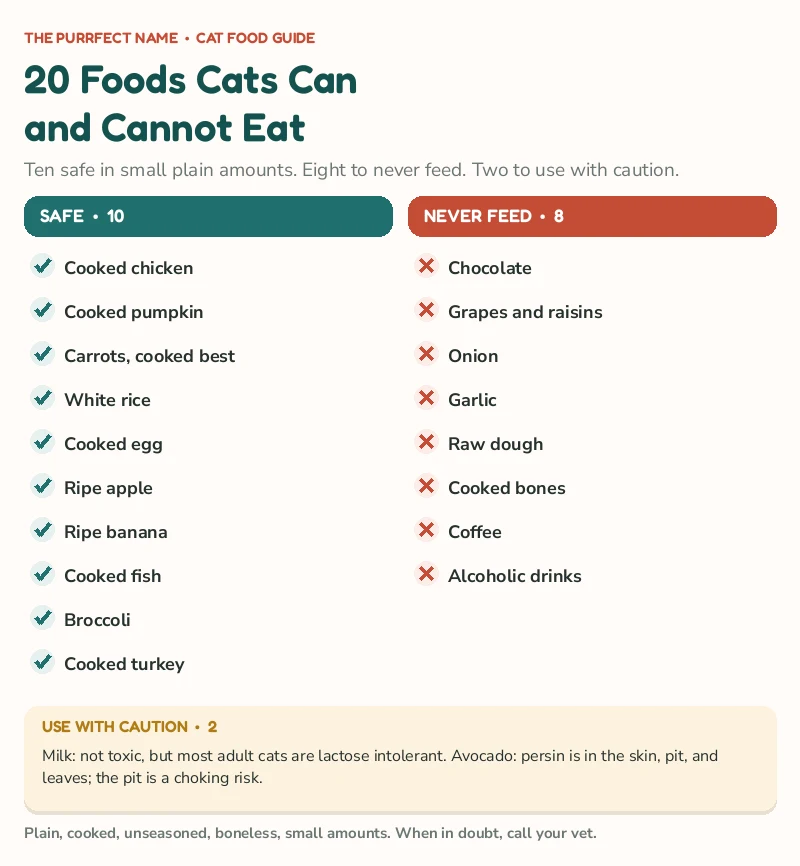
This guide sorts 20 common foods into three clear groups: 10 safe foods, 8 foods to never feed, and 2 foods to use with caution. The two caution foods are where most list articles get it wrong, so read those entries carefully.
The short answer is that complete and balanced cat food should be the whole diet. Human food is an occasional extra only, and treats and scraps together should stay at about 10 percent of the day’s calories.
Our broader guide on what cats can eat covers the same ground in a different format. Everything below is general information only and is not veterinary advice. If your cat has kidney disease, diabetes, food allergies, or a sensitive stomach, ask your vet before sharing anything from your plate.
Key Takeaways
- 10 foods are safe in small plain amounts: cooked chicken, cooked pumpkin, cooked carrots, white rice, cooked egg, ripe apple, ripe banana, cooked fish, broccoli, and cooked turkey.
- 8 foods should never be fed: chocolate, grapes and raisins, onion, garlic, raw dough, cooked bones, coffee, and alcohol.
- 2 foods sit in the middle: milk and avocado. Neither is a simple yes or no, and both are explained in full below.
- Safe means plain, cooked, unseasoned, boneless, and in a small amount. A safe food served the wrong way can still cause harm.
- If your cat eats anything from the never feed list, call your vet or ASPCA Animal Poison Control at 888-426-4435 right away, even if your cat seems fine.
The 10 Percent Rule
Cats are obligate carnivores. Their bodies are built to run on animal protein and the nutrients in a complete cat food, and almost nothing on your plate adds something they need. A treat is a kindness, not a meal, and the widely used rule is that treats should make up no more than about 10 percent of daily calories.
A spoonful of chicken is a treat. A plate of it is a diet change, and a diet change without a vet behind it is how stomach upsets and weight gain start.
Preparation matters as much as the food itself. Plain means no salt, no butter, no oil, no garlic, no onion, no sauce, and no seasoning. Cooked means fully cooked, with skin and bones removed. Small means a bite or two, not a portion. If a food needs a sauce to taste good to you, it is not a cat treat.
10 Foods Cats Can Eat
Every food below is safe only as an occasional plain treat in a small amount. None of them should replace cat food.
| Food | How to serve it | Watch out for |
|---|---|---|
| Cooked chicken | Plain, fully cooked, skin and bones removed | Seasoning, skin, and any bone |
| Cooked pumpkin | Plain pureed pumpkin, a spoonful | Raw pumpkin is hard to digest; pie filling is not pumpkin |
| Carrots | Cooked is best, soft and plain | Raw carrot is hard and can be a choking risk |
| White rice | Plain cooked rice, a small spoonful | Sauces, salt, and fried rice |
| Cooked egg | Scrambled or boiled, plain | Raw egg white, see below |
| Ripe apple | A tiny piece of plain flesh | Core, seeds, and stem must come out |
| Ripe banana | A tiny plain piece | More than a bite is too much sugar for a cat |
| Cooked fish | Thoroughly cooked, skin and bones removed | Raw fish, bones, and heavy seasoning |
| Broccoli | A tiny nibble, plain and cooked | Cheese sauce, butter, salt, and seasoning |
| Cooked turkey | Plain, fully cooked, skin and bones removed | Seasoning, skin, and any bone |
1. Cooked Chicken
Plain cooked chicken is the safest human food to share with a cat. Bake it or boil it, take the skin and all bones off, and offer a few small pieces with no seasoning. It is a fine snack because it is lean protein with nothing added, and it is the one food on this list most vets would name first.
2. Cooked Pumpkin
Plain pureed pumpkin suits a healthy cat in a spoonful. Raw pumpkin is hard to digest, so cook it first, and do not confuse plain pumpkin with pumpkin pie filling, which is sweetened and spiced. Pumpkin is a useful occasional extra, not a daily supplement.
3. Carrots
Carrots are safe, but cooked is the right way to serve them. Soft plain cooked carrot is easy to chew and easy on the stomach. Raw carrot is hard, and a cat that gulps instead of chewing can choke on a firm piece, so if you offer it raw, keep the piece tiny and watch your cat eat it.
4. White Rice
Plain cooked white rice is safe in a small spoonful. It is bland, easy to digest, and one of the foods vets often suggest for a cat with a briefly upset stomach. Fried rice, seasoned rice, and rice with sauce do not count. Plain means plain.
5. Cooked Egg
A small amount of scrambled or boiled egg is a good source of protein and a safe occasional treat. The important split is cooked versus raw. Raw egg white contains avidin, a protein that blocks the absorption of biotin, a B vitamin, and raw egg can also carry Salmonella or E. coli. Cooking destroys the avidin and kills the bacteria, which is why cooked egg is on the safe list and raw egg is not.
Our guide on whether cats can eat eggs covers the cooked versus raw question in more detail.
6. Ripe Apple
A tiny piece of plain ripe apple flesh is safe. Remove the core, the seeds, and the stem first, and skip apple pie, apple sauce, and sweet baking, which add sugar and spice a cat does not need. Cats do not need fruit, so a bite is plenty. Our guide on whether cats can eat apples has the full serving notes.
7. Ripe Banana
A tiny piece of plain ripe banana is safe. The ASPCA lists bananas among the foods that can be safely shared with pets, but cats do not need fruit and banana is sugary, so keep it to a bite. If your cat is not interested, that is normal. Most cats walk away from banana, and that is fine.
8. Cooked Fish
Most fish is fine when it is thoroughly cooked, with the skin and bones removed. A small flake of plain cooked salmon or sardines is a good treat. Raw fish carries a food safety risk, bones are a choking and injury risk, and canned fish in brine or oil with added salt is not a good choice. Plain and cooked is the whole rule.
9. Broccoli
A tiny nibble of plain cooked broccoli is safe. It should never replace cat food, and it should never come with cheese sauce, butter, salt, or seasoning. Most cats will sniff broccoli and leave it, which is also fine. It is an allowed food, not a recommended one.
10. Cooked Turkey
Plain cooked turkey follows the same rules as chicken: fully cooked, unseasoned, skin and bones removed, in a small amount. It is a useful alternative for a cat that is bored of chicken, and it is just as safe when it is served plain.
8 Foods Cats Should Never Eat
These foods range from dangerous to potentially deadly. Keep them away from your cat, and if your cat eats any of them, call your vet or a poison helpline right away. Do not wait for symptoms.
| Food | Why it is dangerous | How urgent |
|---|---|---|
| Chocolate | Theobromine and caffeine; cats clear theobromine slowly | Call a vet for any amount, darker chocolate is worse |
| Grapes and raisins | Linked to kidney damage; no known safe amount for a cat | Call a vet for any amount |
| Onion | Allium compounds damage red blood cells and cause anemia | Call a vet for any amount, including powder |
| Garlic | Same allium damage as onion; cats are more sensitive than dogs | Call a vet for any amount, including powder |
| Raw dough | Keeps rising in the stomach and produces alcohol as it ferments | Call a vet, this is an emergency |
| Cooked bones | Splinter and can choke, block, or puncture the gut | Call a vet if any bone was swallowed |
| Coffee | Caffeine overstimulates the heart and nervous system | Call a vet, including for grounds and tea bags |
| Alcohol | Depresses the nervous system fast in a small cat | Call a vet for any amount |
1. Chocolate
Chocolate contains theobromine and caffeine, and cats clear theobromine slowly, so even small amounts can build up. It can cause vomiting, tremors, seizures, and heart problems. Dark and baking chocolate carry the most theobromine and are the most dangerous, but no chocolate is safe for a cat.
2. Grapes and Raisins
Grapes and raisins are linked to kidney damage, and there is no known safe amount for a cat. The kidney link is proven in dogs, and vets treat grapes as toxic to cats too because no safe dose has ever been established. Watch for them in fruit cake, hot cross buns, trail mix, and baked goods, not just in the fruit bowl.
3. Onion
Onion damages red blood cells and can cause anemia, and cats are more sensitive to it than dogs. Raw, cooked, dried, and powdered onion are all toxic, which means stock, gravy, sauces, and baby food containing onion powder count too. A cat does not need to eat a whole onion. Even a small amount in a sauce is a reason to call a vet.
4. Garlic
Garlic carries the same allium risk as onion, and the same rules apply: every form is toxic, including powder, and cats are more sensitive than dogs. Garlic bread, seasoned meat, and sauces are the usual ways a cat meets garlic, so keep seasoned food off the cat’s plate entirely.
5. Raw Dough
Raw yeast dough keeps rising in a warm stomach, which causes painful gas and bloating, and the yeast produces alcohol as it ferments, which can lead to alcohol poisoning. It is two dangers in one food. Plain baked bread is a different matter and is not toxic, but raw dough is an emergency.
6. Cooked Bones
Cooked bones splinter, and a splinter can choke a cat, block the gut, or puncture it. This is true for chicken bones, fish bones, and every other cooked bone, including bones left in meat scraps. Raw bones are also a choking hazard. The safe rule is simple: no bones of any kind as a treat.
7. Coffee
Coffee, tea, energy drinks, and coffee grounds all contain caffeine, which belongs to the same methylxanthine family as the theobromine in chocolate. Caffeine overstimulates the heart and nervous system and can cause restlessness, a rapid heartbeat, vomiting, tremors, and seizures. Keep mugs, grounds, and tea bags out of reach.
8. Alcohol
Alcohol is dangerous for pets in small amounts, including alcohol in cakes, puddings, and rum soaked foods. It depresses the nervous system fast in a small cat and can cause brain and liver damage. Any ingestion is a reason to call a vet.
2 Foods to Use With Caution
These two foods are where most list articles get it wrong. They are not poisons, but they are not good treats either, and the reasons are different for each one.
Milk: Not Toxic, But Usually a Bad Idea
Most adult cats are lactose intolerant. Kittens produce the enzyme lactase to digest milk sugar, but most cats stop producing much of it after kittenhood, so a bowl of milk often ends in stomach upset, gas, bloating, and diarrhea.
Small amounts will not poison a cat, and that is the correction that matters: milk is not toxic, it is just a poor fit for an adult cat’s gut. If you want to offer a milky treat, lactose free milk or plain yogurt in a tiny amount is the kinder choice, and if your cat gets an upset stomach from dairy, stop offering it.
Avocado: The Honest Nuance
Avocado is the most argued about food on this list, and the honest answer is that the flesh is not toxic to cats the way it is to birds, but avocado is still not a good food for a cat. The toxin persin sits mainly in the skin, the pit, and the leaves. The flesh carries far less of it, and avocado based pet foods have been sold for years with no reported problems in cats and dogs.
At the same time, the ASPCA lists avocado among the people foods to avoid feeding pets, the flesh is very fatty, and the pit is a choking and obstruction risk. So the honest position is this: a tiny lick of flesh is unlikely to poison a cat, but there is no good reason to feed avocado to one, and the pit and skin should never be in reach. Do not offer it as a treat.
What to Do If Your Cat Eats Something Toxic
Do not wait for symptoms. Call your vet, the ASPCA Animal Poison Control Center at 888-426-4435, or the Pet Poison Helpline at 855-764-7661 right away. Both helplines answer around the clock and may charge a consultation fee. Have the packaging nearby and be ready to say what your cat ate, how much, and when.
Do not try to make your cat vomit unless a vet or poison control tells you to, because that can cause more harm. Note that no reliable source in our research gives a cat specific safe dose for chocolate, grapes, onion, or garlic, so this article gives none. When in doubt, the call is the answer.
Two more items deserve a mention even though they are not counted in the 20 above. Xylitol, the sweetener in sugar free gum, candy, and some peanut butters, can cause a dangerous drop in blood sugar and liver injury, and any amount is an emergency. True lilies and daylilies are not food, but any exposure to them, even pollen groomed off fur or water from the vase, can cause acute kidney failure in cats and needs immediate vet care.
Frequently Asked Questions
Can cats eat chicken every day?
Plain cooked chicken is safe as a treat, but it is not a complete diet on its own. Cat food should stay the main meal, with treats at about 10 percent of daily calories. A cat fed mostly on chicken will miss nutrients that only a balanced cat food provides.
Can cats drink milk?
Most adult cats are lactose intolerant, so milk usually causes stomach upset. Small amounts are not toxic, but there is no benefit to offering it. Lactose free milk or plain yogurt in a tiny amount is better tolerated if you want to offer a dairy treat.
Can cats eat avocado?
It is best not to. The flesh is not clearly toxic to cats the way it is to birds, but the ASPCA lists avocado among foods to avoid, the flesh is very fatty, and the pit is a choking and obstruction risk. There is no good reason to feed it.
What should I do if my cat eats chocolate?
Call your vet or ASPCA Animal Poison Control at 888-426-4435 right away, even if your cat seems fine. Say what kind of chocolate it was, how much, and when. Do not wait for symptoms, and do not try to make your cat vomit unless you are told to.
Are grapes really dangerous for cats?
Yes, treat them as toxic. Grapes and raisins cause kidney failure in dogs, and no safe amount has ever been established for a cat, so vets advise keeping them away from cats entirely. Any amount is a reason to call a vet.
The Bottom Line
Ten foods are safe in small plain amounts, eight should never be fed, and two need caution. The safe list is short on purpose: chicken, pumpkin, carrots, rice, egg, apple, banana, fish, broccoli, and turkey, all plain, all cooked where cooking applies, all in a bite or two.
The never list is the one to memorize: chocolate, grapes and raisins, onion, garlic, raw dough, cooked bones, coffee, and alcohol. And the two cautions are the ones this guide corrects: milk is not poison, it is a stomach upset waiting to happen, and avocado flesh is not clearly toxic to cats, but it is still not a treat worth offering. When in doubt, keep it off the plate and call your vet.