
Maine Coon: Breed Guide, Size, Temperament & Best Names
The Maine Coon is the cat that makes visitors stop mid-sentence. Part of it is the size: males can push past 20 pounds, with a bushy tail like a feather duster and tufted ears that give them a faintly wild look. But the real surprise is the personality. For all that bulk, the Maine Coon is famously gentle, sociable, and just dog-like enough to greet you at the door, follow you around, and learn to play fetch.
This is one of the oldest natural breeds in North America, built by harsh Maine winters into a shaggy, hardy, water-resistant cat. If you want a big cat with a bigger heart, start here. The other heavyweight worth meeting is the Turkish Van, a slow-maturing swimmer from eastern Turkey that takes just as long to fill out.
History: The Cat of Maine
📖 Breed History
The Maine Coon's exact origins are debated, which has never stopped anyone from telling a good story. The most likely explanation is also the least dramatic: longhaired cats brought to New England by European sailors bred with local domestic cats over generations, and the harsh Maine winters did the rest, selecting for thick coats, tufted paws, and sturdy builds.
The dramatic versions involve Vikings and Marie Antoinette's cats. They are fun, and they are unconfirmed. The bushy ringed tail of the brown tabby even prompted a theory that cats had mated with raccoons, the supposed source of the "Coon" name, though CFA notes that combination is genetically impossible. What is documented: Maine Coons were working farm cats and mousers in the 1800s, appeared in some of America's earliest cat shows, a brown tabby named Cosey was chosen Best Cat at the first U.S. cat show in 1895 (CFA), faded when exotic imports stole the spotlight, and roared back in the second half of the 20th century, earning CFA Championship status in 1976. Today the Maine Coon is the official state cat of Maine and one of the most popular pedigreed breeds in the world.
Appearance: Built for Winter
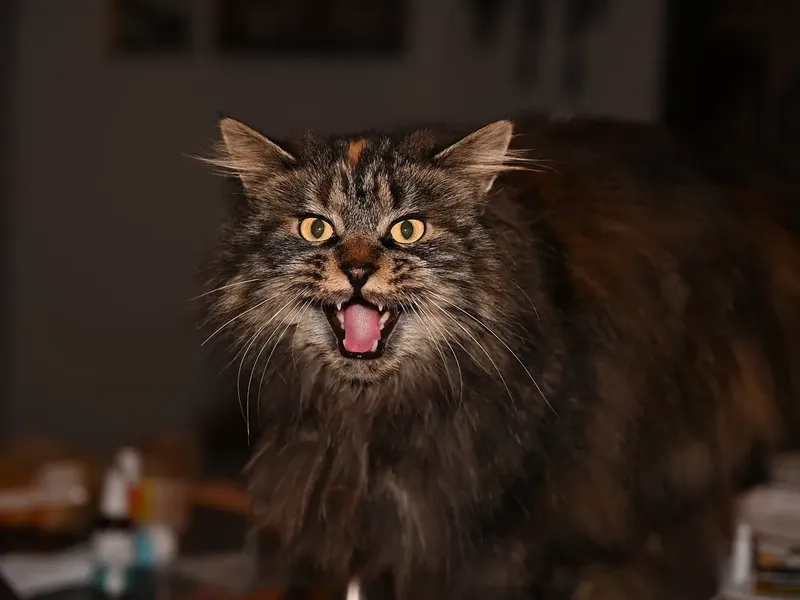
Everything about the Maine Coon says "designed by a blizzard." The coat is long to medium, silky, and dense, with a water-resistant outer layer, a ruff around the neck like a lion's mane, and a long bushy tail the cat can wrap around itself like a blanket. Ears are large with lynx-like tufts at the tips; paws are big, round, and tufted between the toes for walking on snow. Maine Coons are also famously polydactyl: many are born with extra toes, a harmless quirk inherited from the breed's early farm-cat population (PetMD).
They come in a huge range of colors and patterns: brown tabby is the classic, but solids, bicolors, torties, and smokes are all common. Size is the headline: this is one of the largest domestic breeds, and they take their time about it, reaching full size at three to five years old, far slower than most cats.
Temperament & Personality: The Dog of the Cat World
"Gentle giant" gets thrown around a lot, but the Maine Coon earns it. These are big, confident, sociable cats: they greet visitors, follow their people from room to room, and take a friendly interest in household activity without being pushy. They are present, not clingy.
They stay playful far longer than most breeds, well into adulthood. Many learn to play fetch, enjoy puzzle feeders, and communicate in chirps and trills rather than standard meows. A surprising number are fascinated by water, dipping paws in bowls and supervising running taps. With children, dogs, and other cats, they are famously tolerant, which is why they top so many family-breed lists. TICA describes a clown-like personality: a Maine Coon will happily 'help' with whatever you are doing, without being demanding about it.
Care & Grooming
The coat is beautiful and it is work. Plan on brushing two to three times a week, more during spring shedding, to prevent mats and hairballs. The silky texture resists tangling better than a Persian's coat, but "better" is not "immune." Regular nail trims and ear checks round out the routine: keep those big ears clean and dry, especially after a bath or a splash in the sink, to head off ear infections (PetMD).
Maine Coons are big, active cats with big appetites. Feed for their size: offer extra-wide bowls, since PetMD notes the breed has the longest whiskers of any domestic cat and deep bowls can cause whisker fatigue, and keep them moving: two or three interactive play sessions of 10 to 15 minutes a day, plus climbing furniture and puzzle toys, suit their curious, athletic nature. An under-exercised Maine Coon may redirect its energy into excessive vocalisation or furniture scratching (PetMD). They are not delicate apartment ornaments; they are working-cat descendants who like a job, even if the job is supervising yours.
Health Notes
Maine Coons are generally hardy, but the breed carries known predispositions, most notably hypertrophic cardiomyopathy (HCM, a heart condition) and hip dysplasia. Also on the breed's list are spinal muscular atrophy, a neurological condition whose signs typically appear in kittens at three to four months old; polycystic kidney disease (PKD); and chronic gingivitis, with Maine Coon kittens prone to a juvenile form: daily tooth brushing is the best prevention (PetMD). DNA tests exist for HCM and PKD, and CFA notes that breeders test for hip dysplasia by x-ray and for HCM via saliva tests and echocardiograms; PetMD calls an annual echocardiogram the gold standard of preventive care. Responsible breeders screen their breeding cats, and any buyer should ask about health testing directly. Keep up regular veterinary checkups, watch weight (big frames hide extra pounds), and keep the cat indoors or supervised. These are general, widely published breed notes, not medical advice; your vet is the authority on your cat.
Best Names for a Maine Coon
Names that fit a giant, gentle, northern cat. Every meaning below comes from our name database; inspiration-only picks are described honestly, with no invented translations.
Frequently Asked Questions
How big do Maine Coons get?
Males typically reach 13-18 pounds, with some exceeding 20; females are usually 8-12 pounds. They grow slowly, reaching full size at three to five years old. Up to 40 inches nose to tail is common in large males. The closest size rival from the Mediterranean is the Aphrodite Giant of Cyprus, another slow-growing natural breed whose males reach 15 to 18 pounds.
Are Maine Coons good family cats?
Yes, they are among the best. Gentle, sociable, tolerant of children and other pets, and playful well into adulthood. They are "near-you" cats rather than lap cats: present and affectionate without being demanding.
Do Maine Coons need a lot of grooming?
Moderate to high. Brush two to three times a week, daily during spring shedding. Their silky coat resists matting better than some longhairs, but regular brushing is still non-negotiable.
Why do Maine Coons chirp and trill?
It is a breed trait. Instead of the standard meow, many Maine Coons communicate with chirps, trills, and chatters. It is one of the breed's most charming signatures, and owners tend to find it conversational.
Do Maine Coons like water?
Many do, unusually for cats. Paw-dipping, tap-supervising, and general water fascination are widely reported. The water-resistant coat is part of the breed's working heritage in snowy Maine.
What two breeds make a Maine Coon cat?
None: the Maine Coon is a natural landrace, not a cross of two pedigree breeds. It developed in New England from the longhaired cats European sailors brought with them, bred with local domestic cats and shaped by harsh winters (CFA), much like the British Shorthair, another native landrace.
Are Maine Coons hypoallergenic?
No. No cat breed is truly hypoallergenic: the main allergen is in saliva and skin glands, not fur. A Maine Coon's long, dense coat sheds and spreads dander, so allergy sufferers should spend time around the breed before committing.
By Brianna Baxter
Featured photo: Photo: Nortlio, CC BY-SA 4.0, via Wikimedia Commons.
The Maine Coon is one of America’s original farm cats, a role it shares with New York’s York Chocolate. Compare it with its two biggest rivals in Maine Coon vs Ragdoll and Maine Coon vs Norwegian Forest Cat.