
Tabby Cats: The Four Patterns, Genetics & What Makes a Tabby
First, the most important sentence in this guide: tabby is a pattern, not a breed. Your tabby might be a Maine Coon, an Abyssinian, a Bengal, or a glorious random-bred cat from the shelter, but the stripes (or swirls, or spots) are a coat pattern that appears across dozens of breeds and most of the world's mixed cat population. It is also the oldest pattern in the book: the wild ancestor of every house cat wore mackerel stripes.
Once you know what to look for, you will start seeing tabbies everywhere, and reading their coats like a field guide. Here is how.
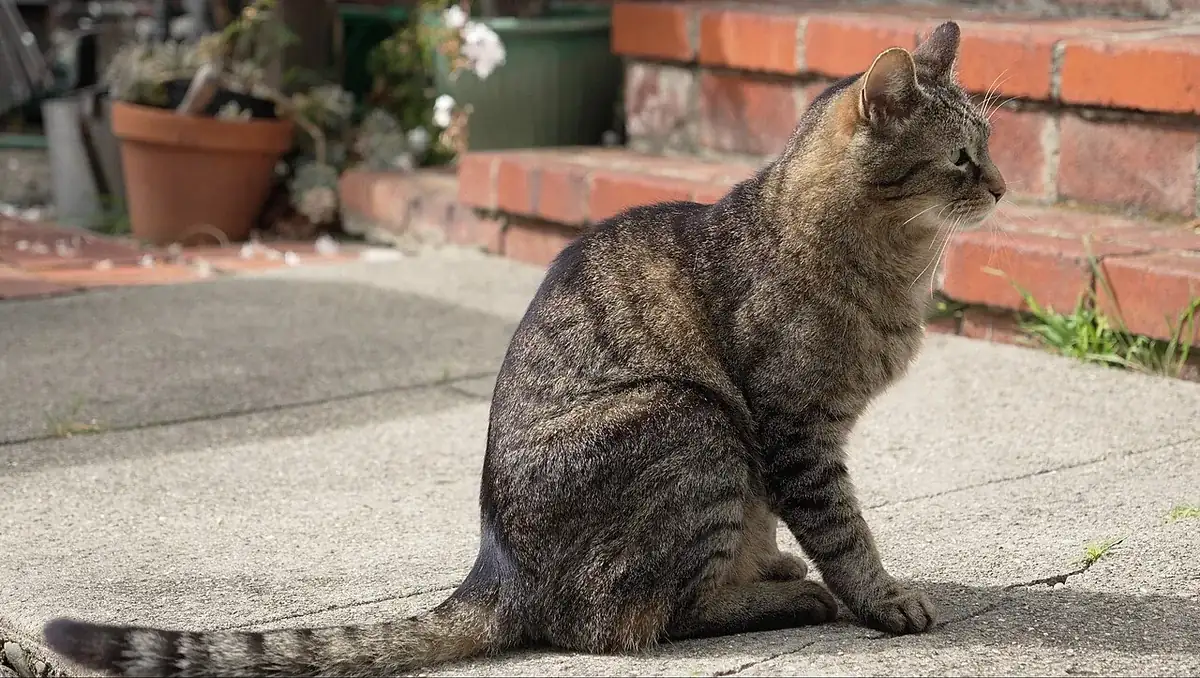
The Four Tabby Patterns
Every tabby wears one of four patterns. Learn the four and you can identify any tabby in ten seconds.
Mackerel: The Fishbone
Thin, vertical stripes running down the sides, gently curving like the skeleton of a fish, which is exactly where the name comes from (the mackerel fish). This is the wild type: the pattern worn by the African wildcat, the ancestor of domestic cats, and still the most common tabby pattern in the random-bred population. If a tabby looks like it was drawn with a fine pen, it is mackerel.
Classic: The Bullseye
Also called blotched. Thick, swirling bands and whorls along the sides, often forming a distinct circular "bullseye" or oyster-shell shape on each flank. Bold, marbled, dramatic: if mackerel is a pencil sketch, classic is oil paint. The classic pattern is recessive, which leads to a neat genetic fact we will get to below.
Spotted: The Broken Stripes
The mackerel stripes, broken into spots. Spots can be round or oval, large or small, arranged in rows or scattered, and they appear famously in breeds like the Bengal, the Egyptian Mau, and the Ocicat, where breeders selected for the clearest spotting. A spotted tabby is essentially a mackerel tabby whose stripes were interrupted.
Ticked: The Salt-and-Pepper
No stripes on the body at all. Instead, each individual hair is banded with alternating light and dark colors, giving the coat a shimmering, sand-like, salt-and-pepper look. Faint striping usually remains on the face, legs, and tail. This is the Abyssinian and Somali signature, and it is fixed in the Singapura too. Up close it looks like the coat is glowing from within.
Every tabby, regardless of pattern, wears the famous "M" on the forehead, plus eyeliner-like markings around the eyes and striped legs and tail. Folklore has tried to claim the M for centuries: stories credit the Prophet Muhammad, the Virgin Mary, or the ancient Egyptian word for cat, "mau." They are lovely legends. They are legends.
Tabby Genetics in Plain Language
You do not need a biology degree for this, just three ideas.
1. The Agouti switch decides whether you see stripes at all. Every cat carries tabby-pattern genes, but a gene called Agouti controls whether the pattern shows. If the dominant Agouti version is present, individual hairs get banded with alternating pigment and the pattern appears. If a cat inherits two copies of the recessive version (non-agouti), the pattern is masked and the coat looks solid. That is why your "solid" black cat was born with faint ghost stripes, and why those ghost markings sometimes reappear in bright sunlight: the pattern genes are still there, just hidden.
2. The pattern gene picks which stripes. Once Agouti says "show the pattern," the tabby-pattern gene (Taqpep) picks the style. The mackerel version is dominant; the classic version is recessive. Consequences: two classic tabbies can never produce mackerel kittens, but a mackerel carrying a hidden classic copy can absolutely produce classic kittens. The spotted pattern comes from a separate modifier gene that breaks mackerel stripes into spots. The ticked version is dominant over both mackerel and classic and masks them entirely, which is why ticked breeds breed true for the look.
3. Orange breaks the rules. The orange gene sits on the X chromosome and masks the non-agouti solid effect, which means every orange cat is visibly a tabby, no exceptions. That orange "solid" cat does not exist; look closely and the stripes are always there. A separate dominant gene, the melanin inhibitor, washes pigment out of the hair shafts and creates the silver tabby.
One more delight from the research: a 2010 study traced the tabby patterns to the Taqpep gene, and the ticked coat to a gene called DKK4. Your cat's stripes are, at some level, a DKK4 art project.
Tabby Colors
Pattern is the design; color is the paint. Tabbies come in brown/black (the default), silver (black on a shimmering pale background), blue (soft grey stripes), cream and red/orange (always visibly striped, per the rule above), and the dilute and warm variants like cinnamon and fawn seen in pedigreed cats. A "brown tabby" is simply a black-patterned tabby on a warm agouti background: the most common cat coat on earth.
Tabbies Across Breeds
Because tabby is a pattern, it shows up nearly everywhere, but some breeds are defined by it. The Abyssinian and Somali are the ticked-tabby icons. The Bengal made the spotted/rosetted tabby famous. The Egyptian Mau is the only naturally spotted domestic breed. The Maine Coon, American Shorthair, Scottish Fold, Pixiebob, and Ocicat all come in classic tabby versions, and the Manx, Oriental Shorthair, and Persian families all accept tabby patterns. If you love stripes, you will never run out of breeds to admire.
Living With a Tabby
The honest truth: the pattern tells you nothing about personality. A tabby's temperament comes from its breed, its upbringing, and its own private cat logic, not its stripes. Care is equally pattern-neutral: groom according to coat length (a longhaired classic tabby needs more brushing than a shorthaired mackerel), feed for the individual cat, and play daily. The stripes are decoration. Glorious, ancient, wildcat-approved decoration.
Best Names for a Tabby
Stripes, spots, spice, and wildcat energy: tabby names should have some texture.
| Name | Meaning | Good for | |
|---|---|---|---|
| Agate | banded gemstone | Striped stone for the striped cat. Almost too perfect. | |
| Brindle | streaked, spotted coat marking | Literally means a streaked coat. The most on-the-nose name here, worn proudly. | |
| Lynx | lynx | The wild spotted cat, for the tabby with an untamed glint. | |
| Hobbes | diminutive of Robert | Calvin's tiger best friend, for the classic tabby with main-character energy. | |
| Jasper | possibly 'treasurer' | Warm and old-fashioned for the brown tabby gentleman. | |
| Marble | marble stone | For the classic tabby whose swirls look carved. | |
| Tawny | tan-colored | The exact color of so many mackerel coats. | |
| Freckle | small brown spot | Sweet and funny for the spotted tabby girl. | |
| Nutmeg | musk nut | Warm spice for the warm brown coat. | |
| Cinnamon | sweet bark spice | For the reddish tabby who smells like autumn (metaphorically). | |
| Cedar | cedar tree | Sturdy and woodsy for the big striped boy. | |
| Garnet | garnet gemstone | Deep red stone for the richly colored tabby. | |
| Alder | Old English alor: alder tree | Quietly handsome for the understated striped cat. | |
| Carnelian | reddish-orange gemstone | Glowing amber for the orange tabby girl. | |
| Clove | nail | Dark spice, small and sharp, for the petite tabby. | |
| Comet | kometes: long-haired star | For the tabby who streaks across the room at 3 a.m. | |
| Bolt | arrow | Fast, straight, and striped like lightning. | |
| Matilda | strength in battle | Sturdy vintage charm for the formidable tabby queen. | |
| Aurora | dawn | For the silver tabby who glows at first light. | |
| Nebula | nebula: mist or cloud | Cosmic and soft for the ticked tabby's shimmering coat. | |
| Nova | new | Bright and sudden, for the kitten who exploded into your life. | |
| Echo | sound | For the tabby whose stripes seem to repeat like a pattern. | |
| Lyra | lyre | Musical and delicate for the graceful girl. | |
| Onyx | claw | Dark and sleek for the bold black-striped tabby. |
For hundreds more stripe-worthy ideas, see our tabby cat names list, our orange cat names for red tabbies, or let the cat name generator surprise you.
Frequently Asked Questions
Is tabby a breed?
No. Tabby is a coat pattern found in most breeds and in random-bred cats. Saying "my cat is a tabby" describes the coat, like saying a dog is "spotted."
What are the four tabby patterns?
Mackerel (thin fishbone stripes), classic/blotched (thick swirls with a bullseye), spotted (broken stripes into spots), and ticked (salt-and-pepper banded hairs, no body stripes).
Why do all tabbies have an M on their forehead?
It is part of the tabby pattern's facial markings, present in every tabby. The legends about its origin (Muhammad, Mary, "mau") are folklore, not history.
Are all orange cats tabbies?
Yes. The orange gene masks the solid-coat effect, so every orange cat shows a visible tabby pattern, even when it looks nearly solid at a glance.
What is a ghost tabby marking?
Faint tabby stripes visible on solid-colored cats, especially kittens or in bright sunlight. All cats carry tabby-pattern genes; the non-agouti gene just masks them.
Do tabby cats need special care?
No. Pattern does not affect health or care needs. Groom by coat length, feed for the individual, and give every tabby the play and company any cat deserves.
What is a patched tabby cat?
A patched tabby wears tabby striping on top of a tortoiseshell or calico coat, so the stripes show through the coloured patches. With tortoiseshell patches she is a torbie, short for tortoiseshell-tabby, and with calico patches she is a caliby. Look closely and you can read the pattern inside each patch: mackerel lines running through the black fur and the ginger fur alike, plus the usual tabby M on the forehead. Because the black-and-orange patchwork needs two X chromosomes, patched tabbies are almost always female, and the rare male is usually sterile.
How long do tabby cats live?
As long as any other domestic cat, because the pattern itself has no effect on health or lifespan. A typical indoor tabby lives around 13 to 17 years, and plenty reach their late teens or early twenties. What actually decides lifespan is everything except the stripes: breed, indoor or outdoor life, weight, dental care and regular vet checks. Outdoor cats face traffic and fights and usually live shorter lives, so the longest-lived tabbies are generally indoor cats whose owners keep up the boring basics.
Are tabby cats good house cats?
Yes, and most pet cats are tabbies, from pedigree kittens to shelter random-breds. There is no tabby temperament, though: personality comes from breed, early socialisation and the individual cat, so one tabby will be a bold lap cat who loves being held while the next prefers company from the back of the sofa. The idea that tabbies are especially friendly and confident is really the idea that ordinary cats are, because tabbies are the ordinary cat. Meet the individual, not the pattern, and choose the cat whose energy fits your home.
By Brianna Baxter
Featured photo: Photo: Worrydream, CC BY-SA 4.0, via Wikimedia Commons.