
Siberian Cat: Russia’s Triple-Coated Gentle Giant
Russia's national cat looks like it was conjured from a fairy tale: a big, round-cheeked forest cat in a magnificent triple coat, built to shrug off Siberian winters. Then it plays fetch, chirps at you in a whole vocabulary of trills, and follows you to the sink to supervise the dishes. The Siberian is the rare breed that delivers both the majestic look and the goofy, devoted personality.
It is also the breed at the center of the cat world's most repeated claim: hypoallergenic. We will give you the honest version of that story below, because you deserve it before you fall in love. Spoiler: the allergy advantage is real, and the word "hypoallergenic" is doing more work than it should.
History
📖 Breed History
The Siberian is a true landrace: a natural breed shaped by the forests of Russia over centuries, with mentions reaching back roughly a thousand years. Known at home as the Moscow Semi-longhair, these were the hardy farm and forest cats of Russian life long before anyone wrote a breed standard.
Formal recognition came remarkably late. A handful of breeders began standardizing the breed in the late 1980s, the first cats left St. Petersburg for Germany around the same time, and the first Siberians arrived in the United States in 1990. Championship recognition followed: TICA in the late 1990s, CFA in the 2000s, plus FIFe and GCCF. From thousand-year forest cat to pedigreed breed in a single generation: the Siberian is old soul, new paperwork.
Appearance
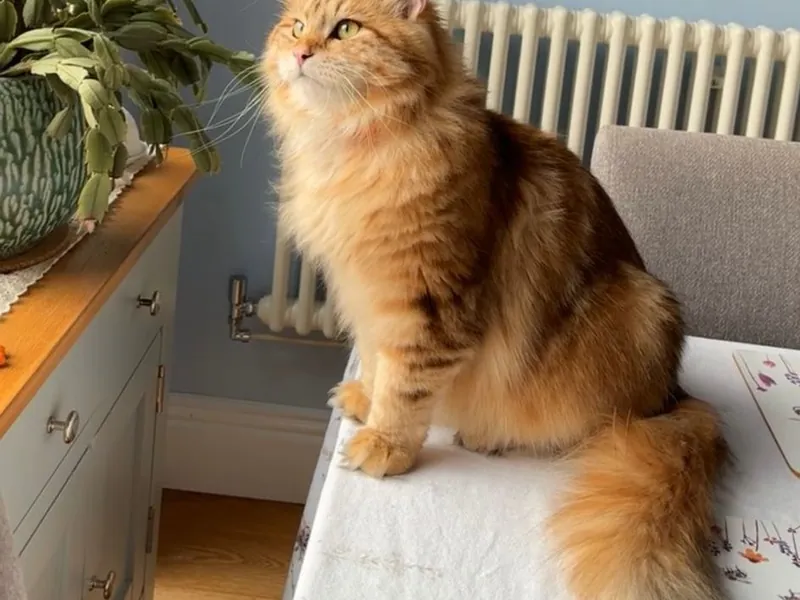
Large, powerful, and round in all the right places: a barrel chest, a broad modified wedge head with full cheeks, and hind legs slightly longer than the front, which gives the Siberian its famously athletic jump. Ear tufts, a magnificent neck ruff, feathery britches, and a long bushy tail complete the forest-cat silhouette.
The coat is triple-layered: dense downy undercoat, a middle awn layer, and water-resistant guard hairs on top. It grows dramatically thicker in winter and sheds heavily in the spring molt. Siberians come in all Western colors and patterns, tabby to solid to colorpoint. Eyes are typically green, gold, or copper, with blue or odd eyes possible in whites and colorpoints. Like the Wegie, this is a slow-maturing breed: many do not reach full size until around five years old, and they stay kittenish nearly as long.
Temperament & Personality
The Siberian's personality is the reason people become lifers. These are affectionate, social, deeply loyal cats with famously dog-like habits: following their people from room to room, greeting them at the door, and playing enthusiastic games of fetch. They are intelligent problem-solvers who enjoy puzzles and learning routines, and they stay playful far into adulthood.
They are also charmingly vocal in a soft way: chirps, trills, and a distinctive purring chatter rather than demanding yowls. Many Siberians are fascinated by water, a legacy of that water-resistant coat, and may join you at the sink or shower just to investigate. They are generally excellent with children and other pets, adaptable to active households, and can be briefly reserved with strangers before deciding you are acceptable.
Care & Grooming
Here is the pleasant surprise: despite the magnificent coat, Siberian fur is naturally resistant to matting compared with many longhaired breeds. It still needs regular brushing, a few times a week, and daily attention during the heavy spring and fall sheds, when the undercoat lets go in earnest. A de-shedding routine in molt season keeps both the cat and your furniture happier.
This is an athletic, high-jumping breed, so provide tall, sturdy climbing structures and daily interactive play: fetch, wand toys, puzzle feeders. The water fascination means you should get used to a supervisor at the sink. Keep meals measured as the slow-maturing frame fills out over five years, and give this social breed plenty of company and interaction.
Health Notes
The Siberian is generally a hardy, robust breed, as you would expect from a natural landrace, with a typical lifespan of 11 to 15 years (Purina). As with any large breed, responsible breeders screen their cats' hearts for hypertrophic cardiomyopathy (HCM), and regular veterinary checkups are the owner's part of the bargain. Now the allergy question, honestly: Siberians are noted for producing lower levels of Fel d 1, the main cat allergen protein, and many allergy sufferers report reacting less to them. But no cat is truly hypoallergenic, individual cats vary, and the only real test is spending time with the actual cat before committing. Do not buy the marketing; meet the cat.
Best Names for a Siberian
A Russian forest giant deserves a Russian name with winter in it. All meanings verified in our name database. For more ideas, browse all our cat breeds or try the cat name generator.
Frequently Asked Questions
Are Siberian cats really hypoallergenic?
Not truly, no cat is. Siberians are noted for producing lower levels of the Fel d 1 allergen protein, and many allergy sufferers tolerate them better than other breeds. But levels vary by individual cat, so spend real time with the specific cat before committing.
How big do Siberian cats get?
Adults typically weigh 10-20 lb, with males substantially larger than females (often 13-20+ lb). They mature slowly and may not reach full size until around five years old.
Do Siberian cats need a lot of grooming?
Less than you would guess from the coat: the fur resists matting naturally, so a few brushings a week usually suffice, with daily brushing during the heavy seasonal sheds in spring and fall.
Are Siberians good with kids and other pets?
Yes, they are one of the better family breeds: playful, patient, adaptable, and generally good with children, other cats, and cat-friendly dogs.
Why does my Siberian like water?
The water-resistant triple coat is a legacy of surviving Russian winters, and many Siberians retain a fascination with running water. Sink supervision is normal breed behavior.
What is the difference between a Siberian and a Norwegian Forest Cat?
Both are large, cold-climate natural breeds, but the Siberian is rounder overall with a triple coat and hails from Russia, while the Norwegian Forest Cat has a more triangular head, a double coat, and Viking-era Norwegian roots. Siberians also tend to be the more dog-like and water-obsessed of the two.
By Brianna Baxter
Featured photo: Photo: Floofymarshmallow, CC BY-SA 4.0, via Wikimedia Commons.
The Siberian’s colourpoint variety is recognised separately as the Neva Masquerade, and it shares its natural-breed roots with hardy landrace cats such as the Turkish Vankedisi of eastern Turkey.