
Exotic Shorthair Cat: The Persian in Pyjamas, Breed Guide
The Exotic Shorthair is the answer to a question every cat lover has asked at least once: what if the Persian, with that round face and those enormous eyes, came in a coat you did not have to brush every single day? In the 1960s, American breeders set out to build exactly that cat, and the result is one of the most popular pedigreed cats in the world: all the Persian sweetness, in a plush, teddy-bear package.
Exotics are the quiet achievers of the cat fancy. They show beautifully, they live comfortably in apartments, and they have perfected the art of looking slightly grumpy while being utterly devoted. If you want a Persian soul without the Persian grooming schedule, start here.
History
📖 Breed History
The Exotic Shorthair was developed in the United States in the 1960s. Breeders crossed Persians with American Shorthairs (with Burmese and Russian Blues contributing to some lines) with a specific goal: keep the Persian's cobby body, round head, and sweet expression, but replace the long, high-maintenance coat with a short, dense one.
The Cat Fanciers' Association recognised the breed in 1966, and the Exotic has been climbing popularity charts ever since. The breed is recognised by major registries including CFA and TICA. The nickname stuck early and has never left: the Persian in pyjamas, or the lazy man's Persian. Exotics quickly became darlings of the show bench, where their plush coats and doll faces win kitten classes with remarkable consistency.
Appearance
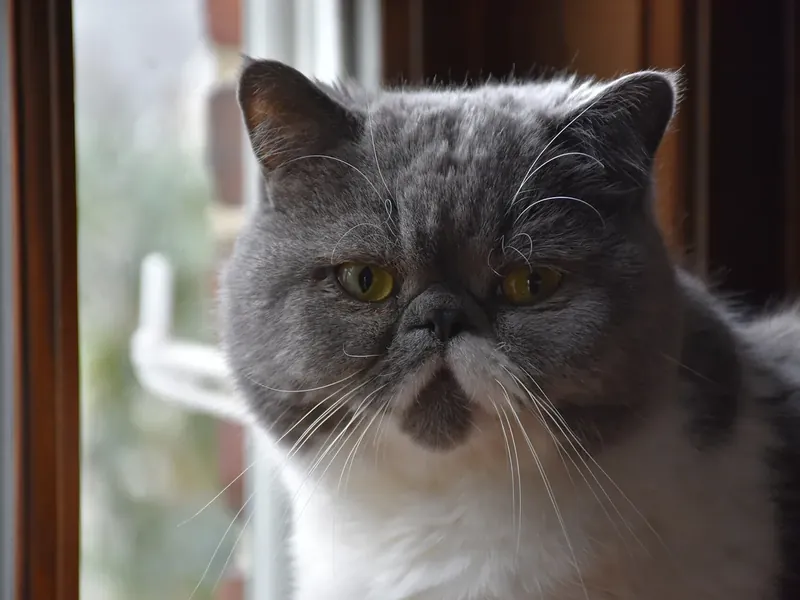
An Exotic Shorthair is a Persian in everything but coat length. The body is cobby: medium-sized, low to the ground, broad-chested, with massive shoulders and a short, thick neck. The head is massive and round, with a broad skull, full cheeks, a short snub nose, and large, round, wide-set eyes that give the breed its famously sweet (and famously unimpressed) expression.
The coat is the whole point: short, dense, plush, and slightly longer than a typical shorthair's, with a thick undercoat that stands the fur up and out. It feels like velvet over a teddy bear. Exotics come in the full Persian palette: solids, tabbies, bicolors, silvers, smokes, and pointed patterns.
Temperament & Personality
The Exotic inherited the Persian's calm, gentle nature and added a little extra sparkle. They are quieter and more easygoing than most breeds, deeply affectionate once they trust you, and famously loyal lap cats. Expect your Exotic to follow you from room to room, not because they are needy, but because they have decided your lap is their favorite place in the house.
They are livelier and more playful than Persians, with a genuine love of interactive toys and the occasional dramatic chase around the furniture. They tend to be accepting of strangers once they feel secure, and they get along well with children, other cats, and calm dogs. Their voice is soft: a gentle meow, a steady purr. An Exotic rarely demands; it simply appears, round and hopeful, wherever you happen to be sitting.
Care & Grooming
The short coat is easier than a Persian's, but it is not wash-and-wear. Brush or comb once or twice a week to remove loose hair and keep the dense undercoat from packing down. During shedding seasons, a little extra attention keeps the furniture (and the hairballs) under control.
The face needs daily care. That flat profile means tears collect around the big eyes, so wipe the eye area gently with a damp, soft cloth each day to prevent staining. Keep up with the usuals: nail trims every couple of weeks, regular dental care, and ear checks. Exotics are indoor cats by temperament and by design; their calm nature suits apartment living perfectly, provided they get daily interactive play to keep their weight in check.
Health Notes
Exotics are generally sturdy cats, but their flat faces bring the usual brachycephalic considerations: snoring, noisy breathing, and watery eyes are common in the breed. The typical Exotic Shorthair lifespan is 8 to 15 years (PetMD, 2024). Responsible breeders screen for polycystic kidney disease (PKD), which occurs in Persian-family lines, and dental crowding from the shortened jaw is worth watching. Keep an eye on weight, since a calm cat with a round body can drift toward chubby. Regular veterinary checkups catch all of this early. (General information only, not veterinary advice.)
Best Names for an Exotic Shorthair
An Exotic deserves a name with two sides, just like the cat: Persian royalty on one side, teddy-bear softness on the other.
Frequently Asked Questions
Are Exotic Shorthairs really low maintenance?
Lower maintenance than a Persian, yes; low maintenance overall, no. The coat needs weekly brushing, but the face needs daily eye care, and dental and weight management are ongoing. Think "easier Persian," not "easy cat."
Do Exotic Shorthairs shed a lot?
They shed a moderate amount. The dense double coat drops hair year-round, with heavier seasonal shedding. Weekly brushing keeps it manageable.
Are Exotic Shorthairs good with kids?
Yes. Their calm, tolerant, affectionate nature makes them one of the better pedigreed choices for families with children, provided the kids are gentle.
Do Exotic Shorthairs have breathing problems?
Their flat faces can mean snoring and noisy breathing, which is common in the breed. Labored or open-mouth breathing is never normal and warrants a vet visit promptly.
Are Exotic Shorthairs lap cats?
Famously so. They are devoted, people-oriented, and happiest in close contact with their humans. Expect a warm, heavy, purring paperweight.
What is the difference between an Exotic Shorthair and a Persian?
Build, face, and personality are essentially the same; the coat is the difference. The Exotic's short, dense, plush coat needs brushing once or twice a week instead of daily, which is the entire reason the breed exists.
By Brianna Baxter
Featured photo: Photo: Dmitry Brant, CC BY-SA 4.0, via Wikimedia Commons.