
Abyssinian Cat: The Ticked-Coat Athlete with Endless Curiosity
The Abyssinian looks like it walked out of an Egyptian tomb painting: tall ears, almond eyes, a slender athletic body, and a coat that shimmers with bands of color. Then it opens a cupboard, climbs to the top of your bookshelf, and perches on your shoulder to supervise the cooking. This is not a cat that decorates the sofa. It has been called the Border Collie of cats, and the nickname is honest: endlessly curious, athletic, intelligent, and busy. For names that fit that energy, the Abyssinian cat names list has 11 verified picks.
An honest Abyssinian profile leads with the energy, because the coat is the easy part and the energy is what you actually sign up for. If you want a cat that participates in your life at full volume, keep reading. If you wanted a placid lap ornament, the Aby will lovingly disappoint you.
History
📖 Breed History
The Abyssinian's name is a Victorian label, not a birth certificate. The most-told story starts in 1868, when a British soldier returned from the Abyssinian War (in what is now Ethiopia) with a kitten named Zula, often called the grand dame of the modern breed. Cats matching the type were exhibited in England in the 1870s, and British breeders refined the slender, ticked-coat cat into the breed we know today.
The romance says ancient Egypt, and the resemblance to cats in Egyptian art is genuinely striking. The genetics are murkier: modern research points toward the Indian Ocean and Southeast Asia for the breed's deeper background. What is certain is that the breed was developed and perfected in Britain, became one of the earliest recognized breeds, and today ranks among the most popular shorthairs in the world. Be wary of anyone selling "guaranteed ancient Egyptian blood": the history is fascinating without the sales pitch. The Egyptian Mau is the breed most directly tied to that ancient-Egyptian look. The Abyssinian also helped found the Chausie, the jungle-cat hybrid breed, where its ticked coat and athletic build were exactly what breeders wanted. It was not the only breed to borrow the ticked look: the Singapura, one of the world’s smallest cat breeds, wears a sepia-toned ticked coat so reminiscent of the Abyssinian’s that its 1987 import papers reportedly listed the foundation cats as Abyssinians.
Appearance
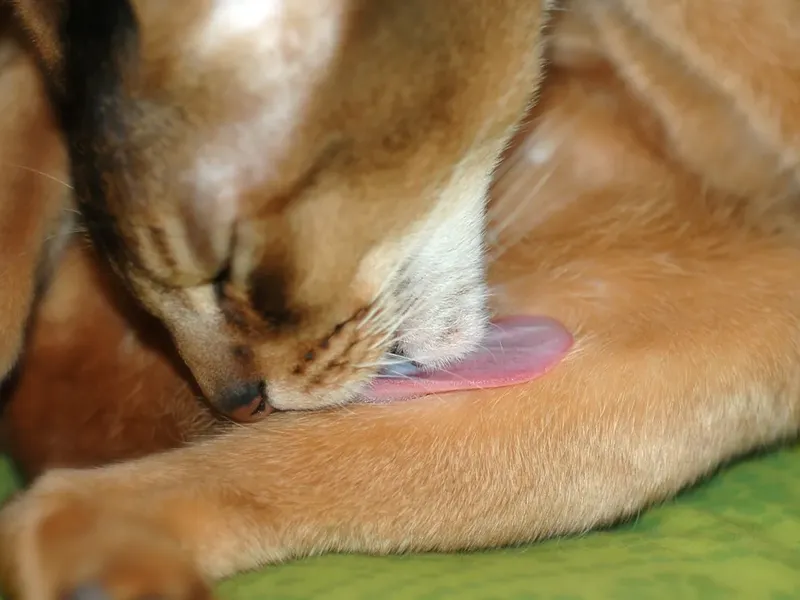
The signature is the ticked coat: each hair carries alternating bands of color, called agouti ticking, which gives the fur a warm, shimmering, almost translucent quality. In a longer coat, the same ticking becomes the Somali, the longhaired version of the Abyssinian often nicknamed the fox cat. The classic color is ruddy, a rich burnt-orange brown; cinnamon (sorrel), blue, and fawn are also recognized. The build is lithe and muscular on fine bones: a medium wedge head, huge cupped ears, almond-shaped gold or green eyes, an elegant arched neck, and a long tapering tail. There is even a tabby "M" on the forehead, a wink at the breed's wildcat look.
Temperament & Personality
Busy, brilliant, and into everything. Abyssinians want to be involved in whatever you are doing: following you from room to room, investigating every bag you bring home, finding the highest point in the room and then a higher one. They can jump astonishing heights, learn to open cupboards, and some will happily ride around on your shoulder. They stay kitten-like in energy for years.
They are deeply people-oriented but on their own terms. Many Abys are not classic lap cats; they would rather sit beside you, supervise, and then explode into a play session. They are quiet vocally, greeting you with a soft chirrup rather than a yowl, and they learn routines fast: puzzle toys, fetch, even clicker training all suit them. The trade-off is real: a bored Abyssinian does not switch off, it invents games, usually involving your belongings. They strongly prefer company, and many owners find that two Abys, or an Aby plus another active pet, is the happiest formula.
Care & Grooming
The coat is the good news: short, fine, and low-shedding, it needs only a weekly brushing to stay glossy. Everything else about Aby care is about the mind. Provide tall cat trees or wall shelves, because this breed lives vertically. Rotate puzzle toys and schedule real interactive play every day: wand toys, fetch, food puzzles. Keep breakables out of paw's reach and cupboards secured, not as punishment but as realism.
Abys do not love long solitary days, so plan enrichment for absences: window perches, foraging toys, and ideally feline company. They are generally good with children and cat-friendly dogs, provided introductions are proper and the household can match their pace.
Health Notes
The Abyssinian is generally a hardy, long-lived breed, but like all pedigreed cats it has a few known inherited predispositions, including renal amyloidosis (a kidney condition), progressive retinal atrophy (an eye condition), and pyruvate kinase deficiency, an inherited red blood cell disorder that causes anaemia and for which a DNA test exists. This is exactly the kind of thing health testing exists for: choose breeders who screen their lines, ask whether their cats are tested for PK deficiency and PRA, keep up regular veterinary checkups, and watch for changes in thirst, appetite, or vision. With sensible breeding and routine care, Abys routinely live well into their teens.
Best Names for an Abyssinian
An Aby deserves a name with ancient-world gravitas. These real Amharic names honor the breed's Abyssinian namesake, and the Egyptian picks nod to that tomb-painting look. All meanings verified in our name database. Want more? Our cat name generator deals fresh ideas by style.
Frequently Asked Questions
Are Abyssinians good apartment cats?
Yes, if the apartment is well set up for them. They need vertical space, climbing options, and daily interactive play. Square footage matters less than enrichment.
Are Abyssinian cats lap cats?
Usually not in the classic sense. Most prefer sitting beside you rather than on you, staying close while keeping an eye on everything. On their own schedule, some will curl up when worn out.
Why is the coat called ticked?
Each individual hair has alternating bands of light and dark color (agouti ticking). The bands blend at a distance into a warm, shimmering solid look with no stripes on the body.
Do Abyssinians get along with other pets?
Generally yes. They are social and do well with other cats and cat-friendly dogs when introduced properly. Many owners recommend a companion animal, since Abys dislike long solitary days.
How much exercise does an Abyssinian need?
A lot, by cat standards. Daily interactive play sessions, tall climbing structures, and puzzle or foraging toys are close to requirements rather than extras. A bored Aby will invent its own entertainment.
What colors do Abyssinians come in?
Ruddy (the classic warm brown), cinnamon/sorrel (red), blue, and fawn are the recognized colors, with ruddy by far the most familiar.
Is the Abyssinian the smartest cat breed?
There is no official ranking of feline intelligence, but the Abyssinian cat’s personality consistently lands it on every “smartest cat breeds” list. Abys learn household routines quickly, play fetch, respond to clicker training, and solve problems such as opening cupboards, which is precisely why they need so much mental stimulation. In this breed, clever mostly means busy.
Are Abyssinians hypoallergenic?
No cat breed is truly hypoallergenic, and the Abyssinian is no exception. Their short, fine coat sheds relatively little, so they tend to scatter less dander than heavy-shedding breeds, but allergy sufferers should still spend time with Abyssinians before committing. Compare shedding and grooming needs across all 74 cat breeds in our directory.
By Brianna Baxter
Featured photo: Photo: John Morton, CC BY-SA 2.0, via Wikimedia Commons.