
Devon Rex Cats: The Mischievous Pixie Cat Explained
If a cat could be a cartoon character, the Devon Rex would be the one swinging from the chandelier. Huge bat-like ears set low on a pixie face, enormous eyes, cheekbones a model would envy, and a soft rippled coat that looks like it was styled by the wind. The Devon Rex does not look like other cats, and it does not behave like them either.
Devotees call them "pixie cats" and "elf cats," and the nicknames fit more than the looks. These are the tricksters of the cat world: clever, clownish, dog-loyal, and physically incapable of minding their own business. A Devon Rex will ride your shoulder, supervise your shower, learn to fetch, and purr at a volume that seems mechanically impossible for a 5-to-9-pound animal.
Here is the full picture: the tin-mine kitten that started it all, what makes them different from the Cornish Rex, how to live with one, and 18 names worthy of a professional mischief-maker.
History
📖 Breed History
In 1959, near a disused tin mine in Devonshire, England, a curly-coated kitten was found in a litter born to a stray tortoiseshell-and-white cat. The kitten was named Kirlee, and his wavy coat caught the eye of a local cat lover, Beryl Cox. Everyone assumed Kirlee was a Cornish Rex, the curly-coated breed discovered in neighboring Cornwall a decade earlier.
They were wrong in the most productive way possible. When breeders test-mated Kirlee with Cornish Rexes, the kittens came out straight-coated: the two curls were caused by completely different, incompatible genetic mutations. Kirlee was not a Cornish Rex at all. He was the founding father of a new breed.
Selective breeding from Kirlee produced the Devon Rex: compact, huge-eared, and intensely social. The breed was recognised in Britain within a decade, arrived in the United States in 1968, and was accepted by the Cat Fanciers' Association in 1979. The name itself is a two-part tribute: "Devon" for the county, and "Rex," borrowed from rabbit breeding, where it denotes a curly or wavy coat. The other famous curly breed is the LaPerm, whose loose curls come from a dominant gene that appeared on an Oregon farm, genetically unrelated to the Devon Rex mutation. The plushest curl of all belongs to the Selkirk Rex, a stocky Montana breed built nothing like the elfin Devon. A very different sparse coat belongs to the Lykoi, the werewolf cat, whose patchy roan fur molts and regrows, another natural mutation, unrelated to the rex breeds.
Appearance
The Devon Rex is built like a daredevil. A small-to-medium, slender frame hides surprising muscle, and the hind legs run slightly longer than the front, which explains the breed's talent for launching itself at curtains.
The head is where the magic is: wedge-shaped, with gigantic ears set low on the sides, prominent cheekbones and whisker pads, and huge oval eyes that give the classic mischievous expression. The coat is short, soft, and wavy to rippled, ranging from a thin suede-like feel to fuller waves, and it comes in every feline colour and pattern, from solid black to colourpoint to silver tabby. Even the whiskers can curl. The coat sheds less than most cats', though it is not truly hypoallergenic: allergies are triggered by proteins in saliva and skin, not by fur length.
Do not confuse them with the Cornish Rex. The Devon has a wedge-shaped head where the Cornish has a more egg-shaped one, a different coat texture, and a stockier build. Different mutations, different cats.
Temperament & Personality
"Monkeys in cats' clothing" is the classic description, and it holds up. Devon Rexes are acrobatic, investigative, and relentlessly social. They follow their people from room to room, perch on shoulders and the tops of doors, and treat laps, keyboards, and the space next to your face as personal property. They would rather give you a full body hug than sit politely.
They stay kitten-curious for life. Devons learn tricks quickly, many play fetch unprompted, and they take to puzzle feeders and harness walks with enthusiasm. Their intelligence cuts both ways: a bored Devon invents entertainment, and that entertainment may involve your drapes, your blinds, and the narrow gap behind your refrigerator. They hate being bored and hate being alone even more. This is not a cat for someone who travels constantly or wants a decorative, hands-off pet.
The upside is enormous affection. Devons are gentle, loving, and famously loud purrers when content. Visitors get thoroughly investigated by a nosy pixie before they can sit down.
Care & Grooming
The Devon is a famously "wash-and-wear" breed. The thin, fine coat does not mat, so grooming is minimal: stroking with your hands or a chamois cloth spreads the natural oils and keeps the waves glossy. That is genuinely most of it, plus routine nail trims, ear checks (those big ears collect a bit of wax), and dental care.
What they need instead of grooming is engagement: daily interactive play, puzzle toys, cat trees, and high perches. A second pet often helps, since Devons dislike solitude. They are warmth-seekers, so expect yours to claim the sunniest spot, the warm laptop, and eventually your blanket. Keep them indoors or supervised; their curiosity and trust make the unsupervised outdoors a bad idea.
Health
Devon Rexes are generally healthy, active cats, with a typical lifespan of 9 to 15 years (PetMD, 2023). Like all breeds, they benefit from regular veterinary checkups, vaccinations, dental care, and parasite prevention. Because the breed is so people-focused and energetic, the most common "health" issues owners report are really lifestyle ones: weight gain in a bored indoor cat, or stress in a lonely one. Plenty of play and company go a long way. Ask breeders about the health screening they do on their lines: veterinary references note the breed can be at risk for hypertrophic cardiomyopathy (HCM), patellar luxation and hereditary myopathy (Devon Rex spasticity), and responsible breeders screen for these conditions (Purina; WebMD).
Best Names for a Devon Rex
Pixie folklore, professional mischief, and wavy coats: that is the naming brief for this breed. Meanings below are from the name database, verified, never invented.
Frequently Asked Questions
Are Devon Rex cats hypoallergenic?
No, not truly. They shed less than many breeds, which helps, but cat allergies are caused by proteins in saliva and skin, not fur length. Allergic owners should spend time with the breed before committing.
What is the difference between a Devon Rex and a Cornish Rex?
Different genes, different cats. The two curly coats come from incompatible mutations (crossing them produces straight-coated kittens). A third coat mutation produced the American Wirehair, whose springy, crimped fur traces to a dominant gene that appeared in New York. Devons have wedge-shaped heads, a suede-to-wavy coat, and a stockier build; Cornish have egg-shaped heads and a velvet down-only coat.
Are Devon Rex cats high maintenance?
In grooming, no: the coat is wash-and-wear. In attention, yes: they need daily play, company, and mental stimulation, and they do not tolerate boredom or long solitude.
Do Devon Rex cats like to cuddle?
Intensely. They prefer full-contact affection: shoulder perches, body hugs, sleeping pressed against you. Personal space is a concept they have heard of but reject.
Are Devon Rexes good with other pets?
Generally yes. Their social, playful nature extends to other cats and cat-friendly dogs, and a companion animal helps when you are away.
Why does my Devon Rex purr so loudly?
It is a breed trait. Devons are famous for extremely loud purrs when content, which, given how often they are content, means you will hear it a lot.
By Brianna Baxter
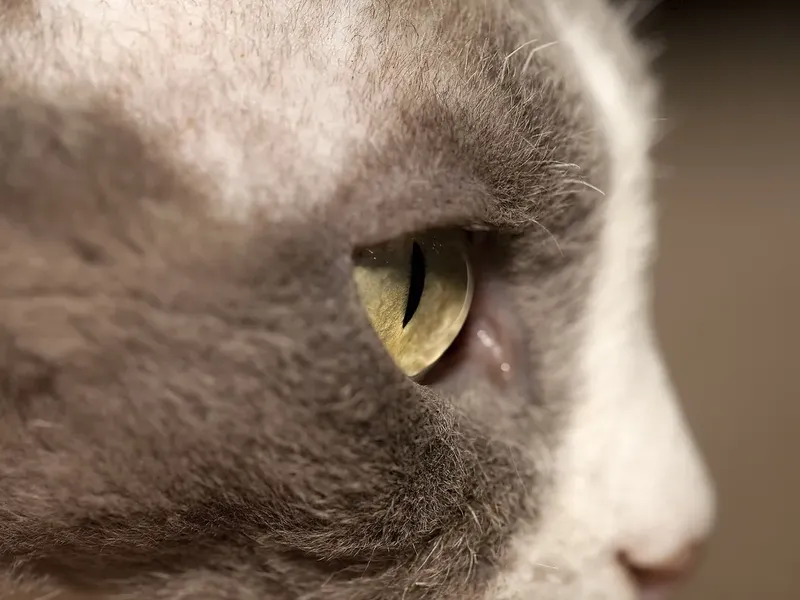
Featured photo: Photo: Nickolas Titkov, CC BY-SA 2.0, via Wikimedia Commons.
Devon Rex down is one of the ingredients in the Minskin, where it forms the breed’s soft fur points.