
Cornish Rex Cats: The Greyhound of the Cat World
Run your hand along a Cornish Rex and you will stop to do it again. The coat is unlike any other cat's: no guard hairs at all, just soft rippling waves of downy undercoat that feel like cut velvet or warm silk. The Cat Fanciers' Association agrees about its importance. In the breed standard, the coat alone is worth 40 out of 100 points, the single highest allocation for any trait in the standard.
Under that coat is an athlete. Long-legged, fine-boned, and arched like a sprinter, the Cornish Rex moves at a gallop and plays like a kitten well into old age. They call it the greyhound of the cat world, and one look at it mid-zoom tells you why.
Here is the story of the curly barn kitten from Cornwall, how this breed differs from its Devon cousin, what living with one is really like, and 18 names for a cat this sleek.
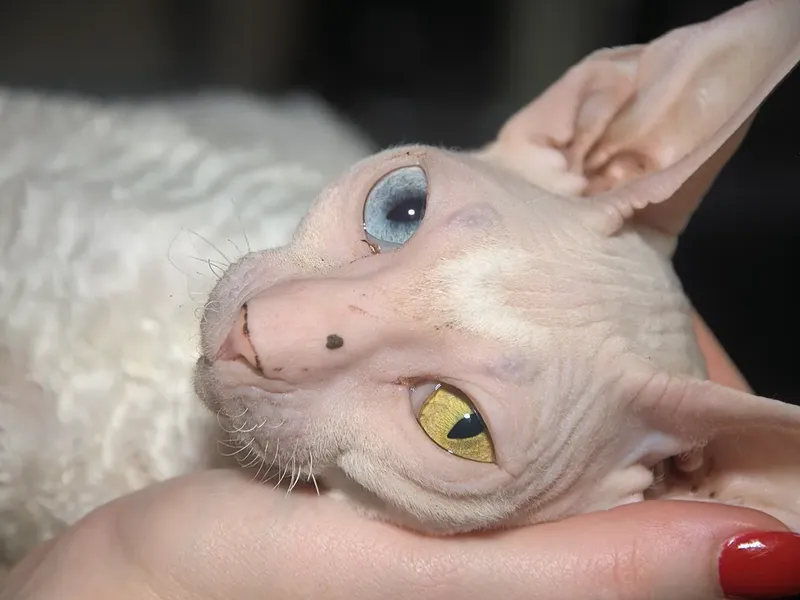
History
📖 Breed History
In 1950, on a farm in Bodmin, Cornwall, an ordinary farm cat gave birth to an extraordinary kitten: a cream-coloured male with a strange, wavy coat, long legs, and large ears. He was named Kallibunker. Breeding experiments confirmed the curl came from a spontaneous recessive mutation, and when Kallibunker was mated back to his mother, curly-coated kittens appeared in the litter. A breed was born from a single barn kitten, making the Cornish Rex one of the best-documented natural mutations in domestic cat history, and the oldest of all the Rex breeds.
Early breeders outcrossed to Siamese and Burmese cats to widen the gene pool, which is why the modern Cornish Rex inherited a chatty voice and a Velcro-like devotion to its people alongside the curl. The breed earned championship status with the Cat Fanciers' Association in 1964 and recognition followed from registries worldwide. The third curly breed is the LaPerm of Oregon, whose dominant curl gene is unrelated to the recessive Cornish Rex mutation. The Selkirk Rex of Montana is the heavyweight of the curly breeds, its dominant curl carried on a stocky, teddy-bear frame. The oldest of the Rex family is the German Rex, a curly-coated breed that surfaced in East Germany in the 1940s, a decade before the Cornish.
Appearance
Everything about the Cornish Rex says "racer." The body is slender and fine-boned but solidly muscular, with an arched back, a tucked-up waist, and long legs built for the breed's famous galloping run. The head is small and oval with high cheekbones, oversized ears, and a distinctive Romanesque (slightly convex) nose. Look closely and even the whiskers and eyebrows are curled.
The coat is the whole point: short, close-lying waves of pure down with no guard hairs, in more than 40 recognised colours and patterns. It sheds minimally and has a warm, velvety texture, but the thinness has a consequence: Cornish Rexes feel the cold and are legendary warmth-seekers. Do not be surprised to find yours on the radiator, the laptop, or your chest.
Against the Devon Rex: the Cornish has the more egg-shaped head (the Devon is wedge-shaped), a softer velvet coat texture rather than the Devon's suede-to-wave, and the two curls come from entirely different, incompatible genes.
Temperament & Personality
The Cornish Rex has two speeds: fast and stop. These are curious, clown-like cats with kitten energy that does not fade with age. They are extremely athletic and agile, love to be picked up and handled, and insist on participating in whatever you are doing: typing (they will help), applying makeup (they will supervise), cooking (they will taste-test the air).
They are deeply people-bonded. Thanks to that Siamese and Burmese ancestry, they are more vocal than average and attach hard to their owners, earning the "Velcro cat" label. They thrive on interaction, climbing, running, and exploring, and they dislike being left alone for long stretches. A companion animal and plenty of environmental stimulation keep them happy.
With family and guests they are affectionate and entertaining rather than aloof: this is a cat that wants to be in the middle of the party, preferably being admired.
Care & Grooming
Shedding is minimal, so the grooming load is light: occasional gentle brushing or hand-stroking keeps the waves tidy. Because the thin coat lets skin oils build up, most Cornish Rexes benefit from regular baths; the good news is the coat dries remarkably fast. Monthly nail trims and routine ear and dental checks complete the basics.
The bigger care note is temperature. With almost no insulating coat, a Cornish Rex needs a warm house in winter: heated beds, sunny windows, and sweaters for the dramatic ones are all fair game. Keep play sessions frequent and food portions measured, since a bored indoor athlete can drift toward chunky. Puzzle feeders, tall cat trees, and interactive toys are close to mandatory.
Health
The Cornish Rex is generally a healthy, long-lived breed, with a typical lifespan of 11 to 15 years (PetMD, 2023). Like all pedigree cats, it does well with regular veterinary checkups, vaccinations, dental care, and parasite prevention. Owners should simply be mindful of the breed's thin coat in cold weather and keep weight in check with measured feeding and active play. As always, ask breeders about health testing on their breeding lines, including screening for progressive retinal atrophy (PRA), one of the known hereditary concerns in the breed (PetMD, 2023).
Best Names for a Cornish Rex
Waves, velvet, and pure speed: that is the naming brief. Meanings below are from the name database, verified, never invented.
Frequently Asked Questions
Are Cornish Rex cats hypoallergenic?
Not truly. They are very low-shedding, which helps some allergy sufferers, but the allergens live in saliva and skin proteins, not fur. Spend time with the breed before deciding.
What is the difference between a Cornish Rex and a Devon Rex?
The curls come from different, incompatible genes. The Cornish has an egg-shaped head, a Romanesque nose, and a velvet down-only coat with no guard hairs; the Devon has a wedge-shaped head and a suede-to-wavy coat. Both are wonderful; they are simply different breeds.
Do Cornish Rex cats need baths?
More than most cats, yes. Skin oils build up on the thin coat, so regular gentle baths keep them comfortable, and the coat dries quickly afterward.
Are Cornish Rex cats cuddly?
Very, partly for warmth. They love being held and handled, and they will seek out laps, shoulders, radiators, and laptops with total commitment.
Do Cornish Rexes get cold easily?
Yes. With no guard hairs and almost no insulating coat, they feel the cold and need a warm home, cozy beds, and indoor life in winter.
Are Cornish Rex cats good with kids and other pets?
Generally excellent. They are social, playful, sturdy enough for respectful children, and usually happy with other cats and cat-friendly dogs.
By Brianna Baxter
Featured photo: Photo: Korona Lacasse, CC BY 2.0, via Wikimedia Commons.