
Scottish Fold Cat: The Owl-Faced Charmer with Folded Ears
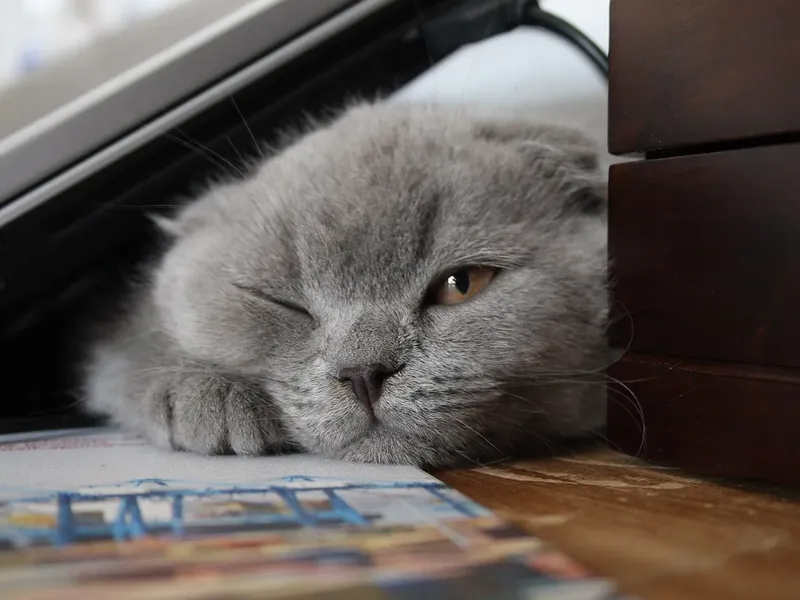
The first time you see a Scottish Fold sitting upright on its haunches, front paws folded neatly on its belly, you understand the obsession. It looks like a tiny owl that learned meditation. Those folded ears, that round face, those enormous round eyes: the Fold is one of the most photographed cats on the internet, and the camera loves it for good reason.
Underneath the plush-toy looks is a genuinely sweet, calm, people-oriented cat. Folds bond hard with their families, chirp softly instead of yowling, and adapt happily to kids, dogs, and apartment life. There is one thing every future Fold owner should know, though, and we will not bury it: the same gene that folds those famous ears affects cartilage throughout the body. This profile gives you the charm and the honest picture, so you can love the breed with your eyes open.
History
📖 Breed History
Every Scottish Fold alive today traces back to one white barn cat named Susie, found on a farm in Perthshire, Scotland, in 1961. Susie was born with naturally folded ears, a spontaneous cartilage mutation, and she passed the trait to about half of her kittens.
A shepherd named William Ross acquired one of Susie's folded kittens. Susie produced only one litter, so it was actually her daughter Snooks who became the foundation queen, bred first to a domestic male and then to a British Shorthair, producing folded-ear kittens with both. The breed was formally registered in 1966, but the story took a turn: the UK's Governing Council of the Cat Fancy withdrew recognition in 1971 over concerns about the cartilage mutation, and to this day the GCCF and FIFe do not recognise the breed.
Across the Atlantic, American breeders took up the Fold in the 1970s, outcrossing to British Shorthairs and American Shorthairs to strengthen the line. The Cat Fanciers' Association and The International Cat Association both recognise the breed, and the Scottish Fold became one of North America's most beloved breeds. Not every kitten in a Fold litter has folded ears, by the way: the straight-eared kittens are sometimes called Scottish Straights. The Fold is not the only ear breed born of a spontaneous mutation: the ears of the American Curl curl backwards instead of folding forwards. The Munchkin faces a similar welfare debate: its short legs come from a natural dominant mutation, and registries remain divided over recognising the breed.
Appearance
The Fold is built out of circles: round head, round eyes, round cheeks, round body, round paws. The folded ears heighten the illusion of roundness and give the breed its famous owl-like expression. Ears come in three degrees of fold: a single fold bends slightly forward, a double fold lies closer to the head, and a tight triple fold presses the ear flat against the skull.
The coat is short, dense, and plush, in every color and pattern from solid to tabby to calico, and some registries recognise a longhaired version with a soft, flowing coat. Males typically run 9-13 lb and females 6-9 lb, with a medium, muscular, cobby frame. The tail is medium to long and flexible, and experienced owners learn to handle it gently, since some Folds develop stiffness there with age.
Temperament & Personality
Sweet is the word that follows this breed everywhere, and it is earned. Scottish Folds are calm, patient, deeply affectionate cats that bond strongly with their whole family rather than picking one person. They are sociable without being demanding: happy to supervise your day from the nearest soft surface, content with children, and generally easygoing with other cats and cat-friendly dogs. They are also devoted homebodies, the CFA notes that Folds do not do well left alone for long periods of time, so they suit households where someone is around for much of the day.
Their quirks are legendary. Folds are famous for sitting upright on their hind legs like little prairie dogs when something catches their interest, and for the "Buddha position": sitting with back legs splayed and front paws resting on the belly. They also sleep on their backs with alarming regularity, paws in the air, utterly unconcerned. Vocally they are quiet communicators, favoring soft chirps and murmurs over loud meows. Playful but not hyper, they enjoy interactive toys and a good game of fetch without needing the marathon exercise sessions of more athletic breeds.
Care & Grooming
Grooming a Scottish Fold is refreshingly simple. The short, dense coat needs a weekly brushing to remove loose hair and keep it glossy; the longhair variant needs brushing two or three times a week to prevent tangles. The folded ears deserve special attention: the fold can trap debris and reduce airflow, so check and gently clean the ears regularly and watch for head-shaking or scratching, which merit a vet visit.
This is a breed that trends round, and Folds are good eaters with only moderate energy, so portion control matters. Keep meals measured and play interactive games daily: wand toys, puzzle feeders, and fetch all suit the Fold's gentle play style. Because of the breed's joint considerations, set up a home that does not demand Olympic high-jumping: provide steps or ramps to favorite perches, and keep nails trimmed so landings stay comfortable.
Health Notes
Honesty first: the gene that folds the ears affects cartilage development throughout the body, a condition known as osteochondrodysplasia. It can show up as stiff joints, a shortened or inflexible tail, or an altered gait, and it varies from cat to cat. This is exactly why responsible breeders never pair two folded-ear cats together, and why several registries and welfare organisations urge careful thought before breeding or buying.
The wider picture is genuinely contested, and you deserve both sides. Veterinary welfare bodies take a harder line: International Cat Care states that the mutation also causes painful joint problems, reluctance to move, stiffness, lameness, difficulty jumping, and believes it is unethical to continue breeding cats carrying this gene, a position it promotes jointly with the British Veterinary Association (BVA); the BSAVA's position statement likewise advises against breeding extremes of conformation that harm welfare. On the other side, the CFA, which recognises the breed for championship showing, argues that responsible breeding manages the risk: fold-eared cats are bred only to straight-eared partners to minimise the arthritic and bone conditions that may occur in the breed, DNA testing confirms that each pairing is appropriate, and a well-bred Fold should have a flexible tail and a normal gait, CFA judges routinely check tail flexibility for early signs of stiffness. The genetics are not in dispute; what breeders and welfare bodies disagree on is how far careful breeding can mitigate them.
What this means for an owner is simple, practical care: keep your Fold lean, provide low-impact ways to climb, handle the tail gently and check its flexibility regularly, the CFA advises that tail flexibility be evaluated gently but frequently, since stiffness can be an early warning sign, watch for signs of stiffness or reluctance to jump, and keep up regular veterinary checkups so any joint changes are caught early. Folds can also be prone to ear infections because of the folded ear structure, which is another reason for those routine ear checks. Many Folds live long, comfortable, happy lives; they just do best with owners who know what to watch for.
Best Names for a Scottish Fold
A Fold deserves a name with Scottish soul. These are real Scottish names with verified meanings, plus a couple of cheeky inspiration picks, drawn from our name database. For even more ideas, browse our cute cat names or let the cat name generator deal you a fresh hand.
Frequently Asked Questions
Why do Scottish Fold ears fold?
A natural genetic mutation affects the cartilage in the ears, causing them to bend forward and downward. The same mutation affects cartilage throughout the body, which is why the breed has known joint considerations.
Do all kittens in a Scottish Fold litter have folded ears?
No. The fold gene is dominant but not every kitten inherits the folded ears. Kittens born with straight ears are sometimes called Scottish Straights, and they make equally lovely pets. A kitten's ears do not begin to fold until three to four weeks of age, so breeders wait before assessing a litter (CFA).
Are Scottish Folds healthy cats?
They can live long, happy lives, but buyers should know the fold gene is linked to cartilage and joint issues (osteochondrodysplasia). Keep the cat lean, provide easy climbing routes, handle the tail gently, and schedule regular vet checkups.
Are Scottish Folds good with kids and other pets?
Yes, that is one of their best traits. They are calm, patient, and adaptable, and they generally do well with respectful children, other cats, and cat-friendly dogs.
How much grooming does a Scottish Fold need?
The shorthair needs only weekly brushing; the longhair variant needs brushing two to three times a week. The folded ears should be checked and gently cleaned regularly, since the fold can trap debris.
What is the Buddha position?
It is the Fold's signature sitting pose: upright with back legs splayed and front paws resting on the belly, like a tiny meditating monk. Folds also famously sit up on their haunches like prairie dogs and sleep flat on their backs.
What two cats make a Scottish Fold?
No pair of breeds “makes” a Scottish Fold. The breed began with one cat, Susie, a barn cat whose folded ears came from a spontaneous mutation, and was built up through outcrosses to British Shorthairs, American Shorthairs and domestic cats. Today, responsible breeders pair fold-eared cats with straight-eared (Scottish Straight) partners rather than crossing two distinct breeds.
Do Scottish Folds like to cuddle?
With their own people, yes, the CFA describes Folds as cuddly and loving with their special people, fond of following you from room to room in quiet conversation. That said, many prefer sitting beside you to being held, and they dislike being left alone for long stretches. Let the cat set the terms and you will get plenty of affection.
By Brianna Baxter
Featured photo: Photo: Psihopat, CC BY 3.0, via Wikimedia Commons.
Folded ears also define the Ukrainian Levkoy, a hairless breed built on the same mutation. A softer take on the same look is the Foldex, a Scottish Fold and Exotic Shorthair cross that keeps the folded ears on a rounder, plusher frame.
For the wider family, see the Scottish cat overview.