
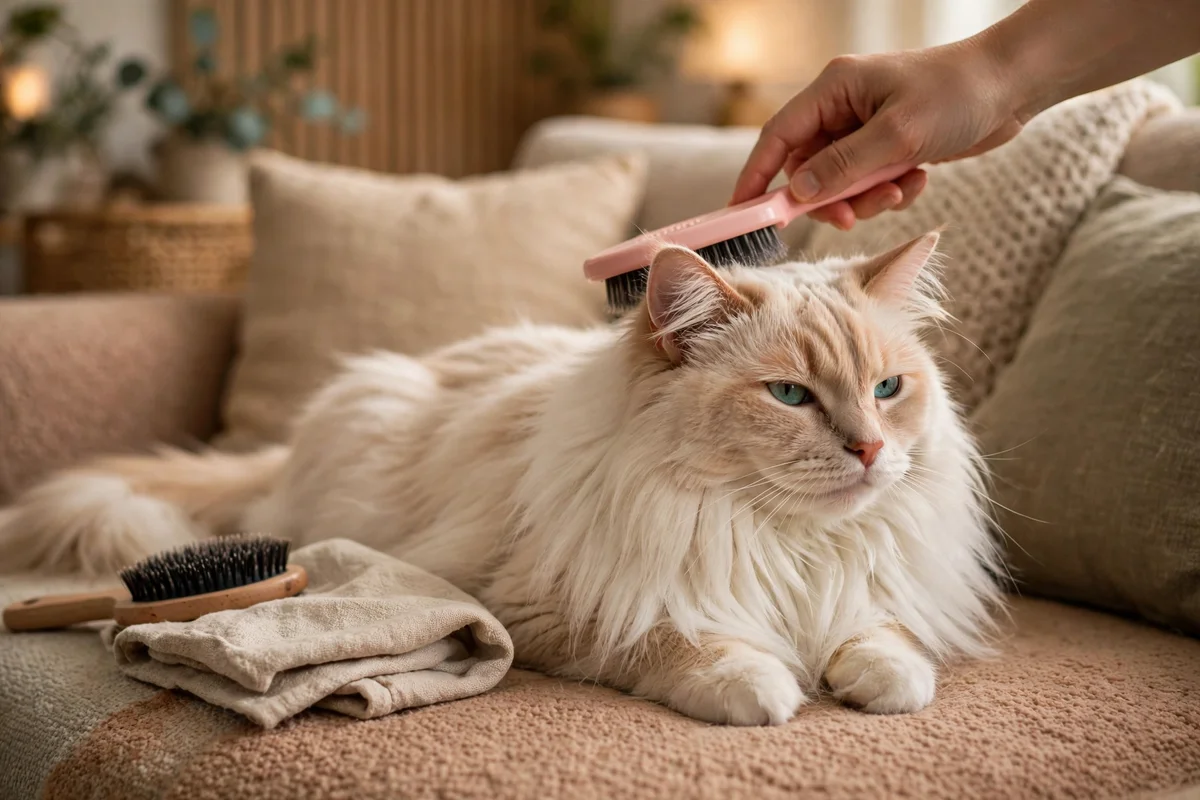
How to Groom Your Cat at Home
Cats are famously good at grooming themselves. They spend hours every day licking, nibbling, and smoothing their coats, and most of the time that is enough. But self grooming has limits. It cannot reach every tangle, it cannot trim a nail, it cannot clean a waxy ear, and it cannot brush a tooth. That is where your help comes in, and the help is simpler than most owners expect. A short weekly brush for a short haired cat, daily brushing for a long haired cat, a nail trim every two to four weeks, and an occasional bath only when the cat is genuinely dirty will cover most cats for most of their lives. This guide works through each job in order, with the tools, the technique, and the signs that mean stop and call a vet or a professional groomer instead. It is general care information, not veterinary advice, and it has not yet had a veterinary review.
The Short Answer
Brush short haired cats at least once a week and long haired cats daily, always in the direction the fur grows, using a slicker brush or rubber brush for short coats and a wide toothed comb or slicker brush for long coats. Trim nails every two to four weeks, cutting only the sharp translucent tip and never the pink quick. Bathe rarely, only when the cat is truly dirty, using lukewarm water and a shampoo made for cats, never human shampoo. Check ears and teeth weekly, clean only the visible outer ear, and never cut a tight mat with scissors. Stop any session if the cat shows pain, fear, or aggression, and call your vet or a professional groomer for tight mats, sores, or sudden changes in grooming behaviour.
Disclosure: this article contains affiliate links. If you buy through them, we may earn a commission at no extra cost to you.
Before You Start: The Kit and the Setting
Grooming goes well when the tools are ready before the cat is. A basic kit covers every job in this guide: a slicker brush and a wide toothed metal comb, a rubber grooming mitt or soft bristle brush for cats that dislike brushes, cat nail trimmers sized for cats, a cat specific shampoo, a non slip mat and towels for bath day, cotton pads and a vet approved ear cleaner for ear checks, and a finger brush or small soft toothbrush with toothpaste made for cats. Do not substitute dog or human nail clippers, since cat nails are easy to break, crack, or split with the wrong tool, and do not substitute human shampoo, which can irritate a cat’s skin. Keep treats within reach, since a treat after each small step is what turns grooming from a wrestling match into a routine.
The setting matters as much as the kit. Choose a calm moment and a stable, familiar place where the cat already relaxes, and do not corner the cat. A lap, a sofa, or a table with a non slip mat all work, as long as the cat can leave if it wants to. Keep sessions short, especially at first: one calm brush stroke followed by a reward is a successful session for a beginner, and you do not need to finish the coat. The Rover guide to grooming a cat, written with certified feline groomers, makes the same point: start with a short coat and skin check, use a tool suited to the task, and keep each session calm and brief. If the cat shows stress, ears back, tail lashing, vocalising, or trying to leave, stop. A session ended early is a session the cat will tolerate again. A session pushed too far is one the cat will dread next time.
Brushing: How Often and How
Brushing is the core of home grooming, and the frequency depends on the coat. Short haired cats need brushing at least once a week, and up to three times a week for thick or plush coats, according to grooming guidance from certified feline groomers. Long haired cats need daily brushing to avoid tangles and matting, and breeds such as Persians, Maine Coons, and Ragdolls are the ones that suffer most when brushing slips. Medium haired cats sit between the two, at two to three times a week. Cats Protection notes the same split: a short haired cat may need a weekly brush, while a long haired cat may need daily attention. Shedding season is the exception for everyone: brush more often while the coat is changing, and expect more loose hair on the brush.
The technique is gentle and boring, which is exactly right. Brush in the direction the fur grows, with light, even strokes, starting on a preferred area such as the shoulders, cheeks, or back, where most cats enjoy being touched. Work through the back, sides, and chest first, and move to the sensitive areas, behind the ears, under the legs, the belly, and the hindquarters, only as comfort allows. For short haired cats, a slicker brush, rubber curry brush, or grooming glove removes loose hair and distributes the coat’s natural oils. For long haired cats, a wide toothed comb or metal comb works through the coat without pulling, and a slicker brush follows for the finish. Remove the loose hair from the brush with your other hand as you go, so the brush keeps working instead of dragging a clump of shed fur across the coat.
Brushing is also a health check, and that is half its value. While you brush, look for fleas, flea dirt, bald patches, lumps, sore skin, redness, and changes in coat condition. The RSPCA notes that owners should look for skin redness or swelling, wounds, matted fur, and changes in coat condition, and take the cat to a vet for an examination if they notice abnormal hair loss or persistent chewing or scratching. A coat that suddenly looks dull, greasy, or unkempt in a cat that used to groom well is worth a vet visit, since cats that stop grooming are often cats that are unwell, in pain, or stressed, and the change is the signal, not the coat itself.
Mats and Tangles: What to Do and What Never to Do
Mats form where the fur rubs and is hard for the cat to reach: behind the ears, under the armpits, around the belly, at the base of the tail, and under a collar. A small tangle can usually be worked apart gently with your fingers or a wide toothed comb, holding the mat close to the skin so the pulling does not hurt. Work from the outer edge of the tangle inward, a little at a time, and reward the cat between attempts. A dematting comb or a mat splitter can help with a stubborn tangle, used gently and with the same hold close to the skin. Never pull hard through a mat, and never try to yank a tangle out in one motion: matted fur pulls the skin, and a cat that is hurt during grooming will not sit still for the next session.
One rule is absolute: never cut a mat out with scissors. Cat skin sits much closer to a mat than it looks, and it is easy to nick or cut the skin while trying to slide scissors under tangled fur. Grooming guides from multiple sources repeat this warning in the same words, and it is worth repeating here because scissors feel like the obvious fix and they are the most dangerous one. If a mat is tight against the skin, or the skin underneath is red or sore, stop and ask a professional groomer or your vet to remove it. The same applies to severe matting across a large area: a professional has the tools and the restraint techniques to remove it without hurting the cat, and a cat that has been shaved by a professional is a cat that was not cut by an amateur. Prevention is far easier than removal, and daily brushing of a long haired cat is the prevention.
Nails: Trimming Without Drama
Most cats need their nails trimmed at some point, and the interval most groomers suggest is every two to four weeks. Untrimmed nails grow long and sharp, which makes play painful, damages furniture, and in extreme cases lets the nail curl under the paw and rub the skin, causing painful sores. Providing scratching posts helps the cat file its own nails, but it does not replace trimming, especially for indoor cats and older cats whose nails grow faster than they wear down. Start by handling the paws during brushing sessions, long before you ever pick up the clippers, so the cat is comfortable with its paws being touched.
To trim, take a paw in your hand and gently press the toe pad so the claw extends. The translucent tip of the claw is the part to trim, and the pink quick inside contains nerves and blood vessels and must be avoided. Hold the clippers at a 45 degree angle to the nail and snip just the tip, then move to the next nail. On dark nails where the quick is hard to see, trim less, and trim more often. Do not forget the fifth nail on each front leg, the dewclaw, which sits further up the leg and does not wear down by scratching. If you cut the quick and it bleeds, stay calm, apply gentle pressure with a clean cloth, and use styptic powder if you have it; a small bleed is painful but not an emergency, and it is a reason to trim less next time rather than a reason to stop trimming. If nail trims are a battle every time, our guide to how to trim cat nails covers the same job as a standalone routine, and our broader guide to cat grooming sets it in context.
Bathing: Rarely, and Only When There Is a Reason
Most cats rarely need a bath. Cats are excellent self groomers, and bathing is usually only necessary if the cat is extremely dirty, has got into something that cannot be brushed out, or has a condition that requires it. The groomers consulted by Rover recommend bathing about once every three months for most cats, once a month for long haired and curly haired cats, and weekly only for hairless cats, which need regular skin cleaning. Kittens should not be bathed before two months old, and should be dried quickly and kept warm afterwards. If your cat is not dirty and grooms normally, skip the bath. A bath your cat does not need is stress your cat does not need either.
When a bath is genuinely needed, prepare everything first and keep the cat calm. Choose a safe space the cat cannot bolt from, such as a bathroom with a door or a secure kitchen sink, and put a towel or rubber mat at the bottom so the cat does not slip. Brush the cat thoroughly before the bath to remove loose fur and tangles, and trim the nails first, since a wet cat with sharp nails is harder to handle. Fill the tub or sink with a few inches of warm, not hot, water, and get the cat wet gradually, using a cup to pour water over the coat rather than a running tap or shower head, which frightens many cats. Massage a cat formulated shampoo into the fur from nose to tail, avoiding the eyes and ears, then rinse thoroughly with clean warm water, since shampoo left in the coat will be licked off during grooming.
Dry the cat with towels, keep it warm, and let it finish drying in a warm room. Do not use a hair dryer unless the cat is already used to one, since the noise and heat frighten most cats and can burn the skin. If the cat is especially skittish or anxious, recruit a helper to feed treats while you wash, and never force a struggling cat into a tub. A cat that has got into something toxic, sticky, or oily needs a vet’s advice before a bath, since some substances should not be washed off at home. And if bathing is a fight every time, a professional groomer is the better option: a groomer has the setup, the extra hands, and the experience to bathe a difficult cat safely, and a cat that is bathed by a professional once is a cat that has not learned to fear your bathroom.
Ears, Eyes, and Teeth: The Weekly Check
Once a week, take a quick look at the ears, eyes, and mouth, and treat it as a check rather than a cleaning session. A healthy ear is pale pink, odour free, and has minimal wax, and most cats rarely need help cleaning their ears, since their upright ear shape allows good airflow. Clean only the visible outer ear with a vet approved cleaner and a soft cotton pad, and never insert anything into the ear canal, including cotton buds. Watch for the signs that mean a vet visit: excessive scratching at the ears, head shaking, dark or crumbly debris, an unpleasant smell, redness, or any sign of discomfort. Those can indicate ear mites or infection, and they are not things to treat at home.
Wipe the corners of the eyes with a damp cotton pad if there is a little discharge, and note anything more than that: persistent discharge, redness, squinting, or a cloudy eye are all reasons to call the vet. For teeth, lift the lip gently and look for red gums, broken teeth, tartar, or breath that suddenly smells much worse than usual. Dental disease is one of the most common health conditions in cats, and regular tooth brushing is one of the most effective ways to reduce it. Aim to brush the teeth two to three times a week using toothpaste made for cats and a soft brush or finger brush, and never use human toothpaste, which contains ingredients that are toxic to cats. Getting a kitten used to having its mouth handled early makes toothbrushing much easier later, so start the handling even before you start the brushing.
When to Stop and Call a Professional
Home grooming has clear limits, and knowing them is part of doing the job well. Call your vet or a professional groomer promptly if you notice tight mats against the skin, sores or red skin under a mat, sudden hair loss, bald patches, lumps, wounds, fleas or flea dirt you cannot clear, dark crumbly ear debris, a bad ear smell, constant head shaking, red gums, broken teeth, or breath that suddenly smells much worse than usual. A sudden change in grooming behaviour is itself a signal: a cat that grooms obsessively, or a cat that stops grooming entirely, may be in pain, stressed, or unwell, and the change is worth a vet visit rather than a better brush.
Senior cats, overweight cats, and cats with arthritis or mobility problems need extra care, because they often cannot reach the places they used to groom, and they may find being held or brushed painful. Keep their sessions shorter, support their body rather than letting them balance, and ask your vet about the right routine for them. Kittens need the opposite approach: start early, keep it brief, and make every session end with a treat, so grooming becomes a normal part of life rather than a rare ordeal. The goal of home grooming is not a show cat. It is a comfortable cat with a healthy coat, trimmed nails, clean ears, and an owner who notices problems early. Our new cat owner starter kit covers the rest of the first year basics, including the supplies and the first vet visit, and it pairs naturally with this guide: the kit sets the house up, and a short weekly grooming session keeps the cat in it healthy.
Frequently Asked Questions
How often should I brush my cat?
Short haired cats need brushing at least once a week, and up to three times a week for thick or plush coats. Long haired cats need daily brushing to prevent tangles and matting, and medium haired cats need two to three sessions a week. Brush more often during shedding season, and always in the direction the fur grows, with light, even strokes.
How often should I bathe my cat?
Most cats rarely need a bath. Groomers generally suggest about once every three months for most cats, once a month for long haired and curly haired cats, and weekly only for hairless cats. Bathe only when the cat is truly dirty or has got into something that cannot be brushed out, using lukewarm water and a shampoo made for cats, never human shampoo.
How do I trim my cat’s nails without cutting the quick?
Press the toe pad gently so the claw extends, and cut only the sharp translucent tip, holding the clippers at a 45 degree angle. The pink quick inside contains nerves and blood vessels and must be avoided. On dark nails where the quick is hard to see, trim less and trim more often. If you cut the quick and it bleeds, apply gentle pressure with a clean cloth and use styptic powder if you have it.
Can I cut a mat out of my cat’s fur with scissors?
No. Never cut a mat out with scissors, because cat skin sits much closer to a mat than it looks and is easy to nick or cut. Work a small tangle apart gently with your fingers or a wide toothed comb, holding the mat close to the skin, or use a dematting comb. If a mat is tight against the skin or the skin underneath is red or sore, ask a professional groomer or your vet to remove it.
Should I clean my cat’s ears at home?
Check them weekly and clean only the visible outer ear with a vet approved cleaner and a soft cotton pad. Most cats rarely need ear cleaning, and you should never insert anything into the ear canal. Call your vet if you see redness, dark crumbly debris, an unpleasant smell, or the cat scratching its ears or shaking its head constantly.
What grooming changes mean I should call the vet?
Call your vet promptly for tight mats against the skin, sores, sudden hair loss, bald patches, lumps, dark ear debris, red gums, broken teeth, or a sudden change in grooming behaviour, whether the cat grooms obsessively or stops grooming entirely. A change in grooming is often the first visible sign of pain, stress, or illness, and it is worth a vet visit rather than a better brush.