
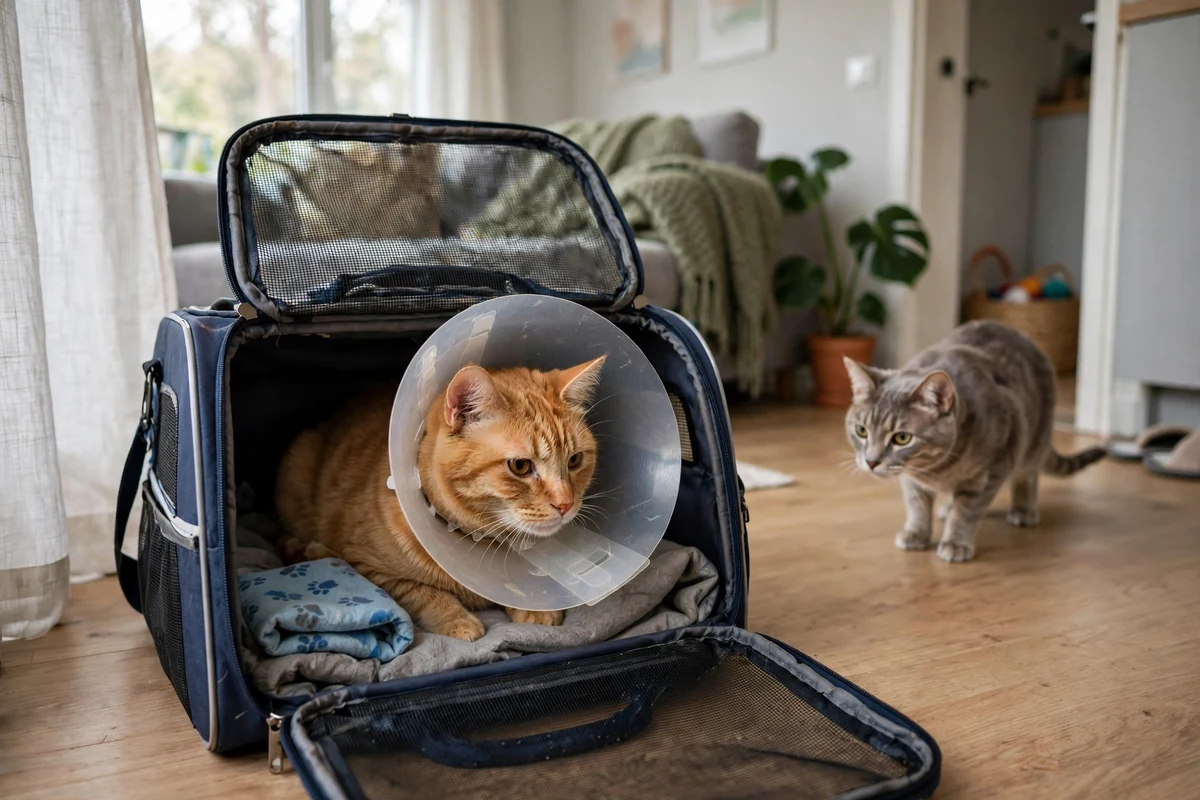
Why Your Cats Fight After a Vet Visit (Non-Recognition Aggression)
The information here is general information only and is not veterinary advice. If either cat is injured, stops eating or drinking, or hides for more than a day, contact your vet.
Your cats fight after a vet visit because the returning cat smells of the clinic, and for a cat, smell is how it knows who is family. The cat at home has not forgotten its housemate and is not being spiteful: the returning cat simply smells wrong. Separate them, swap scent between them, and reintroduce them slowly.
Key Takeaways
- Non-recognition aggression is scent based. The returning cat smells of the clinic, not of home.
- Separate the cats at once. Do not let them fight it out and do not force them together.
- Most cases settle within a few hours to a few days. Some need a full reintroduction lasting a week or more.
- Reintroduce in stages: scent first, then sight, then short supervised meetings.
- A bad first reunion can create a lasting fear, so the first meeting matters more than the tenth.
- Check both cats for bite wounds the same evening. Bites can turn into abscesses.
- See a vet promptly if either cat is injured, in pain, limping, panting, or not eating.
What Is Non-Recognition Aggression?
Non-recognition aggression happens when one cat temporarily fails to recognise a feline housemate. It most commonly happens after one cat has been away from home, especially for a vet visit, but it can also follow grooming, boarding, a hospital stay, or a bath. The cat that stayed home reacts with hissing, growling, staring, swatting, chasing, or a full fight, as if a strange cat had walked into its territory.
Cats recognise each other mainly through scent. They carry a shared group scent built up from sleeping together, grooming each other, and rubbing against the same furniture. A vet visit strips that scent away and replaces it with disinfectant, medication, other animals, unfamiliar people, and stress. International Cat Care explains that a cat picks up unfamiliar scents at the veterinary clinic, and that these smells can mask its natural scent and make identifying it as part of the group difficult. The ASPCA describes the same pattern, noting that cats can get along just fine until something scary or unpleasant, like the odour of the veterinary clinic, becomes associated with the other cat. Cornell’s feline health center adds that cats may even attack resident cats that were previously accepted but were away from the home, such as for a hospital stay.
It helps to know that this is not a grudge and not a broken relationship. In most cases the cats go back to normal once the clinic smell fades and the returning cat starts to smell like home again. Your job is to keep them safe while that happens, and to stop one bad meeting from turning a temporary confusion into a lasting fear.
Why a Vet Visit Changes How Your Cat Smells
A veterinary clinic is a wall of new smells. Disinfectant on the tables and floors, medication, the scent of other animals, including animals that were frightened there before, and the smell of people the cat has never met. A cat that spends an hour in a clinic picks up all of it on its fur. Then the car ride adds motion, noise, and stress, and stress itself changes how a cat smells, because a frightened cat releases scent signals other cats can read.
Procedures add more. Anaesthesia and sedation can leave a cat groggy, wobbly, and slow for hours. A bandage, a shaved patch, or a cone changes how the cat looks and feels to the touch. An injection site can be tender, so the returning cat may flinch or snap when the other cat comes close to sniff it. None of this means the cat is now aggressive by nature. It means the cat is having a bad day and smells like a stranger while it has it.
Signs: How to Tell It Is Non-Recognition
The timing is the biggest clue. The aggression starts within minutes or hours of the returning cat walking through the door, and it comes from the cat that stayed home, aimed at the cat that went out. The cats got along before the visit. If the fighting started days before the vet visit, or if it comes from the cat that went to the vet and is aimed at the cat that stayed home, the cause may be different, and the vet should know about it.
Look for hissing, spitting, growling, staring, flattened ears, a puffed up tail, swatting, chasing, or lunging. The cat at home may refuse to let the returning cat pass through a doorway, or may guard the food bowls and the litter box. The returning cat may hide, crouch low, or lash out when approached. Both cats may stop eating. These are the same signs you would see in any cat fight, which is why the timing matters so much. The signs tell you there is a fight. The timing tells you why.
Three other problems can look similar, and it is worth telling them apart. Redirected aggression happens when a cat that is already worked up, by the car ride or by a barking dog in the waiting room, takes it out on the nearest cat at home. It usually fades faster, once the cat calms down. Pain driven aggression happens when the returning cat is sore and snaps at any cat that touches the sore spot. If the returning cat cries when touched, limps, or guards one part of its body, call the vet, because pain can look like aggression. And if aggression starts with no recent separation or obvious scent change, that is a different problem that needs a vet exam.
The First 10 Minutes at Home
What you do in the first ten minutes matters more than anything else you do that day, because the first meeting sets the tone. A calm first reunion can end the whole episode. A fight in the hallway can stretch it into weeks.
Before you open the carrier, take a breath and look at both cats. If the cat at home is already staring, growling, or stalking toward the carrier, do not open it in front of that cat. Carry the carrier into a quiet room, close the door, and let the returning cat out there. Give it food, water, a litter box, and a hiding place, and leave it alone to settle.
If the cat at home seems relaxed and only mildly curious, you can open the carrier in a room with an escape route and watch from a distance. Let the returning cat come out on its own terms. Do not carry it out and do not hold it up for the other cat to sniff. If either cat hisses, stares hard, or puffs up, separate them calmly and go to the quiet room plan. Do not scold either cat. A hiss is information, not bad behaviour.
Keep the cats apart for the rest of the day at least, even if the first meeting seemed fine. The returning cat needs rest, and the cat at home needs time to get used to the new smell from a safe distance. Feed the cats on opposite sides of a closed door that evening. If both cats eat calmly, that is a good sign. If either cat refuses food or camps by the door growling, keep them separated longer and start the staged plan below.
What to Do Tonight
For a mild case, where the reaction was a hiss or two and both cats are now calm in separate rooms, tonight is about rest and scent. Give the returning cat a blanket or towel that smells of home to sleep on. Rub a soft cloth on the returning cat’s cheeks and forehead, then put it near the other cat’s bed. Swap the cloths so each cat sleeps on the other’s scent. Put them nearby and let the cat choose.
Check both cats for bites before bed. Part the fur gently and look for small puncture wounds, swelling, or sore spots, especially around the head, neck, and base of the tail. Cat bites seal over fast and trap infection inside, so a small wound can become a swollen abscess in a day or two. If you find swelling, limping, or a wound, contact your vet.
Do not let the cats sleep together tonight, even if they usually do. Give each cat its own room with everything it needs. In the morning, offer food on opposite sides of the closed door. If both cats eat calmly and show relaxed bodies, you can try a short supervised meeting. If either cat is still tense, stay separated and work through the staged plan below.
The Reintroduction Protocol: Mild, Moderate, and Severe
How long the reintroduction takes depends on how bad the reaction was. Match the plan to the severity and do not skip stages to save time. A slow plan that works beats a fast plan that fails.
Mild: a hiss or two, both cats calm within hours
Keep the cats apart for the rest of the day and overnight. In the morning, feed them on opposite sides of a closed door. If both eat calmly, open the door a crack or use a baby gate so they can see each other while they eat. If that goes well, let them share a room for a short supervised visit of ten or fifteen minutes, with an escape route open and a treat for each cat at the end. Most mild cases are back to normal within 24 to 72 hours.
Moderate: repeated hissing, growling, swatting, or chasing
Separate the cats fully for two to three days, each in its own room with food, water, a litter box, and a hiding place. Swap bedding and scent cloths daily. Feed both cats at the same time on opposite sides of the closed door, and move the bowls a little closer each day. When both cats eat calmly near the door, move to sight through a baby gate or a door propped open a few centimetres. Feed on opposite sides of the barrier for a day or two. Then try short supervised meetings of five or ten minutes, with food or play, and end each meeting before tension rises. Most moderate cases settle in three to seven days. If a meeting goes badly, go back one stage for a day and try again.
Severe: full fights, biting, or one cat living in fear
Treat this as a full reintroduction, as if the cats had never met. Separate the cats for at least a week, each with its own base room. Swap scent daily for several days before you allow any sight contact. Move through the stages slowly: closed door feeding, then sight through a barrier, then short meetings with food and two wand toys so each cat has its own game. Keep every meeting short, supervised, and calm, and keep the cats separated when you are out of the house. Severe cases can take two weeks or more, and some need help from a vet or a qualified cat behaviourist. If either cat was injured, contact your vet first.
Whatever the severity, the move forward signs are the same: eating near each other, relaxed bodies, grooming, playing, and choosing to be in the same room. The step back signs are hard staring, blocking, chasing, swatting, hiding, or refusing food. Never put a hand between fighting cats. Break a fight with noise or a barrier, then separate the cats and let them cool down for hours.
The Scent Bridge: Bringing Home Smell to the Clinic
You can make the next vet visit easier by giving the returning cat some home smell to carry with it. Before the visit, put a small blanket or towel that both cats have slept on into the carrier. The familiar scent gives the returning cat something of home to lie on, and it gives the cat at home something recognisable to sniff when the carrier comes back. Some owners also rub a soft cloth on the cat that stays home, then put that cloth in the carrier, so the travelling cat carries the housemate’s scent with it. There is no guarantee this prevents non-recognition aggression, and no honest source promises one, but it costs nothing and it gives both cats a familiar anchor.
After the visit, the same trick works in reverse. Rub a cloth that smells of home on the returning cat’s cheeks and forehead, then put the cloth near the other cat. Swap the cloths between the cats for a day or two. Do not use a strongly scented product on the returning cat to cover the clinic smell. Perfume, scented wipes, and air freshener can irritate a cat’s nose and make the problem worse. If the returning cat had surgery or a wound, ask your vet before rubbing anything near the site.
Prevention: Before the Next Vet Visit
The simplest prevention is to take both cats to the vet together when practical. If both cats come home smelling of the clinic, neither one smells like a stranger, and the shared experience seems to help. This is not always practical, especially if only one cat needs care, but when both cats are due for check ups, booking them together is worth doing. Tell the clinic when you book that you have a multi-cat home and that non-recognition aggression has happened before.
Keep the carrier out at home between visits, with treats and bedding inside, so the carrier itself does not signal stress. A cat that only sees the carrier on vet days starts to panic before it even leaves the house, and a panicked cat comes home more stressed and more likely to be treated as a stranger. Our guide on keeping your cat calm at vet visits, in travel, and with guests covers carrier training and the car ride in detail.
Plan the return as carefully as the visit. Have a quiet room ready before you leave, with food, water, a litter box, and a hiding place. Come home, carry the carrier into that room, and let the returning cat out there. Give the cats a few hours apart, then feed them on opposite sides of a closed door.
When It Keeps Happening After Every Visit
Some pairs of cats go through non-recognition aggression after every single vet visit, even a short one. That is frustrating, but it is also useful information. It tells you that one of the cats is especially sensitive to scent change, or that the pair already has some underlying tension that the vet visit brings to the surface.
For these pairs, make the routine the treatment. Take both cats together whenever you can. Use the scent bridge every time. Always plan the return with a quiet room and a closed door feed that evening. Keep the staged plan ready, and do not test the cats with an immediate reunion just because last time was mild. Over time, many owners find the episodes get shorter, because the cats learn that the strange smelling housemate becomes familiar again within a day.
When to Call the Vet Urgently
Call your vet or an emergency vet now if either cat is bleeding, breathing hard, or cannot walk normally after a fight, or if a cat that had surgery has had its incision bitten or opened. Call promptly if the returning cat seems painful, is limping, cries when touched, pants, or hides more than usual, because pain can look like aggression and needs treatment, not behaviour work. Call promptly too if either cat stops eating or drinking, has trouble using the litter box, or shows a sudden change in behaviour that lasts more than a day. And if aggression starts with no recent separation or obvious scent change, book a vet exam, because a medical cause should be ruled out first.
If one of your cats hides a lot of the time after the visit, our guide on why cats hide explains what hiding usually means and when it needs a vet visit. Hiding after a vet visit is common and usually passes, but hiding that lasts more than a day deserves a call.
Frequently Asked Questions
How long does non-recognition aggression last?
There is no set time. Mild cases settle within a few hours to a few days. Moderate cases often take three to seven days. Severe cases, especially after surgery or a hospital stay, can take two weeks or more. Repeat episodes are likely if one cat spends time away from home again.
Should I take both cats to the vet together?
When practical, yes. If both cats come home smelling of the clinic, neither one smells like a stranger, and many owners find the episodes are shorter or do not happen at all. It is not always practical, and it is not a guarantee, but it is the simplest prevention available.
Can I stop it by bathing the returning cat?
No, and do not try. Bathing a stressed cat can make things worse, and a bath is itself a scent change that can trigger the same problem. Let the clinic smell fade on its own.
Will my cats ever get along again?
In most cases, yes. Non-recognition aggression is usually temporary, and most pairs go back to normal once the smell fades and the cats are reintroduced calmly. The risk is a bad reunion creating a lasting fear, which is why separation and slow stages matter more than speed.