
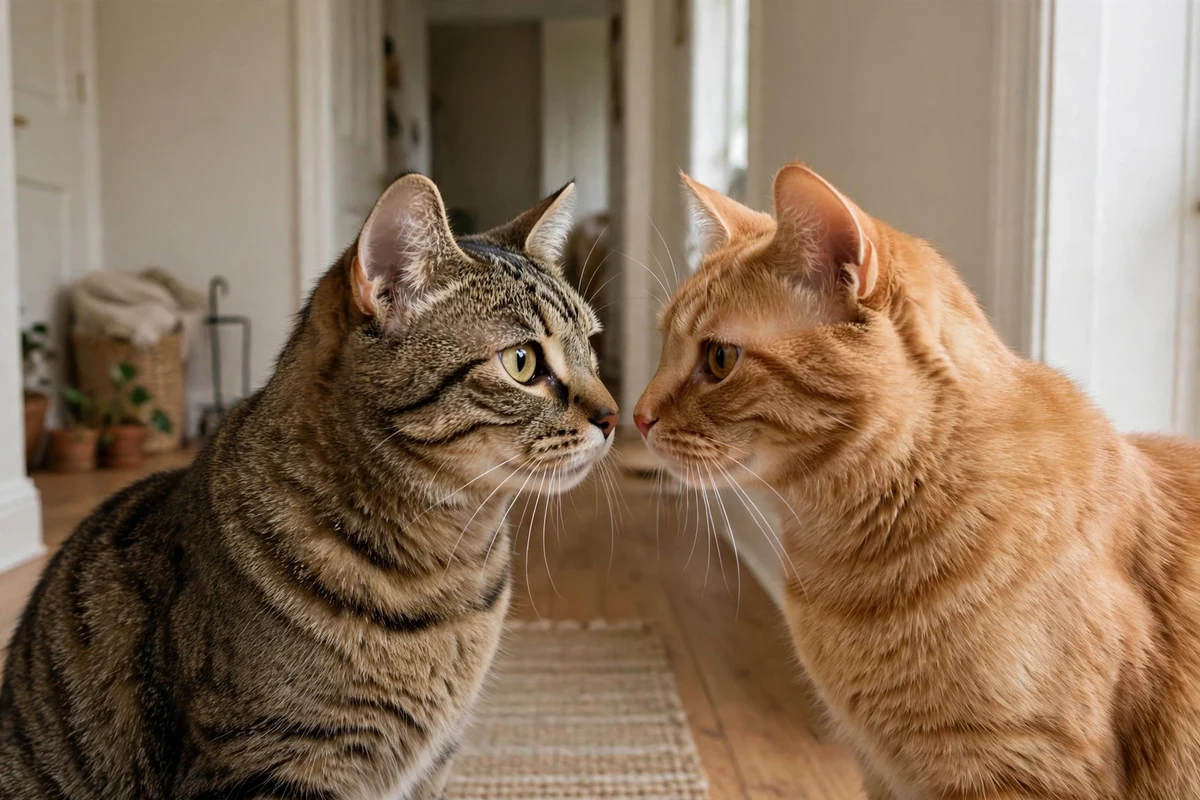
Should You Get a Second Cat?
Every cat owner has had the thought. The house is quiet, the cat is asleep on the sofa, and you wonder whether a second cat would make life better for both of you. It might. A second cat can give a lonely indoor cat a companion, a playmate and a warm body to sleep beside. It can also double the costs, double the litter boxes, and turn a peaceful home into a territory dispute that lasts for months. The difference between those two outcomes is rarely luck. It comes down to your cat’s personality, your home, your budget, and how slowly you introduce the two animals.
There is no universal yes or no. Some cats blossom with a companion. Some cats are genuinely solitary and will never accept another cat in their territory, no matter how carefully you introduce them. The honest work is to judge which kind of cat you already have, whether your home can hold two cats comfortably, and whether you can afford and manage the extra work for the next 15 years.
This is general information only and is not veterinary advice. If either cat has a health condition, or if introductions have already gone badly, ask your vet or a feline behaviourist before trying again.
Key Takeaways
- A second cat is a systems decision, not only an emotional one. Space, resources, routines and money matter more than good intentions.
- Two cats need three litter boxes, in separate places. One box per cat plus one extra is the standard rule, and it applies to food bowls, water bowls, beds and perches too.
- Costs roughly double. Food, litter, vet care, insurance and boarding all scale with the second cat, for 15 years or more.
- The best pairings are two kittens together, or a kitten with a gentle adult. A young kitten with a senior cat is the hardest match.
- Introductions take 2 to 6 weeks at least, and some pairs need 2 to 3 months. Scent first, sight second, meeting last.
- Health screening comes before the cats meet. The new cat needs a vet check and FeLV and FIV testing, plus flea and worm treatment.
- A second cat does not fix a problem cat. A bored, anxious or aggressive cat needs enrichment, play and vet care, not a roommate. Start with how to stop unwanted cat behaviors instead.
Start With a Home Audit, Not a Feeling
Before you browse for a second cat, walk through your home with fresh eyes and count what two cats would need. Each cat needs its own food station, its own water station, its own litter box plus one spare, its own bed, and its own high perch. Those resources must sit in different places, because two bowls side by side count as one resource in a cat’s mind, and two litter boxes in the same corner count as one box. A confident cat can guard a single location and block the other cat from everything in it.
Count the rooms with doors. You need at least one spare room with a door that closes, for the new cat’s first weeks. A bathroom can work for a short stay, but a spare bedroom or study is far better. If every room in your home is open plan and you have no door to close, a slow introduction becomes very hard. Count the litter box locations too. Two cats need three boxes, and those boxes need three separate spots, ideally on different floors if you have them. If you cannot find three spots, the home is not ready for a second cat.
Finally, count the quiet. Two cats need enough space to avoid each other when they want to. A one bedroom flat can work for two bonded cats that like each other, but it is a hard home for two cats that merely tolerate each other. Be honest about the size of your home. A second cat in a home that is already full will not make the first cat happier.
The Real Cost of a Second Cat
A second cat roughly doubles the running costs. That is easy to say and harder to feel until you see the numbers. The table below shows typical annual costs for one cat and for two, using mid range US figures. Prices vary by region and by brand, so treat these as a planning guide, not a quote.
| Expense | One cat per year | Two cats per year |
|---|---|---|
| Food | $300 to $720 | $600 to $1,440 |
| Litter | $180 to $360 | $360 to $720 |
| Routine vet care and vaccines | $150 to $300 | $300 to $600 |
| Flea and worm prevention | $120 to $240 | $240 to $480 |
| Pet insurance | $300 to $600 | $600 to $1,200 |
| Toys, scratchers and extras | $60 to $120 | $100 to $200 |
| Total, before emergencies | $1,110 to $2,340 | $2,200 to $4,640 |
Emergencies double too, and they are the costs that catch owners out. A urinary blockage, a broken tooth, or a swallowed object can cost $1,000 to $3,000 per cat, and two cats means twice the chance of a bad year. Keep an emergency fund of at least $1,000 per cat, or hold insurance for both. Boarding and sitting also double: a sitter who charges $25 a visit will charge more for two cats, and a cattery charges per cat per night.
There are also one off costs at the start: a second carrier, a third litter box, extra bowls, another bed, another scratching post, and a vet visit with blood tests for the new cat. Budget $300 to $600 for the setup, on top of the adoption fee. If those numbers make you uneasy, that unease is useful information. A second cat adopted into a tight budget becomes a source of stress, and a stressed owner makes a tense home for both cats.
Which Pairings Work, and Which Rarely Do
Pairing matters more than most owners expect. Cats are not like dogs, and they do not automatically enjoy company. The table below is a rough guide based on what shelters and behaviourists see most often. Every cat is an individual, so treat it as a starting point and ask the shelter about the specific cats involved.
| Pairing | Usually works? | Notes |
|---|---|---|
| Two kittens together | Yes, the easiest match | They burn off energy on each other and learn bite control together |
| Kitten with a gentle adult under 5 | Often works well | The adult teaches manners, but needs space away from a very bouncy kitten |
| Two adults with similar energy | Often works with a slow introduction | Matching energy matters more than matching age |
| Adult with a senior | Sometimes works | Only if the adult is calm; a boisterous adult will exhaust a senior |
| Kitten with a senior over 10 | Rarely works well | The kitten’s energy overwhelms the senior, and the senior may become stressed or unwell |
| Two seniors | Often works | Both are calm and both want the same quiet life |
| Two cats that are already bonded | Yes, adopt together | Separating a bonded pair causes real distress; shelters often adopt them for close to the price of one |
Age is only part of the picture. Personality matters more. A confident, social cat that greets visitors and has lived with other cats is a far better candidate than a shy cat that hides from strangers, even if the shy cat is young. A cat that guards food, swats at visitors, or has a history of fighting with other cats is telling you clearly that it prefers to live alone. Listen to that.
Signs Your Cat Might Want Company
Some cats show clear signs that they would enjoy a companion. A young indoor cat that is alone for long hours, that plays roughly with your hands, that races around the house at night, or that follows you from room to room may be bored and understimulated. A cat that grooms excessively, overeats, or scratches furniture out of frustration may also be asking for more stimulation. A companion can help with all of these, but so can more play, more enrichment and more of your time, so try those first. If you double the play sessions and add puzzle feeders and climbing space, and the cat is still restless, a second cat is a reasonable next step.
Signs a Second Cat Is a Bad Idea Right Now
Some signs point firmly against a second cat. A cat over seven years old that has lived alone its whole life rarely welcomes a newcomer, and forcing one can cause lasting stress. A cat that hides from visitors, hisses at cats seen through the window, guards its food or litter box, or has a history of redirected aggression is saying no in the clearest way it can. A cat that is currently unwell, recovering from surgery, or on medication for stress or anxiety needs stability, not a new housemate.
If your budget is already tight, or your home is already full, wait as well. The right time is when the home is calm, the money is steady, and the first cat is healthy and settled.
Health Screening Before the Cats Meet
Never bring a new cat home and put it straight in with your resident cat. The new cat needs a vet check first, and the two cats must be kept apart until that check is done. Ask your vet to test the new cat for feline leukaemia virus (FeLV) and feline immunodeficiency virus (FIV), to check for fleas, ear mites and worms, and to confirm vaccinations are up to date. Treat for fleas and worms before the cats meet, even if the new cat looks clean. A single flea can infest a whole house in days.
Keep the new cat in its own room for the first days at least, with its own litter box, food, water, bed and toys. Set up the room with the items in our new cat owner starter kit before adoption day. This is not only about behaviour. It is quarantine, and it protects your resident cat from any illness the new cat may be carrying without showing signs. Upper respiratory infections are common in shelter cats and spread easily. A week or two of separation is a small price for keeping both cats healthy.
If your resident cat is due for a vet visit, bring it forward. Make sure its vaccinations are current and ask your vet whether any extra protection is sensible before the new cat arrives. A healthy resident cat copes with introductions far better than one carrying a low grade illness you have not noticed.
The Slow Introduction: Scent First, Sight Second, Meeting Last
The introduction is where most second cat plans succeed or fail, and the rule is simple: go slowly, and let the cats set the pace. The whole process takes 2 to 6 weeks for most pairs, and some need 2 to 3 months. Rushing is the most common cause of failure. A bad first meeting is hard to undo, because the cats remember it. The steps below follow the method used by International Cat Care, Cats Protection and most shelters, and each step is gated on the previous one staying calm.
Step 1, separate rooms, days 1 to 3 at least. The new cat gets its own room with everything it needs: litter box, food, water, bed, hiding place, scratching post and toys. The door stays closed. The resident cat keeps the rest of the house, and its routine does not change. Visit the new cat often, play with it, and let it settle. The goal is simple: both cats eat, sleep and use the litter box normally.
Step 2, scent swapping, days 2 to 7. Cats learn each other through smell long before they meet. Rub a clean cloth gently on one cat’s cheeks and forehead, where the scent glands sit, and leave it near the other cat’s resting spot. Do the same in reverse. Swap bedding between the two rooms daily. Feed both cats on opposite sides of the closed door, so the smell of the other cat starts to predict good things. Advance only when both cats sniff the cloth calmly or ignore it, and eat calmly at the door.
Step 3, room swapping, days 5 to 10. Let the new cat explore the rest of the house while the resident cat is shut in another room, then let the resident cat sniff around the new cat’s room. This lets each cat read the other’s territory without a confrontation. If either cat hisses, sprays or hides afterwards, go back to scent swapping for a few more days.
Step 4, visual contact through a barrier, week 2 to 3. Crack the door open a few centimetres, or use a baby gate or a mesh screen, so the cats can see each other but cannot touch. Keep sessions short, five to ten minutes, and end each one with a treat for both cats. If either cat freezes, stares hard, growls or tries to lunge, close the door calmly and try again the next day. A little hissing is normal. Lunging, pinning or screaming is not, and means you moved too fast.
Step 5, short supervised meetings, week 3 to 4. Open the door with both cats in the same room, stay with them, and keep a wand toy and treats ready. Keep meetings short and end them before tension builds. A good sign is when both cats can eat in the same room, or play with separate toys without staring at each other. A bad sign is when one cat stalks the other, blocks the doorway, or guards the food bowl. If that happens, separate them and return to the barrier stage.
Step 6, longer shared time, week 4 onward. Extend supervised time gradually, then leave the cats together unsupervised for short periods while you are in another room. Keep the new cat’s room available as a retreat for several more weeks, with the door open so either cat can use it. Most pairs need 5 to 7 consecutive calm days before unsupervised time becomes the norm. Some pairs take months to reach that point, and that is fine. The goal is not speed. The goal is two cats that can share a house without fear. Our step by step guide to introducing a new cat to your home covers the same method with more detail on each stage.
The First Weeks Together
Keep the resources duplicated even after the cats are sharing the house. Three litter boxes in separate spots, two or three feeding stations in different rooms, multiple water bowls, more beds than cats, and more high perches than cats. Feed the cats separately if either one guards food, and keep the bowls far apart. Play with each cat separately as well as together, so neither one feels it has lost your attention. See playing with your cat the right way for toy and session ideas.
Protect the resident cat’s routine. Keep its feeding times, its favourite sleeping spots and its play sessions unchanged. Give the resident cat attention first when you come home, so it does not associate the newcomer with losing you. Small things matter: a cat that feels replaced becomes resentful, and resentment shows up as guarding, spraying or hiding.
Expect some tension in the early weeks. A hiss, a swat, a stare or a short chase is normal while the cats sort out their boundaries. What matters is the pattern over days. If the cats can eat in the same room, sleep in the same room, and pass each other without freezing, they are on the right track. If one cat stops eating, hides all day, or starts soiling outside the litter box, separate them and slow down.
When It Is Not Working
Some matches do not work, even with a slow introduction and a well set up home. The signs are consistent: weeks of hiding, refusal to eat near the other cat, constant guarding of doorways and litter boxes, urine spraying, overgrooming, or fights that draw blood. If you see those signs after two or three months of careful work, the match may be wrong, and no amount of patience will fix a fundamental incompatibility.
Before deciding, ask for help. A feline behaviourist can watch the cats and spot a cause you have missed, such as a resource placed in the wrong spot or an outdoor cat visible through a window that is driving the tension. A vet check is worth doing too, because pain can make a cat aggressive, and a cat in pain will not settle with another cat until the pain is treated.
Deciding With a Clear Head
A second cat can be one of the best things you do for your first cat, or one of the most stressful. The deciding factors are not mysterious. A young, social, healthy resident cat, a home with room for three litter boxes and two feeding stations, a budget that can double, and an owner with several weeks to supervise a slow introduction: those are the ingredients of a success. An old, solitary or unwell cat, a small flat with no spare room, a tight budget, or a chaotic few months ahead: those are the ingredients of a failure.
If the audit says yes, choose the new cat carefully. Tell the shelter about your resident cat’s age, energy and temperament, and ask which of their cats has lived with other cats successfully. Ask for a trial or a foster to adopt arrangement if the shelter offers one. Then follow the slow introduction without skipping steps, and judge the result over weeks, not days. Two cats sleeping on the same sofa, grooming each other and playing together, is a sight that makes all the patience worthwhile.