
Why Does My Cat Chew on Everything?
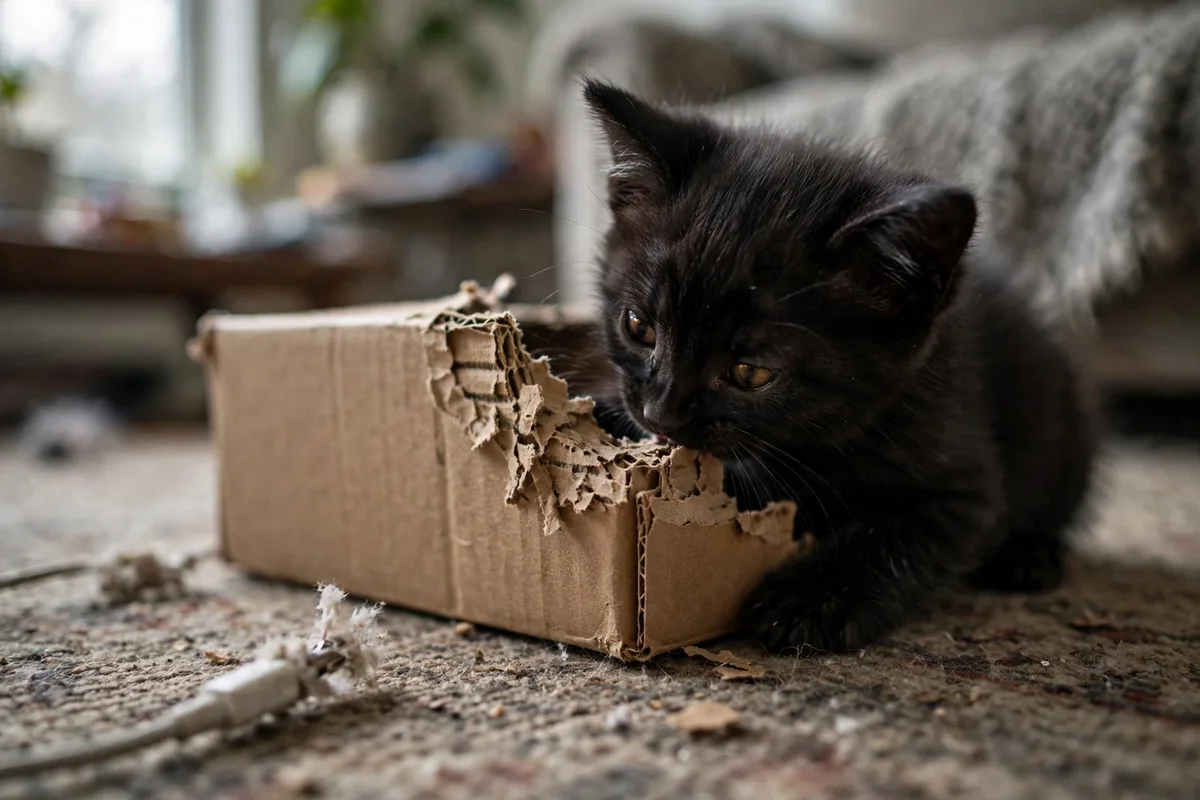
Your phone charger has teeth marks. The corner of the cardboard box is gone. The houseplant looks eaten, your shoelaces are frayed, and there is a hole in your favourite sweater. Your cat chews on everything, and the things it chooses seem to be exactly the things you need most.
Some of that chewing is completely normal. Cats explore the world with their mouths, kittens chew while they teethe, and a bored cat will chew whatever is nearest. But some chewing is dangerous, and the line between normal and dangerous is not how much the cat chews, it is what the cat chews and whether it swallows it. Cords can kill, string can block the gut, and fabric can need surgery to remove.
The information here is general information only and is not veterinary advice. If your cat swallows a nonfood item, chews a live cord, stops eating, vomits, or suddenly starts chewing out of nowhere, contact your vet.
Key Takeaways
- Some chewing is normal: kittens teethe, and all cats explore new textures with their mouths. Chewing becomes a problem when the cat swallows things, targets cords, or cannot stop.
- Kittens lose their baby teeth from about 3 to 4 months and have their permanent teeth by about 6 to 7 months. Teething chewing usually fades on its own.
- Electrical cords are the most dangerous target. Chewing through insulation can cause electric shock, burns, or death.
- String, thread, yarn, ribbon, and hair ties are the most dangerous swallowed items. They can saw through the gut wall as the intestine tries to pass them.
- Pica is the persistent eating of nonfood items. It is more common in Siamese, Burmese, and other Oriental breeds, and it is linked to early weaning and compulsive behaviour.
- Never pull on a string you can see coming out of your cat. It may extend into the gut, and pulling can cause serious damage.
- A vet exam comes before calling chewing a behaviour problem. Dental pain, nausea, and gut disease can all drive chewing.
- Most chewing improves with safe chew alternatives, more play, cord covers, and removing the tempting items, not with punishment.
The Short Answer: Why Does My Cat Chew on Everything?
Cats chew on everything because their mouths are how they investigate the world. A kitten chews to soothe sore gums while its adult teeth come in. An adult cat chews a new object to learn its texture, taste, and smell. A bored or stressed cat chews because chewing is something to do, and a cat that has learned chewing gets attention will chew the thing you care about most, because that is the thing that gets the fastest reaction.
Most chewing is harmless and fades with age, play, and better alternatives. The chewing that matters is the chewing you should act on today: cords, string, plastic bags, toxic plants, and anything the cat actually swallows. Those items need removing first, and the reasons behind them need a vet check if the chewing started suddenly or the cat is eating nonfood items every day.
Is Chewing Normal? The One Minute Test
Ask three questions. First, does the cat chew and then walk away, or does it chew and swallow? A cat that mouths an object, drops it, and moves on is exploring. A cat that chews and swallows fabric, plastic, or string has a problem worth a vet visit. Second, what is the target? A cardboard box, a toy, or a paper ball is low risk. A live cord, a toxic plant, or a hair tie is high risk, whatever the amount. Third, how often? Occasional chewing of a new object is normal. Constant chewing, chewing that damages the cat, or chewing paired with hiding, overgrooming, or appetite change is not normal, and it needs a vet check.
Age matters too. Kittens chew more than adult cats, and most cats grow out of heavy chewing as they mature, keeping the habit only if it became a form of play or comfort. A sudden change is the warning sign: a cat that never chewed and suddenly starts, or a cat that starts chewing and swallowing nonfood items, needs a vet exam before any training plan.
7 Reasons Your Cat Chews on Everything
Most cats chew for one main reason and one or two smaller ones. Find the main reason first, because the fix follows it.
1. Kittens Chew Because They Are Teething
Just like human babies, kittens go through a teething stage as their adult teeth develop. Kittens generally begin losing their baby teeth at around 3 to 4 months of age, and most have their permanent teeth by approximately 6 to 7 months. During those months, sore gums make chewing feel good, and kittens will target soft and textured things: cardboard, fabric, fingers, and cables. Teething chewing is normal, it usually fades once the adult teeth are in, and the main job is to keep dangerous items out of reach until it passes.
2. Cats Explore the World With Their Mouths
Cats investigate new things with their paws, noses, and mouths, much like human babies do. A new object in the house gets sniffed, pawed, and then mouthed, because the mouth gives information the nose cannot: texture, taste, and whether the thing gives way. Plastic, string, and fabric are popular because they feel interesting and smell of the people who handled them. This kind of chewing is usually brief. Once the cat has learned what the object is, interest drops, and the cat moves on.
3. Boredom and Too Little to Do
A cat with nothing to hunt, nothing to play with, and nothing new to investigate will chew whatever is nearest. Indoor cats are most at risk, because they cannot hunt or patrol, and a flat with the same toys in the same rooms gets boring by the afternoon. Boredom chewing often targets the same few items every day, and it comes with other boredom signs: scratching furniture, racing around at night, or overgrooming. More play and more enrichment usually cut it right down.
4. Stress and Anxiety
Some cats chew or repeatedly mouth objects when they are stressed, the way some people bite their nails. A move, a new pet, a new baby, building work, or a stray cat outside the window can all start it. Stress chewing is often paired with other changes, like hiding, overgrooming, or being jumpier than usual. If the chewing started at the same time as a change in the house, the change is probably the cause, and calming the stress matters more than blocking the chewing.
5. Attention: Chewing Gets a Reaction
Cats learn fast, and chewing is a very effective way to summon a person. A cat that chews a phone charger gets an immediate reaction: you jump up, you talk, you take the charger away, and you look at the cat. From the cat side, that is a clear result. If you react the same way every time, the cat will keep choosing the item that gets the biggest reaction, which is usually your charger, your shoes, or your clothes.
6. Dental Pain and Mouth Problems
Not every chewing habit is behavioural. Dental disease, sore gums, tooth resorption, mouth injuries, nausea, and gastrointestinal problems can all drive unusual licking, chewing, or eating. A cat with a sore mouth may chew soft objects for relief, or may chew on one side only, drool, drop food, or eat less. If your cat suddenly starts chewing, chews and cries, or has bad breath, bleeding gums, or trouble eating, book a vet check before you try any training.
7. Pica: When Chewing Becomes a Compulsion
Pica is the persistent eating of nonfood items, and it is different from curiosity chewing because the cat seeks the item out, eats it, and does it again and again. Common targets are fabric, wool, plastic bags, rubber bands, paper, cardboard, houseplants, string, and electrical cords. It is more common in Siamese, Burmese, Birman, Tonkinese, and other Oriental breeds, which points to a genetic link, and it is also linked to early weaning, boredom, gut disease, and compulsive behaviour. The exact cause is not fully understood, and most cases have more than one cause. If your cat regularly eats nonfood items, contact your vet, because swallowed material can block the gut and need surgery.
What Your Cat Chews, Ranked by Danger
Not all chewing targets are equal, and the fix depends on the danger, not on how annoying the damage is. Use this table to decide what to remove today and what can wait.
| Target | Danger | Action today |
|---|---|---|
| Live electrical cords and cables | Highest: shock, burns, death | Unplug, cover, or route out of reach now |
| String, thread, yarn, ribbon, hair ties | Highest: gut blockage, saw injury | Put away entirely, never leave out |
| Plastic bags and packaging | High: blockage, choking, suffocation | Store in a closed cupboard, cut bag handles |
| Toxic houseplants | High: poisoning, lilies can cause kidney failure | Remove lilies from the house, check every plant |
| Fabric, wool, socks, and clothes | Medium to high: blockage if swallowed | Keep laundry in closed baskets and drawers |
| Cardboard and paper | Low if not swallowed in large amounts | Safe to chew, remove small swallowed pieces |
| Cat toys and silvervine sticks | Low | Offer as the legal alternative |
Pica in Cats: Wool Sucking, Fabric, and Plastic
Wool sucking is the behaviour most owners notice first. The cat takes a fold of fabric into its mouth and sucks rhythmically, often with drooling, the way a kitten nurses. It is common in Siamese and other Oriental breeds, it often appears when the cat is about 1 to 1.5 years old, and it is linked to early weaning before 8 weeks of age, when the kitten misses the nursing stage. On its own, wool sucking is usually harmless self soothing. It becomes pica, and becomes dangerous, when sucking progresses to chewing and swallowing.
Managing pica is about management, not cure, especially in Oriental breeds where it is likely to be lifelong. Remove the target items, keep the cat busy with play and puzzle feeders, reduce stress, and keep a vet involved, because gut disease, hyperthyroidism, diabetes, anaemia, and nutritional problems have all been linked to pica. Keep a note of what the cat eats, how often, and whether it passes normally, because that record helps the vet far more than a description.
What to Do Right Now: Cord Safety in 10 Minutes
Start with the cords, because they are the one target that can kill. Walk the rooms your cat uses and count the cables at cat height: phone chargers, laptop cables, lamp cords, television cables, and extension leads. Unplug anything you are not using. Bundle the rest with cable ties and push them behind furniture, under a desk, or inside a cable box so the cat cannot reach them. Cover any cord that must stay out with a hard plastic cord cover or a split tube, which is cheap and sold for exactly this job. Raise power strips off the floor and fix them to the wall or the back of a desk.
How to Stop Your Cat Chewing on Everything: 6 Steps
Work through these in order. Step 1 is safety, steps 2 to 4 give the mouth something better to do, and steps 5 and 6 fix the cause behind the chewing.
Step 1: Remove the Dangerous Items First
Before any training, remove the high danger items from the table above. Put string, hair ties, rubber bands, and thread in closed drawers. Store plastic bags in a closed cupboard and cut the handles off any bag left out. Move toxic plants out of the house, and keep laundry in closed baskets.
Step 2: Give the Mouth a Legal Job
Offer safe things to chew: silvervine sticks, cat chew toys, cardboard boxes, and paper balls. Rotate them weekly so they stay new. Some cats like a frozen lick mat or a food puzzle, which keeps the mouth busy in a safe way. Do not offer dog chews, cooked bones, or small toys that can be swallowed, and do not offer rawhide, which can block the gut.
Step 3: Play and Enrichment Before the Chewing Hour
Most chewing has a trouble hour, usually when the house is quiet or before a meal. Play before it, not after it. Two short wand toy sessions a day, 10 to 15 minutes each, plus a puzzle feeder for part of the daily food, will cut most boredom chewing. A cat that has hunted, caught, and eaten is a cat with no energy left for your charger. The same play drive that makes cats chew is behind cats that eat grass and chew plants, so giving the mouth a safe plant like cat grass can help too.
Step 4: Make Cords Boring and Unreachable
Use hard cord covers, cable boxes, and routing behind furniture, and keep chargers in a drawer when not in use.
Step 5: Calm the Stress, Do Not Just Block the Chewing
If the chewing started with a change in the house, fix the stress. Keep feeding times steady, give the cat a quiet hiding place and a high perch, and introduce new people, pets, or furniture slowly. A calm cat with a safe routine chews less, and a cat that is only blocked from chewing will find a new target.
Step 6: Reward Chewing the Right Things
When the cat chews a silvervine stick, a toy, or a cardboard box, give a treat or a quiet word. When the cat chews a cord, stay calm, remove the cord quietly, and offer the legal alternative. Cats repeat what pays off. If legal chewing earns attention and illegal chewing earns nothing, the cat will choose the legal option. A healthy diet supports all of this, and choosing the best cat food matters, because a cat that is hungry or missing nutrients is more likely to chew strange things.
What to Do If Your Cat Chews a Live Cord or Swallows String
If your cat chews a live cord, do not touch the cat while it is still in contact with the cord. Switch off the power at the socket or the breaker first, then move the cat away. Check for burns around the mouth, drooling, breathing trouble, or collapse. Even if the cat looks fine, contact your vet at once, because internal burns and heart effects can appear later. If your cat swallows string, thread, or a hair tie, do not pull on any string you can see, because it may extend into the gut and pulling can saw through the intestinal wall. Keep the cat calm, remove any remaining string from reach, and contact your vet at once.
When Chewing Means Something Is Wrong: Vet Red Flags
Book a vet check before any training if the chewing started suddenly, the cat swallows nonfood items, the cat chews and cries, drools, drops food, or eats less, or the chewing comes with vomiting, diarrhoea, weight loss, hiding, or overgrooming. Dental disease, nausea, gut disease, hyperthyroidism, and diabetes can all drive chewing, and only a vet exam can rule them out. For the vet reviewed background, PetMD explains why cats chew on things and when chewing needs a vet.
What NOT to Do
Do not punish the cat for chewing, and do not spray it with water or shout. Punishment teaches fear, not a lesson, and a frightened cat will chew more, or will chew only when you are not looking. Do not use a spray bottle, do not tap the cat mouth, and do not smear hot sauce or chilli on cords, because those can burn the cat mouth and cause more harm. Do not pull string out of a cat mouth or rear, and do not wait and see after a cord chew or a swallowed hair tie. Those are vet matters, not training matters.
FAQ
Why does my cat chew on cords and wires?
Cords are thin, they move when touched, and they often sit at cat height behind furniture where cats like to hide. Cover them, route them out of reach, and give the cat a silvervine stick as a legal alternative.
Why does my cat chew on plastic bags?
Plastic bags feel interesting, smell of food or people, and make a noise when chewed.
Why does my kitten chew on everything?
Your kitten is teething and learning the world with its mouth. Baby teeth fall out from about 3 to 4 months, and adult teeth are in by about 6 to 7 months. Keep cords and string away until then, and offer cardboard and chew toys.
Why does my cat chew on fabric and clothes?
Fabric chewing is often wool sucking, a nursing behaviour that is common in Siamese and Oriental breeds and linked to early weaning. Keep laundry in closed baskets, and ask your vet if the cat swallows fabric.
Why does my cat chew on plants?
Cats chew plants out of curiosity, for texture, or because they like the taste. Some plants are toxic, and lilies can cause kidney failure, so check every plant, remove lilies, and offer cat grass instead.
Is it safe to let my cat chew cardboard?
Yes, for most cats. Cardboard is a safe chew as long as the cat does not swallow large amounts of it. Remove small swallowed pieces, and take the box away if the cat eats it rather than chewing it.
The Bottom Line
A little chewing is normal, and most of it fades with age, play, and better alternatives. The chewing that matters is cords, string, plastic, and anything the cat swallows. Remove those first, give the mouth a legal job, play before the chewing hour, and get a vet check if the chewing started suddenly or the cat eats nonfood items every day. Your cat is not being naughty. It is exploring, teething, bored, stressed, or unwell, and each of those has a fix.