
Your Cat Loves the Smell of Bleach. The Liquid Is Another Story
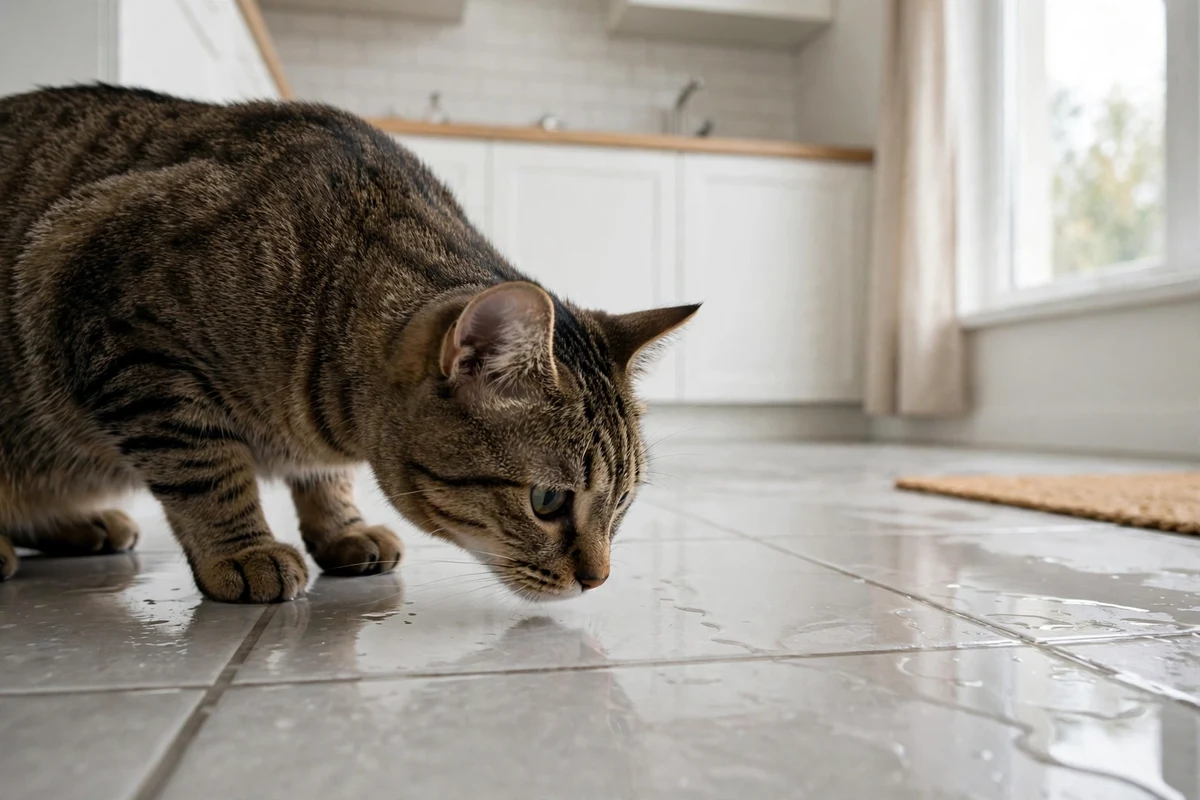
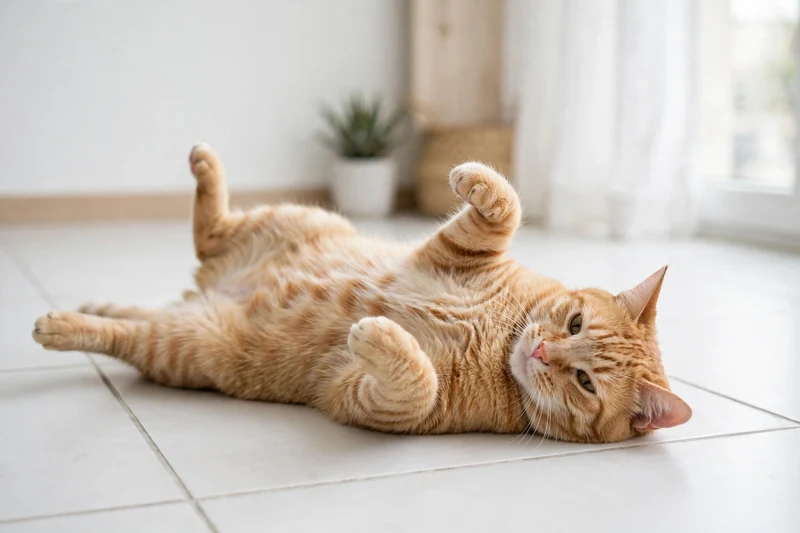
Your cat has found the patch of floor you just mopped, and now she is sniffing hard, rolling on her back, rubbing her cheek on the tiles, and purring like she has found something wonderful. The short answer is that nobody knows exactly why cats like bleach, but the best explanations all point to the smell. The chlorine in bleach seems to smell like feline pheromones to a cat, or like cat urine, or both, and the reaction looks a lot like the reaction to catnip. The attraction is real, the reason is still a theory, and the danger is certain: bleach is toxic to cats, and a cat that rolls in it and then licks her fur is swallowing a corrosive poison.
What a cat attracted to bleach actually does
A cat attracted to bleach will sniff the cleaned surface again and again, often with her mouth slightly open. She may roll on her back, rub her cheek on the floor, purr, and sometimes drool. It is the same happy, rolling pattern cats show with catnip, which is why owners often laugh at it first. Do not laugh it off. Keep your cat out of any room where you are using bleach, and keep her away until the floor is rinsed and completely dry. Never let a cat lick a bleached surface, a mop, or a puddle.
Three explanations for the smell link
Three explanations appear in almost every ranking page, and none has been proven in a study. First, the chlorine in bleach may smell like the pheromones cats use to mark safe territory, so the floor smells like a message from another cat. Second, it may smell like cat urine, which is why cats rolling in bleach look like cats investigating a new cat. Third, the strong smell itself may simply excite the same scent pathways as catnip. Genetics almost certainly plays a part, just as it does with catnip: some cats do not respond to catnip at all, and some cats walk straight past a mopped floor while their housemate rolls on it. Whichever explanation is right, the practical rule is the same: the smell is interesting to your cat, and the liquid is dangerous to her.
How bleach harms a cat, and what to do first
Household bleach is a solution of sodium hypochlorite, usually at 5 to 6 percent strength, and it is corrosive to the eyes, skin, paw pads, airways, mouth, and digestive tract. Bleach poisoning in cats signs usually appear within 4 to 6 hours, but they can be delayed up to 24 hours, according to Lort Smith Animal Hospital, so a cat who looks fine straight after contact still needs watching. Watch for drooling, vomiting, pawing at the mouth, coughing, or a cat who suddenly goes quiet and hides. If your cat has touched or licked bleach, act quickly and stay calm: rinse the fur and paws with water, offer water to drink, do not try to make the cat vomit, and contact your vet straight away, even if the cat looks fine. The International Cat Care guide to poisoning in cats covers the general signs and the first steps to take, and the VCA guide to household hazards lists the common products that harm cats. The ASPCA Animal Poison Control page is the number to keep on the fridge for a poisoning scare.
A cleaning routine that keeps cats safe
You do not have to give up bleach entirely, but you do have to change how you use it. Shut the cat out of the room before you start, mop with a dilute solution, rinse the floor with clean water, and let it dry completely before the cat comes back. Never clean cat urine with bleach: urine plus bleach makes toxic fumes, so use an enzyme cleaner for accidents instead. And do not use bleach as a deterrent in the garden or by a doorway. It does not keep stray cats away, and it can draw your own cat straight to the spot you wanted her to avoid.
Your cat is not being naughty when she rolls in bleach. She is following a smell that tells her something wonderful is there. Keep the wonderful smell out of her reach, and she can keep the delight without ever touching the danger.