
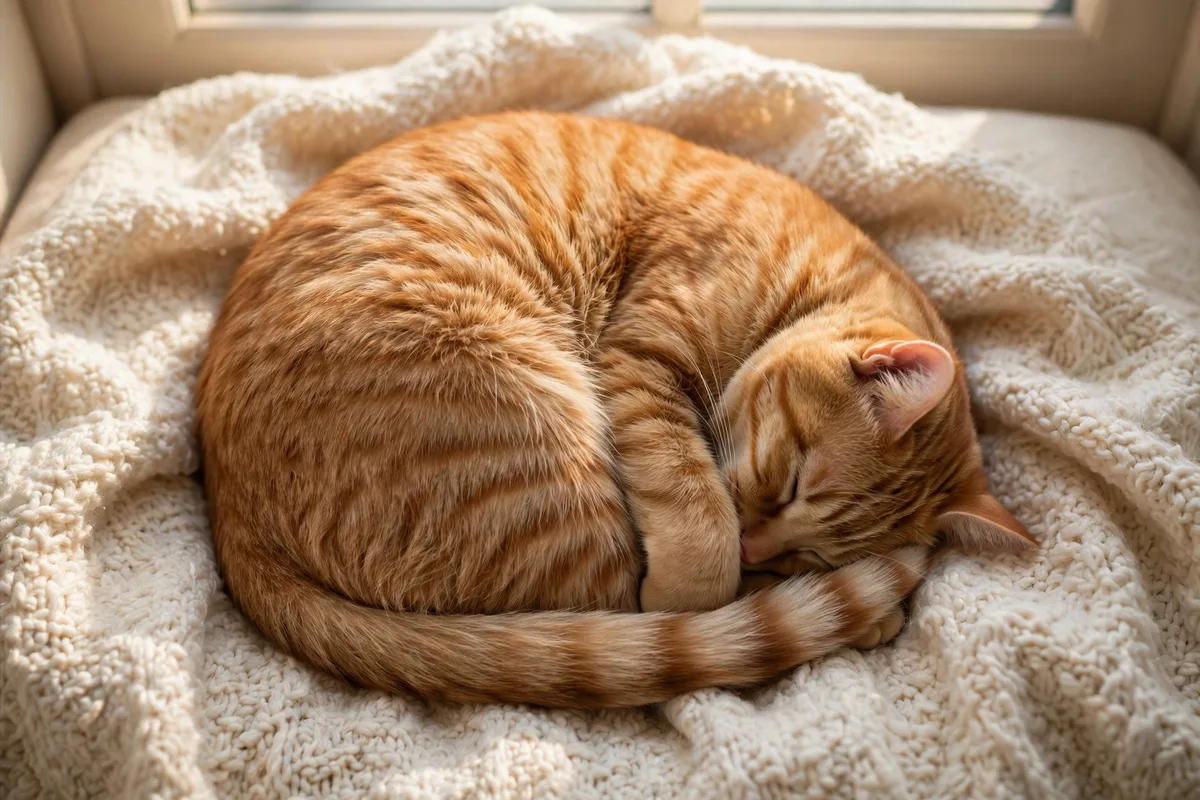
Your Cat Sleeps as a Little Ball Because It Is Warm, Safe, and Comfortable
You find your cat asleep as a tight round ball, nose tucked to tail, paws folded in, looking more like a furry doughnut than an animal. The short answer to why do cats curl into balls when sleeping has three parts, and every ranking page agrees on them. Cats curl into balls when they sleep because it keeps them warm, because it keeps them safe, and because it is comfortable. A ball has less surface exposed to the air, so it loses less heat. A ball hides the belly, throat, and chest, which are the softest and most vulnerable parts. And a cat body is built to fold that way, with a spine so flexible that the position costs the cat nothing.
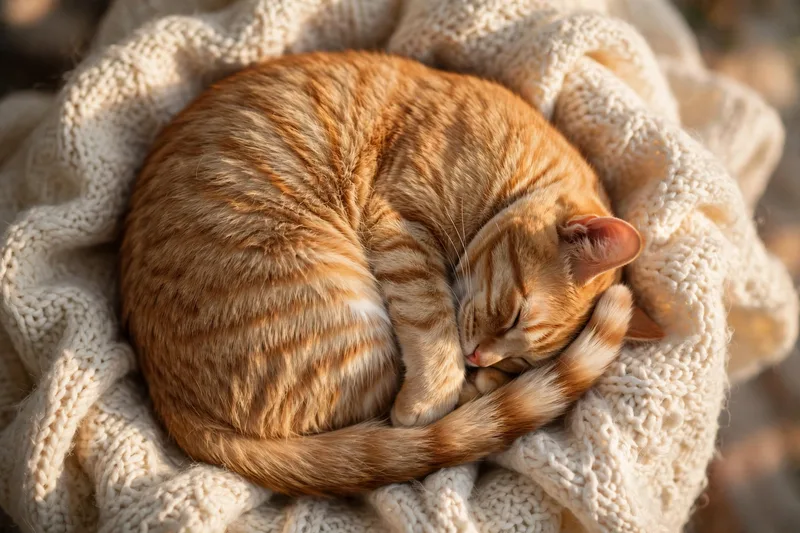
The heat maths: why a ball loses less warmth
Warmth is the reason every ranking page lists first, and it is the easiest to understand once you see the shape. A stretched out cat has a lot of skin exposed to the air, and every bit of skin loses heat. A cat sleeping curled up in a ball has far less skin showing, so the heat stays inside. Cats run warmer than us, at 100.5F to 102.5F, so a ball saves heat and guards the belly at the same time. Kittens curl up more than adults do, and for two reasons: a kitten is small and loses heat fast, and a kitten feels safer tucked in tight. A cat curls up when cold for the same reason you pull a blanket tighter: the shape is the blanket. In winter, a cat that curls tighter than usual is usually just cold, and the fix is warmth, not worry: a warmer room, a blanket in the bed, and a spot out of the draught.
More curling or less curling: read the change, not the pose
Most pages warn about curling more. Fewer warn about curling less. Both directions matter, and you should judge your cat against her own normal, not against other cats. A cat that suddenly curls up far more than usual, even in a warm room, may be cold, unwell, or in pain. A cat that suddenly stops curling up and sleeps flat and stiff may have sore joints. Arthritis, usually called osteoarthritis or degenerative joint disease, happens when the cartilage that cushions a joint wears down over time, so the bones rub together and cause pain and inflammation. It is very common in older cats, and the VCA guide to arthritis in cats explains the signs to watch for: moving and jumping less, less tolerance of petting, litter box changes, muscle loss, and an unkempt coat. The International Cat Care guide to arthritis in cats covers the same signs and what a vet check involves. An older cat stopped curling up is worth a vet visit, because a cat who stops folding herself into a ball is often a cat who cannot fold comfortably any more.
Choosing a bed for a cat that loves to curl
You do not need an expensive bed, but the right shape helps. A round bed with raised sides suits a curling cat far better than a flat mat, because the rim supports the curl and keeps the draught off. Put the bed in a warm, quiet corner, out of the main walkway, and add a soft blanket she can knead into shape. A cat who curls up in a ball is usually relaxed, not upset, and a good bed lets her stay that way for the whole nap. The International Cat Care guide to older cats explains how a senior cat needs change as she ages, including warmer and softer places to sleep. This is general information only, not veterinary advice.
Cats curl into balls when they sleep because a ball is warm, safe, and comfortable. The shape loses less heat, hides the soft parts, and fits a body built to fold. Know your cat’s normal, then trust the change.