
20 House Plants Toxic to Cats (And What to Do If Your Cat Eats One)
A houseplant is a decoration to you and a snack to your cat. Cats chew leaves out of curiosity, boredom, or habit, and some of the most common houseplants in the world can poison them.
The worst of them, the lily, can destroy a cat’s kidneys from a single leaf, a little pollen on the fur, or a drink from the vase water. That is not an exaggeration. It is the reason the ASPCA Poison Control Center receives more calls about lily exposure in cats than about any other plant.
The short answer is to keep the emergency plants out of the house entirely, know the symptoms, and act before symptoms appear. The 20 plants below are all verified against the ASPCA toxic plant list, and they are sorted into three urgency tiers: call a vet now, be seen today, and call for a plan.
If your cat has eaten a plant and you are not sure which one, call your vet or the ASPCA Animal Poison Control Center at (888) 426-4435, or the Pet Poison Helpline at (855) 764-7661. Both lines are open 24 hours a day, and both charge a consultation fee. Do not wait for symptoms, and do not try home remedies.
Our guide on what cats can eat covers the food side of the same question, and our guide on when to take your cat to the vet covers the thresholds that mean go now.
Key Takeaways
- 20 plants make the list, all verified against the ASPCA toxic plant list. 8 are emergency now, 6 need a vet today, 6 need a call for a plan.
- Lilies are the most dangerous plant on the list. Any part, pollen, or vase water can cause fatal kidney failure, and treatment delayed 18 hours or more means the damage is generally irreversible.
- Cedar is NOT on the list. True cedars are not listed by the ASPCA as toxic to cats. The toxic lookalike is white cedar, a different plant entirely.
- Symptoms vary by plant and some are delayed by hours or days. Waiting for symptoms is dangerous, especially for lilies and autumn crocus.
- Never induce vomiting and never give human medication unless a vet or poison control tells you to.
- Save the numbers now: ASPCA Animal Poison Control (888) 426-4435, Pet Poison Helpline (855) 764-7661.
The 20 Plants
| Plant | Toxic part | What it does | Urgency |
|---|---|---|---|
| 1. Lilies | All parts, pollen, vase water | Acute kidney failure | Call a vet now |
| 2. Sago palm | All parts, seeds worst | Vomiting, then liver failure | Call a vet now |
| 3. Oleander | All parts | Heart rhythm failure | Call a vet now |
| 4. Autumn crocus | All parts, bulb worst | Organ damage, often delayed | Call a vet now |
| 5. Castor bean | Seeds above all | Severe gut damage, collapse | Call a vet now |
| 6. Yew | Needles, bark, seeds | Sudden heart rhythm failure | Call a vet now |
| 7. Foxglove | All parts | Vomiting, abnormal heart rhythm | Call a vet now |
| 8. Azalea | Leaves and flowers | Drooling, vomiting, weakness, collapse | Call a vet now |
| 9. Kalanchoe | Whole plant, flowers worst | Vomiting, diarrhea, heart rhythm changes | Be seen today |
| 10. Tulip | Bulb far more than bloom | Drooling, vomiting, diarrhea | Be seen today |
| 11. Daffodil | Bulb far more than bloom | Vomiting, diarrhea, heart changes | Be seen today |
| 12. Amaryllis | Bulb most toxic | Vomiting, diarrhea, tremors | Be seen today |
| 13. Morning glory | Seeds and leaves | Behavior changes, tremors, convulsions | Be seen today |
| 14. Chrysanthemum | Whole plant | Vomiting, drooling, incoordination | Be seen today |
| 15. English ivy | Leaves and berries | Vomiting, diarrhea, drooling | Call for a plan |
| 16. Philodendron | Leaves and sap | Immediate mouth pain, drooling | Call for a plan |
| 17. Dieffenbachia | Leaves and sap | Immediate mouth pain, drooling | Call for a plan |
| 18. Aloe vera | Leaves, gel and latex | Vomiting, lethargy, diarrhea | Call for a plan |
| 19. Ficus | Leaves and sap | Skin and stomach irritation | Call for a plan |
| 20. Pothos | Leaves and sap | Immediate mouth pain, drooling | Call for a plan |
Emergency Now: 8 Plants
These eight plants can kill a cat, and the rule for all of them is the same: call a vet or poison control immediately, before symptoms appear, and go to the vet. Do not wait to see how the cat feels. With these plants, feeling fine is not good news. It is the quiet period before the damage shows.
1. Lilies: True Lilies and Daylilies
Lilies are the most dangerous plant a cat owner can bring into a house, and they are also one of the most common, in bouquets, in gardens, and at Easter. True lilies, Lilium species including Easter, tiger, Asiatic, Oriental, and stargazer lilies, and daylilies, Hemerocallis species, can cause acute kidney failure in cats. The ASPCA lists kidney failure and death, and says cats are the only species known to be affected.
Every part is toxic: leaf, petal, stem, pollen, and the water in the vase. A cat that brushes against a lily can get pollen on its coat and swallow it while grooming. A cat that drinks the vase water can be poisoned without ever eating a leaf.
The timeline is what makes lilies so frightening. Early signs include vomiting, drooling, loss of appetite, and lethargy within hours, and kidney failure develops over one to three days. The FDA warns that when treatment is delayed 18 hours or more, the kidney damage is generally irreversible. That is why the rule for lilies is different from every other plant on this list: do not wait for symptoms at all.
If you think your cat has touched a lily, call your vet or an emergency vet now. The simplest rule is the best one: keep true lilies out of a cat household entirely, including cut flowers. Peace lilies, calla lilies, and lily of the valley are not true lilies, but they have their own toxins, and they belong out of reach too.
2. Sago Palm
The sago palm, Cycas revoluta, is a popular garden and houseplant, and every part of it is toxic, with the seeds carrying the highest concentration of the toxin cycasin. A cat that eats sago palm usually starts vomiting, then develops bloody stools and liver failure, and the outcome can be death.
The seeds are the worst part, and they are also the part a cat is most likely to find on the ground. If your cat has eaten any part of a sago palm, that is an emergency vet visit, not a wait and see. Keep sago palms out of reach, and pick up fallen seeds in the garden.
3. Oleander
Oleander, Nerium oleander, is a common garden shrub with beautiful flowers and a serious poison. All parts contain cardiac glycosides, the same family of chemicals as foxglove and lily of the valley, and even a small amount can cause serious heart and neurological problems.
Signs include vomiting, an abnormal heart rhythm, and in severe cases death. Oleander is also toxic when dry, so a fallen leaf or a clipping on the ground is still dangerous. If your cat has eaten oleander, call a vet now.
4. Autumn Crocus
The autumn crocus, Colchicum autumnale, is not the spring crocus, and the difference matters. The spring crocus is a mild stomach irritant. The autumn crocus contains colchicine, and it is one of the most dangerous plants on this list.
Signs include oral irritation, bloody vomiting, diarrhea, shock, organ damage, and bone marrow suppression, and they are often delayed, which makes the plant more dangerous, not less. A cat that ate autumn crocus yesterday and looks fine today is not safe. All parts are toxic, with the bulb worst. Call a vet now.
5. Castor Bean
The castor bean plant, Ricinus communis, contains ricin, one of the most potent plant toxins known, concentrated in the seeds. A cat that chews a seed can develop severe abdominal pain, drooling, diarrhea, excessive thirst, loss of appetite, weakness, dehydration, muscle twitching, tremors, seizures, coma, and death.
The seeds look like attractive beans, and a cat that plays with them can crack one open. Keep castor bean plants out of any garden a cat can reach, and call a vet immediately if a seed has been chewed.
6. Yew
Yew, Taxus species including English, Japanese, Western, and American yew, is a common hedging shrub, and it contains taxine alkaloids that attack the heart. Signs include central nervous system dysfunction, difficulty breathing, gastrointestinal irritation, cardiac failure, and potential death, and the onset can be sudden. The needles, bark, and seeds are all toxic.
Yew is one of the few plants on this list where a cat can go from looking normal to collapsing quickly, which is why it sits in the emergency tier. If your cat has eaten yew, call a vet now.
7. Foxglove
Foxglove, Digitalis purpurea, is a tall garden flower with bell shaped blooms, and all parts contain cardiac glycosides. Signs include vomiting, a slow or irregular heartbeat, intense vomiting, and abdominal pain within a few hours of eating it, and they can progress to heart failure.
Foxglove is easy to recognise and easy to grow, which is why it appears in so many gardens. If your cat has eaten foxglove, call a vet now, and take a photo of the plant with you so the vet can confirm the identification.
8. Azalea and Rhododendron
Azalea and rhododendron, Rhododendron species, are the same genus, and both contain grayanotoxins in their leaves and flowers. Signs include drooling, vomiting, diarrhea, lack of appetite, heart arrhythmias, weakness, tremors, transient blindness, seizures, coma, and death.
Azaleas are common as garden shrubs and as potted gifts, and a cat that nibbles a leaf can be in serious trouble within hours. If your cat has eaten azalea or rhododendron, call a vet now.
Be Seen Today: 6 Plants
These six plants are less likely to kill quickly than the emergency tier, but they still need a vet visit the same day. Do not manage them at home without advice. Call the vet, describe the plant and how much the cat ate, and follow the instructions you are given.
9. Kalanchoe
Kalanchoe is a small succulent with bright flowers, sold in supermarkets and garden centers all year round, and the whole plant is toxic, with the flowers worst. It contains bufadienolides, which cause gastrointestinal irritation and heart damage. Signs include vomiting, diarrhea, and heart rhythm changes.
Kalanchoe is dangerous precisely because it is small, cheap, and easy to leave on a windowsill where a cat can reach it. Keep it out of the house, or on a shelf the cat cannot reach.
10. Tulip
Tulips contain tulipalin A and tulipalin B, concentrated in the bulb far more than in the bloom. A cat that nibbles a tulip flower will usually get drooling, vomiting, and diarrhea.
A cat that eats a bulb, often dug up in the garden, can develop central nervous system signs, convulsions, and cardiac abnormalities. The bulb is the danger. Keep tulip bulbs out of reach, plant them where the cat cannot dig, and call the vet the same day if a bulb has been eaten.
11. Daffodil
Daffodils, Narcissus species, are like tulips: the bulb is far more dangerous than the flower.
The bulbs contain lycorine and other gastric irritants that cause intense gastrointestinal irritation, drooling, vomiting, diarrhea, and loss of appetite, and in severe cases central nervous system dysfunction, convulsions, and cardiac abnormalities. Daffodils are one of the most planted spring bulbs, and cats dig. If your cat has eaten a daffodil bulb, call the vet the same day.
12. Amaryllis
Amaryllis, Hippeastrum species, is a popular holiday bulb, and the bulb is the most toxic part. Signs include vomiting, diarrhea, drooling, depression, abdominal pain, loss of appetite, and tremors.
Amaryllis is often given as a gift in a pot, and the pot sits on a table at cat height. Move it somewhere the cat cannot reach, or give it away. If the cat has eaten the bulb, call the vet the same day.
13. Morning Glory
Morning glory, Ipomoea species, is a fast growing vine with trumpet shaped flowers, and its seeds and leaves contain toxins that can cause behavioral alterations, violent convulsions, and tremors. Morning glory is common on fences and trellises, where a cat can reach the lower leaves. The seeds are the most concentrated part. If your cat has eaten morning glory seeds or leaves, call the vet the same day.
14. Chrysanthemum
Chrysanthemums, the autumn garden flower, contain pyrethrins and sesquiterpene lactones. Signs include vomiting, drooling, diarrhea, depression, and loss of coordination, and skin irritation is possible from contact. Chrysanthemums are everywhere in autumn, in pots on doorsteps and in garden beds, at exactly the height a cat walks past. If your cat has eaten chrysanthemum, call the vet the same day.
Call for a Plan: 6 Plants
These six plants are the most common houseplants on the list, and they are also the least dangerous, which is why they sit in the lowest tier. That does not mean they are safe.
A cat that eats them will usually be in pain and need advice, and the vet may want to see the cat. Call, describe the plant and the amount, and follow the instructions. Monitor at home only if the vet advises it.
15. English Ivy
English ivy, Hedera helix, is on the ASPCA toxic list, and it is one of the most common trailing houseplants. The leaves and berries cause vomiting, diarrhea, and drooling, and the saponins in the plant irritate the gut.
Ivy is often hung in baskets, and the trailing vines are exactly at cat batting height. Keep it out of reach, and call the vet if your cat has eaten a significant amount.
16. Philodendron
Philodendron, including the heartleaf and split leaf types, contains insoluble calcium oxalate crystals in its leaves and sap. A cat that bites a leaf gets immediate mouth pain, drooling, and pawing at the mouth, and may vomit.
The pain is usually the worst of it, and it starts instantly, which often stops the cat from eating more. Rinse the mouth gently if the vet advises it, and call for a plan. Philodendron is one of the most popular houseplants in the world, so check your shelves.
17. Dieffenbachia, Dumb Cane
Dieffenbachia, also called dumb cane, contains the same calcium oxalate crystals as philodendron, and the effect is the same: immediate mouth pain, drooling, foaming, and pawing at the mouth, with vomiting possible.
The name dumb cane comes from the swelling and pain it causes in the mouth, which can make speaking difficult in people. In cats it is painful and frightening, and the cat may refuse food for a day. Call the vet for a plan, and keep the plant out of reach.
18. Aloe Vera
Aloe vera is the plant people keep for sunburn, and it is toxic to cats. The leaves contain saponins and anthraquinones that cause vomiting, lethargy, and diarrhea. The gel inside the leaf is the part people use, and the latex just under the skin is the part that causes the trouble.
A cat that chews an aloe leaf will usually vomit and feel unwell for a day. Call the vet for a plan, and keep the plant where the cat cannot chew it.
19. Ficus, Rubber Plant and Weeping Fig
Ficus species, including the rubber plant and the weeping fig, cause skin and stomach irritation in cats. The sap is the irritant, and a cat that chews a leaf will usually drool, vomit, and develop diarrhea.
Ficus is a large and common houseplant, and the weeping fig drops leaves constantly, which gives a cat plenty of chances to nibble. Sweep up fallen leaves, and call the vet for a plan if the cat has eaten a significant amount.
20. Pothos
Pothos, Epipremnum aureum, also sold as devil’s ivy, is the trailing plant in almost every office and living room, and it contains the same calcium oxalate crystals as philodendron and dieffenbachia. A cat that bites a pothos leaf gets immediate mouth pain, drooling, and pawing at the mouth.
Pothos replaces cedar as the 20th plant on this list, because it is a verified ASPCA toxic houseplant and far more common in cat households than any cedar. If your cat has eaten pothos, call the vet for a plan.
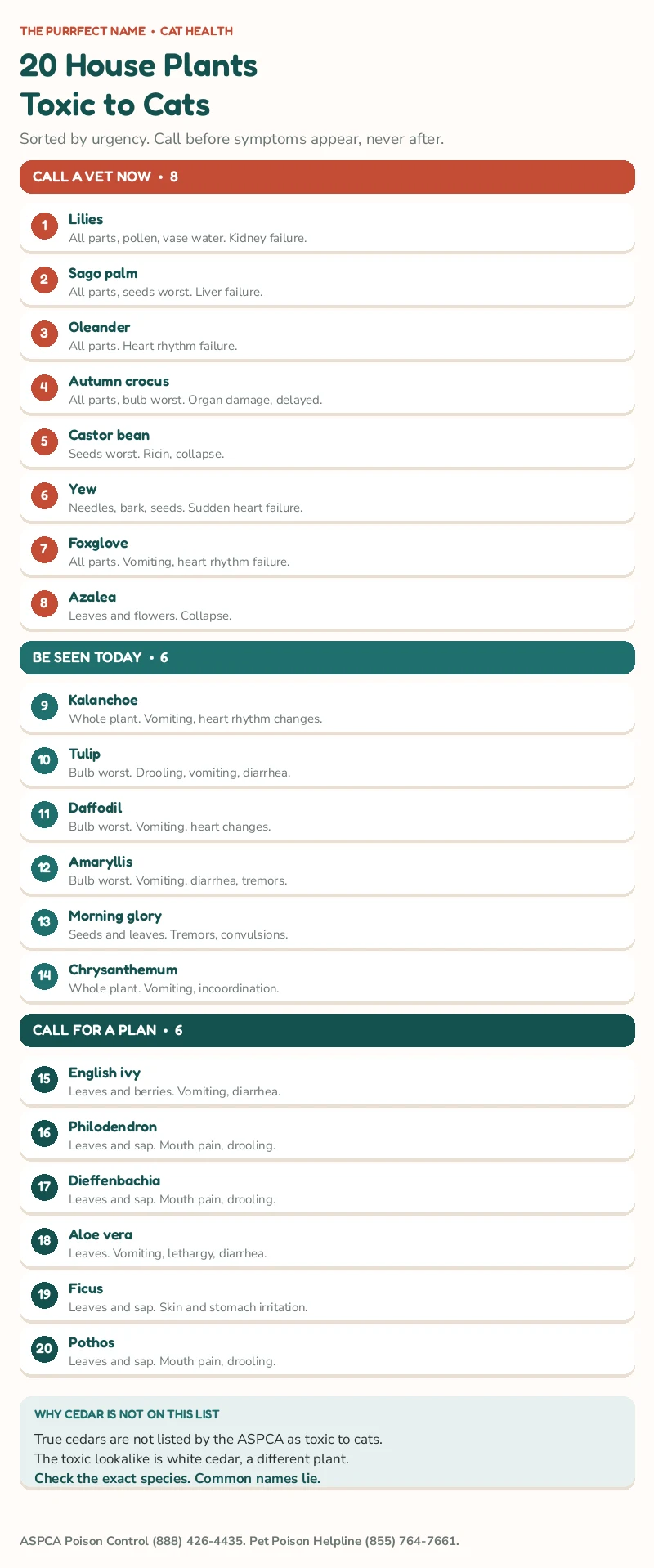
Why Cedar Is Not on This List
The reference image for this guide lists cedar as the 10th toxic plant, and this draft deliberately leaves it out. The reason is that the word cedar covers several different plants, and they are not equally dangerous.
The four true cedars, Cedrus atlantica, Cedrus brevifolia, Cedrus deodara, and Cedrus libani, are not listed by the ASPCA as toxic to cats. The image says Cedar (Cedrus), which is the true cedar genus, the one the ASPCA does not list. Listing it as toxic would be wrong.
The dangerous plants called cedar are different species. White cedar, Melia azedarach, also known as the chinaberry tree, is listed by the ASPCA as toxic to cats, dogs, and horses, causing drooling, vomiting, diarrhea, and seizures. Eastern red cedar, Juniperus virginiana, has poisonous bark, berries, and needles. Western red cedar, Thuja plicata, can cause adverse effects, but it is less dangerous than Eastern red cedar, and the highest risk is from cedar oil, which concentrates the phenols and terpenes that cats cannot properly metabolize.
So the honest answer is: check the exact species. A true cedar is not an ASPCA toxic plant. A white cedar is. If you are not sure which one you have, treat it as dangerous, keep the cat away, and ask the nursery or check the ASPCA list before you decide.
Symptoms to Watch For
Symptoms vary by plant and by how much the cat ate, and some are delayed by hours or days. The general symptoms to watch for are vomiting, diarrhea, excessive drooling, lethargy or weakness, loss of appetite, breathing difficulties, tremors or seizures, and kidney failure, especially with lilies.
A cat that has eaten a plant may look fine for hours and then deteriorate quickly, which is why waiting for symptoms is dangerous. Lilies can look fine for a day and then go into kidney failure. Autumn crocus can look fine and then cause organ damage days later. If you know the cat ate a plant, act on the plant, not on the symptoms.
Call the vet or poison control immediately for any plant in the emergency tier, and the same day for the other two tiers. Tell them the plant name if you know it, how much the cat ate, and when. Take a photo of the plant with you to the vet.
Do not induce vomiting unless a vet or poison control tells you to, because vomiting can make some poisons worse. Do not give milk, food, or home remedies. Do not give human medication. The only safe first aid is a phone call, and the sooner the better.
Cat Safe Swaps
Removing toxic plants does not mean removing plants. Several common houseplants are listed as non-toxic to cats by the ASPCA, including spider plants, Boston ferns, prayer plants, and cat grass, which is usually wheat, oat, or barley grass grown for cats to chew. Herbs such as basil, rosemary, and thyme are also listed as non-toxic.
A pot of cat grass on the windowsill gives a cat something safe to chew, and it often stops the cat from chewing the plants it should not touch. Check every new plant against the ASPCA toxic and non-toxic plant list before you bring it home, and check the exact species, not just the common name. Common names lie. The cedar story above is the proof of that.
Frequently Asked Questions
What should I do if my cat eats a plant?
Stay calm, remove the plant, and call your vet or the ASPCA Animal Poison Control Center at (888) 426-4435, or the Pet Poison Helpline at (855) 764-7661. Tell them the plant name, how much the cat ate, and when. Do not induce vomiting and do not give home remedies unless they tell you to. For lilies, go to an emergency vet now, before symptoms appear.
Are lilies really that dangerous to cats?
Yes. True lilies and daylilies are the most dangerous plants on this list. Any part, pollen, or vase water can cause fatal kidney failure, and the ASPCA receives more calls about lily exposure in cats than about any other plant. The FDA warns that treatment delayed 18 hours or more means the kidney damage is generally irreversible. Keep lilies out of a cat household entirely.
Is cedar toxic to cats?
It depends on the species. True cedars, Cedrus species, are not listed by the ASPCA as toxic to cats. White cedar, Melia azedarach, is listed as toxic, and Eastern and Western red cedars carry phenols that can cause adverse effects, worst as cedar oil. Check the exact species before you assume a cedar is safe or dangerous.
What are the symptoms of plant poisoning in cats?
Vomiting, diarrhea, excessive drooling, lethargy or weakness, loss of appetite, breathing difficulties, tremors or seizures, and kidney failure, especially with lilies. Symptoms vary by plant, and some are delayed by hours or days, so do not wait for symptoms before calling a vet.
Which houseplants are safe for cats?
Spider plants, Boston ferns, prayer plants, and cat grass are all listed as non-toxic to cats by the ASPCA, and herbs such as basil, rosemary, and thyme are also listed as non-toxic. Always check the exact species against the ASPCA list before bringing a new plant home.