
That Bunny Kick Is Not Anger, It Is Your Cat Talking
Your cat grabs your arm, rolls over, and kicks hard with its back legs. A bunny kick looks like an attack, but it is a normal cat move with three jobs: play hunting, self defence, and telling you it has had enough. The meaning depends on the context, not the kick. A kick at a toy is play, a kick at your hand is overstimulation, and a kick at an attacker is defence. PetMD calls it a hunting or defensive behaviour.
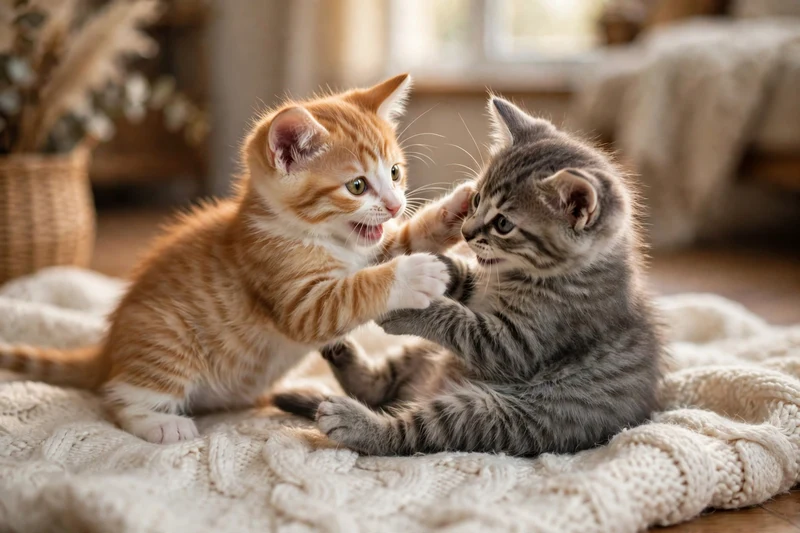
Three Reasons, One Move
1. Play hunting. This is the most common reason. A cat bunny kick aimed at a toy or a littermate is practice. PetMD notes that bunny kicking often comes with pouncing, biting, and batting during play. A play hunting cat has relaxed ears and a loose body, and it stops when the toy is taken away.
2. Self defence. This is why the move exists. Cats are predators, but they are also prey. A larger animal can grab a cat, pin it, or roll it onto its back. Then the bunny kick is the cat’s best weapon. Catster explains the powerful back legs and sharp claws push predators away, giving the cat a chance to run. A defensive kick is fast, hard, and short.
3. Overstimulation. This catches owners by surprise. A cat can enjoy a belly rub and then suddenly switch to a kick. The petting built up. PetMD calls it the cat’s way of saying the attention is getting a little too much. The warning signs come first: a twitching tail, skin rippling along the back, ears turning sideways, and a head turning toward your hand. Stop at the first sign and the kick never happens.
The Primordial Pouch: Built In Armour
Your cat’s belly has a saggy flap of loose skin along the underside. That is the primordial pouch, not fat. It is built in armour, and it exists because of the bunny kick. In a fight, the target is the belly, where the organs sit close to the surface. The pouch gives the skin extra slack, so a claw raking across the belly moves skin instead of cutting into organs.
Play Kick, Defence Kick, or Angry Kick?
The kick looks the same, so read the rest of the cat. A play kick has relaxed ears, and the cat returns to play after. A defence kick has flat ears, and the cat runs and hides after. An angry kick has sideways ears and a lashing tail, and the cat walks away after. Play returns. Defence flees. An overstimulated cat withdraws.
Why Belly Rubs End in Kicks
The belly rub is the classic trap. Your cat rolls over, shows you its belly, and you take it as an invitation. A cat showing its belly is usually showing trust, not asking for a rub. The belly is the most vulnerable part of the body, and exposing it means the cat feels safe with you. See why cats show their belly for the full story. Admire the belly, do not touch it.
Stopping the Kicks Aimed at You
If your cat kicks you, do not pull away fast. Pulling away triggers the prey response and makes the cat hold on tighter. Go still. Freeze your hand and wait. Most cats let go within a few seconds when the target stops struggling. Then withdraw your hand slowly and redirect the cat to a toy.
Keep petting sessions short, especially on the belly, the base of the tail, and the back legs. The ASPCA advises stopping at the first warning sign: a twitching tail, tension in the body, or a head turning toward your hand.
The problem starts when the kick is aimed at people, often, hard, and without warning. That is cat play aggression, and it usually comes from boredom or a lack of proper play. The VCA notes under stimulation and unused energy can lead to play related aggression. Never punish a cat for bunny kicking. It teaches the cat that people are dangerous, and it kicks harder next time.
The best toy is a kicker toy: long, soft, and built to grab and kick. Build a routine: three short wand toy sessions a day, each ending with a catch and a treat. Keep hands and feet out of the game entirely. Our guide on the best cat toys covers kicker and wand toys, and the International Cat Care playing guide explains daily play. Why do cats bunny kick? Because the hunt never really ends.