
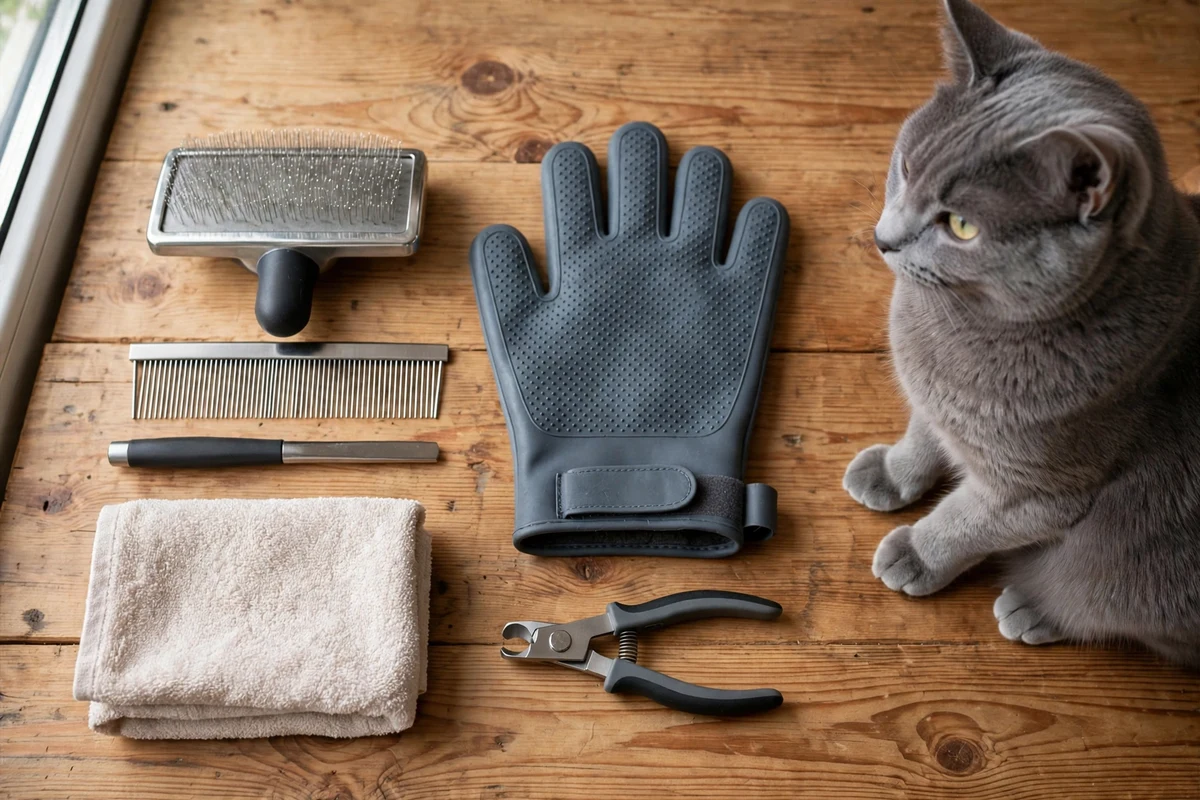
Cat Grooming Essentials & Tools
Most cat owners buy too many grooming tools. A drawer full of brushes, combs and gadgets looks prepared, but a cat only needs a small set chosen for its coat, and the wrong tool can pull, scratch or scare a cat off grooming altogether. Cat grooming essentials are simple: a comb that reaches the skin, a brush that suits the coat, nail clippers, and a few small extras for ears, teeth and the occasional bath. This guide walks through each tool, what it does, what to look for when you buy it, and how to use it without hurting your cat. It is the tools companion to our complete guide to cat grooming, which covers the full routine step by step.
The Short Answer
Start with three things: a rounded-tooth metal comb, a brush matched to the coat, and cat nail clippers. Long-haired cats need daily combing to stop mats; short-haired cats usually need a brush once or twice a week. Add a flea comb, grooming wipes and cat shampoo only if those jobs are part of your routine. Buy fewer, better tools, introduce each one slowly, and stop if the cat flinches or the tool pulls. This article is general information only and is not veterinary advice.
Before You Buy Anything: Know the Coat
The coat decides the toolkit. A short, sleek coat needs a tool that lifts loose surface hair. A dense double coat needs a tool that reaches the undercoat. A long, fine coat needs a tool that separates individual hairs without snagging. Buying by coat type is the difference between a five minute session your cat enjoys and a wrestling match that ends with a scratched hand and a cat under the bed.
- Short coat: close lying, single layer, sheds steadily. A soft brush, rubber tool or grooming mitt usually does the job, with a metal comb for a weekly check.
- Medium coat: thicker, with some undercoat. A slicker brush followed by a metal comb, two to three times a week, is the usual rhythm.
- Long coat: long topcoat over a dense undercoat, mats easily. A wide-tooth metal comb daily, plus a slicker brush if the cat tolerates it.
- Curly or fine coat: fine, cottony hair that felts fast. A wide-tooth comb used gently, and very little brushing, because brushing can break fine hair.
- Hairless: no fur to brush, but skin oils build up. A soft damp cloth wipe one to two times a week, and regular ear checks.
Age matters too. Kittens need the softest tools and the shortest sessions, because the goal at that age is teaching the cat that grooming is safe. Senior cats often groom themselves less, so they need gentler tools and more frequent checks, especially around the hindquarters and belly where stiffness makes self-grooming hard. If your cat has sore skin, a wound, or a tight mat, skip home grooming on that area and ask a groomer or vet for help.
The Essential Toolkit, Tool by Tool
Below is the full set, in the order you are most likely to need it. Most cats need only the first three. The rest are additions for specific jobs, not requirements.
The Metal Comb: The One Tool Every Cat Owner Needs
If you buy only one grooming tool, buy a metal comb with smooth, rounded teeth and a secure handle. A comb does work a brush cannot: it reaches the skin, separates individual hairs, and finds the tangles and mats that a brush glides over. The Cat Friendly Homes grooming guide recommends a comb with long, even, fine to medium teeth and rounded tips, and that description is a good shopping checklist.
Look for teeth that are smooth and rounded at the tips, with no sharp edges, and a handle that does not twist in your hand. A comb with wide teeth at one end and finer teeth at the other covers both jobs: wide teeth for a first pass through a long coat, fine teeth for finishing and for checking flea dirt. Use it in small sections, working from the skin outward, and stop the moment the comb catches. A comb is not a safe way to force a tight mat apart, and adding pressure only hurts the cat and tightens the mat. If the comb stops, work the mat apart with your fingers, or leave it for a groomer.
Brushes: Slicker, Bristle, Pin and Rubber
Brushes collect loose hair and smooth the coat, but each type suits a different job, and each has a limit. The table below is the quick version; the detail follows it.
- Slicker brush: fine, closely spaced wire pins on a flat or curved pad. Best for loose hair and surface tangles in medium and long coats. The pins can irritate sensitive skin and catch in mats, so use light pressure and never drag a slicker through a mat.
- Bristle brush: soft natural or synthetic bristles. Best for short coats, for removing light surface debris and adding shine. It does not reach a dense undercoat, so it is a finishing tool, not a mat tool.
- Pin brush: widely spaced pins with ball tips. Best for smoothing medium and long coats without snagging. Pins can scratch if they are damaged or pressed too hard, so check the tips before each use.
- Rubber brush or grooming mitt: soft rubber nubs that mimic petting. Best for short coats and for cats that dislike brushes. It collects loose hair well but cannot separate tangles or reach a long undercoat.
For a short-haired cat, a rubber tool or bristle brush is usually enough, finished with a comb check. For a medium coat, start with a slicker brush and finish with a comb. For a long coat, start with a wide-tooth comb, then use a slicker lightly if the cat tolerates it. A professional groomer quoted by Rover advises starting a short-haired cat with a rubber brush in soft circular motions, then a metal comb, then a slicker to finish, and that sequence works well at home too. Whatever you choose, watch the cat, not the tool: a tool that makes your cat tense, flinch or leave is the wrong tool, however popular it is.
Deshedding Tools: Useful, But Easy to Overuse
Deshedding tools, the best known being the bladed type sold under the FURminator name, are designed to remove loose undercoat hair. They work, and for a heavy shedder such as a Maine Coon or Siberian they can cut shedding noticeably. They are also the easiest tool to overuse. The blade can cut topcoat hair and irritate skin if pressed hard or used too often, and several groomers advise against using bladed tools on cats with fine or delicate coats at all.
If you use one, follow three rules. First, use it only on a clean, dry, tangle free coat, never on a mat. Second, use light strokes in the direction of the hair, once a week at most during shedding season, and monthly at other times. Third, stop if you see red skin, broken hair, or bald patches. A wide-tooth comb often handles undercoat just as well with less risk to the topcoat, and for many cats it is the safer choice. If you are unsure whether your cat’s coat suits a bladed tool, ask a groomer before you buy one.
Nail Clippers and Styptic Powder
Cat nails grow constantly, and indoor cats wear them down less than outdoor cats, so trimming is part of the essential kit. You need clippers made for cats: either scissor style or guillotine style, with a sharp blade that makes a clean cut. Blunt clippers crush the nail instead of cutting it, which hurts and can split the nail. Human nail clippers can work on a kitten’s tiny claws, but they are the wrong shape for an adult cat’s curved nail and are easy to misuse.
Trim only the sharp, clear tip, well clear of the pink quick inside the nail, where the blood supply sits. On a light coloured nail the quick is visible as a pink line; on a dark nail, trim a tiny amount at a time and stop at the first sign of a dark centre in the cut surface. Keep styptic powder beside you every time you trim: a pinch pressed onto a nail that bleeds will usually stop it quickly, and having it ready turns a small accident into a small delay. If you cut the quick, stay calm, apply the powder, and offer a treat. If bleeding does not stop within a few minutes, or the cat is in clear distress, contact your vet. Our guide to how to trim your cat’s nails gives the full step by step method, including how to get a nervous cat to accept handling.
The Flea Comb: Small Tool, Useful Check
A flea comb is a fine-toothed metal comb with very closely spaced teeth. It traps fleas and flea dirt, the black specks that are flea droppings, between its teeth, which makes it a useful early warning check even if your cat never has fleas. Comb through the coat, especially around the neck, belly and base of the tail, then wipe the comb on a damp white tissue: flea dirt turns reddish brown because it contains digested blood.
A flea comb is a detector, not a treatment. Finding fleas or flea dirt means your cat needs a proper flea treatment plan, which your vet can advise on. Do not rely on combing alone to control fleas, and do not use a flea comb on a mat, because the fine teeth will snag. Keep the comb clean after each use, since a dirty comb spreads debris back into the coat.
Ears, Eyes, Teeth and Paws: The Small Extras
Most of the grooming kit is about the coat, but a few small items cover the rest of the cat. None of these needs to be expensive, and all of them should be cat specific.
- Ear cleaner: a vet approved ear cleaner and cotton balls, not cotton buds, which can push debris deeper. Clean only the visible outer ear, and only if your vet has shown you how. Redness, a bad smell, or dark discharge are reasons to see a vet, not to clean harder.
- Grooming wipes: fragrance free, cat specific wipes for cleaning paws, face and coat between baths. Useful after a litter tray accident or a muddy paw, and kinder than a full bath for most cats.
- Cat shampoo: a hypoallergenic, cat specific shampoo for the occasional bath. Never use human or dog shampoo on a cat, because the ingredients and pH are wrong for cat skin. Most cats rarely need a bath at all, and a wipe is usually enough.
- Toothbrush and toothpaste: a small soft cat toothbrush or finger brush, and cat specific toothpaste, never human toothpaste. Daily brushing is the ideal, and three times a week is the minimum most veterinary sources suggest. Ask your vet to show you the technique at your next visit.
- A soft towel: for drying after a bath or a wipe, and for wrapping a nervous cat so you can reach one paw at a time. A towel is the most underrated tool in the kit.
How Often to Groom, by Coat Type
Frequency matters as much as tool choice, because mats form between sessions, not during them. The widely repeated guidance, from the ASPCA, the RSPCA and veterinary sources, is consistent: long-haired cats need daily brushing, semi-long-haired cats every one to two days, and short-haired cats once or twice a week. During spring and autumn shedding, even short-haired cats may need two to three sessions a week. Senior cats need more frequent gentle checks regardless of coat length, because self-grooming drops off with age and stiffness.
Short sessions beat long ones. Five minutes a day for a long-haired cat prevents more mats than a single thirty minute weekend session, because loose hair has less time to felt between passes. End every session while the cat is still calm, with a treat or a short play session, so the cat remembers grooming as a pleasant routine. If the cat starts to swish its tail, flatten its ears, or try to leave, stop. A session that ends well is worth more than a session that finishes the coat.
What Not to Buy
Some tools cause more harm than good, and the grooming aisle is full of them. Skip bladed deshedding tools on fine, cottony coats, where they break hair and irritate skin. Skip cheap slicker brushes with bent or missing pins, because a single bent pin can scratch. Skip any brush or comb with sharp, unrounded teeth. Skip scented sprays, perfumes and dry shampoos marketed for cats unless your vet has approved them, because cats groom the product off their fur and swallow it. And skip the twelve piece kit: if you would not use a tool every month, you do not need it in the drawer. Three to six well chosen tools handle every cat, and the money saved buys better food or a vet visit that matters more.
Keeping Your Tools Clean and Safe
Tools last longer and work better when they are clean. Pull loose hair out of brushes and combs after every session, wash them in warm soapy water every few weeks, and dry them fully before you put them away, because damp bristles grow bacteria. Check pins and teeth before each use: a bent slicker pin, a loose comb tooth, or a blunt clipper blade should be replaced, not tolerated. Store clippers with the blade closed or covered, and keep all tools where the cat cannot chew them. A clean tool is also a diagnostic tool: a comb that comes away with more hair than usual, or with flakes, redness or a smell, is telling you something about the coat, and that is worth noting.
The right grooming kit is a small one, chosen for the coat in front of you, kept clean, and used in short calm sessions. Start with a comb, a brush and clippers. Add the rest only when a real job calls for it. Your cat will tell you, quickly and honestly, whether you chose well.
Frequently Asked Questions
What are the essential grooming tools for a cat?
Three tools cover most cats: a rounded-tooth metal comb, a brush matched to the coat, and cat nail clippers. Add a flea comb for checks, grooming wipes for spot cleaning, and cat shampoo for the occasional bath. A deshedding tool is useful for heavy shedders but is not essential, and many cats do better with a wide-tooth comb instead.
How often should I brush my cat?
Long-haired cats usually need daily brushing, semi-long-haired cats every one to two days, and short-haired cats once or twice a week. During spring and autumn shedding, increase the frequency for every coat type. Senior cats need more frequent gentle checks because they groom themselves less. Short, regular sessions work better than one long session a week.
Is a slicker brush or a comb better for cats?
They do different jobs, and a comb is the more important of the two. A comb reaches the skin, separates individual hairs and finds mats a brush glides over. A slicker brush collects loose surface hair and smooths the coat. For most cats the best routine is a slicker brush first, then a comb check, or a comb alone for a long or fine coat.
Can I use human shampoo or a human toothbrush on my cat?
No to both. Human shampoo has the wrong pH and ingredients for cat skin, so use a cat specific hypoallergenic shampoo. Human toothpaste can contain ingredients that are harmful if swallowed, so use cat specific toothpaste and a small soft cat toothbrush or finger brush. Human nail clippers are also the wrong shape for an adult cat’s curved nail.
How do I groom a cat that hates being brushed?
Start smaller and slower. Use a rubber grooming mitt or your hand first, keep sessions to one or two minutes, and reward the cat after every session. Brush only the areas the cat tolerates, usually the back and sides, and leave the belly and legs for later. If the cat flinches, hisses or tries to bite, stop and try again another day. A cat that has been hurt by a mat or a sharp tool will need time to trust grooming again.
When should I take my cat to a professional groomer?
See a groomer or vet for tight mats that sit against the skin, a coat that is matted over a large area, a cat that will not let you near it, or any skin problem under the coat such as redness, sores or a smell. Never cut a tight mat out with scissors at home, because the skin is often pulled up into the mat and is easy to cut. A professional can remove it safely and show you how to prevent it next time.