
Cognitive Dysfunction in Cats: 6 Signs and How to Help Your Senior
Your senior cat stands in the hallway at 3 a.m., yowling at nothing. Yesterday it stared at a wall for a full minute. Last week it missed the litter box for the first time in years. None of these moments alone means very much. Together, over weeks and months, they can point to feline cognitive dysfunction, the cat equivalent of dementia. This guide covers the 6 signs vets look for and the practical care that helps a confused senior feel safe again.
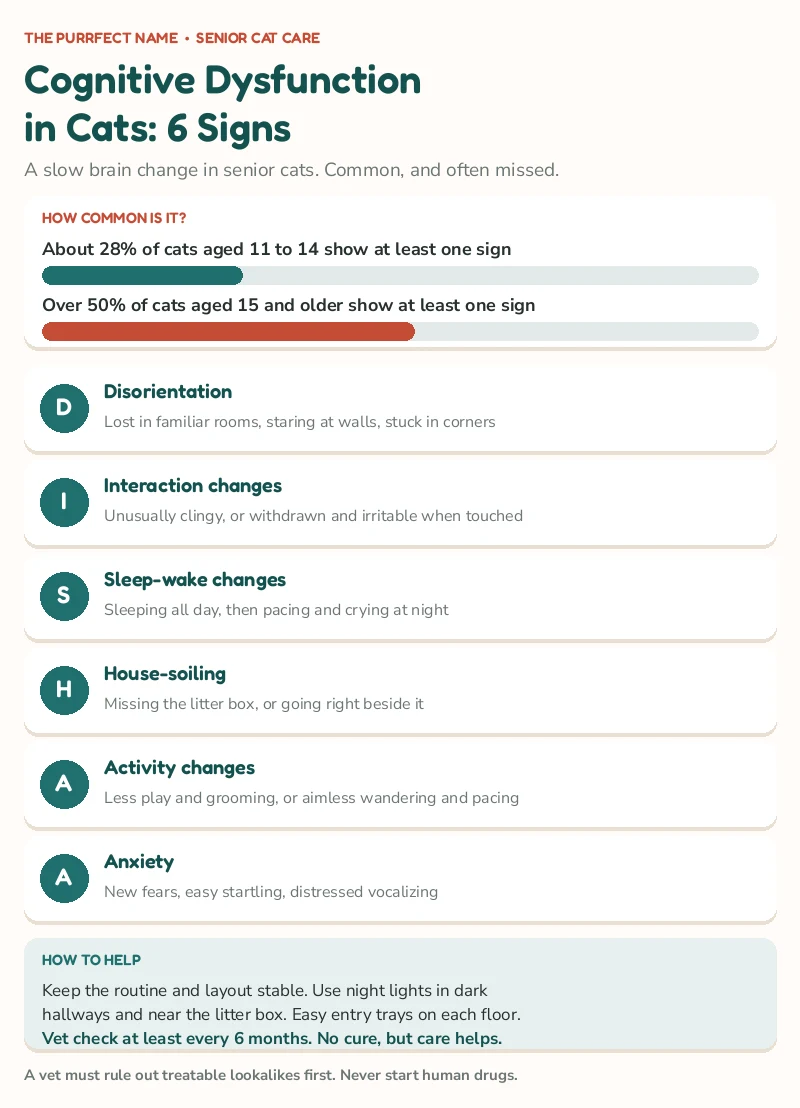
The short answer is that cognitive dysfunction is a slow, progressive change in an aging cat’s brain, and it is common. About 28 percent of cats aged 11 to 14 show at least one sign, and the figure rises to over 50 percent in cats aged 15 and older. There is no cure, but there is a great deal you can do at home, and the first step is a vet visit, because several very treatable diseases look exactly the same.
Everything below is general information only and is not veterinary advice. Our guide on senior cat care after age 10 covers the wider changes that come with the same years.
Key Takeaways
- 6 signs make the list, remembered by the acronym DISHAA: Disorientation, Interaction changes, Sleep-wake changes, House-soiling, Activity changes, and Anxiety.
- About 28 percent of cats aged 11 to 14 show at least one sign, rising to over 50 percent at age 15 and older.
- Nighttime yowling is the single most reported sign.
- Cognitive dysfunction is a diagnosis of exclusion. Hyperthyroidism, high blood pressure, kidney disease, arthritis pain, and vision or hearing loss can all look the same, so a vet must rule them out first.
- There is no cure. Care is routine, night lights, easy access to food, water, and litter, gentle enrichment, and a vet check at least every 6 months.
- Never start a human Alzheimer’s drug for a cat. Any medication or supplement decision belongs to your vet.
What Is Cognitive Dysfunction in Cats?
Feline cognitive dysfunction, also called cognitive dysfunction syndrome or feline dementia, is a progressive neurodegenerative condition. The brain of an affected cat shows changes resembling those seen in Alzheimer’s disease in people, including deposits of a protein called beta amyloid, loss of neurons, oxidative damage, and reduced blood flow. The result is a gradual decline in memory, learning, perception, and awareness.
Age is by far the biggest risk factor. The condition is rare in cats under 10 and rises steeply with each passing year. A cat is senior from over 10 years of age under the 2021 AAHA/AAFP Feline Life Stage Guidelines, and that is the age when screening starts to matter. You can check where your cat sits on the scale with our cat age calculator, which converts cat years to human years.
One important piece of honesty: compared to dogs, cognitive dysfunction is likely underrecognized in cats, because the signs are less specific and there is no validated feline specific scoring system yet. Many owners put the changes down to normal aging, and many cats go undiagnosed. A pattern of several signs that gradually worsens over weeks and months is what matters, not a single odd day.
The 6 Signs: The DISHAA Checklist
Vets use the acronym DISHAA to group the signs. If you recognize several of these in your senior cat, it is worth a conversation with your vet.
| Letter | Sign | What it looks like at home |
|---|---|---|
| D | Disorientation | Getting lost in familiar rooms, staring at walls, getting stuck in corners |
| I | Interaction changes | Unusually clingy, or withdrawn and irritable when touched |
| S | Sleep-wake changes | Sleeping all day, then pacing and crying at night |
| H | House-soiling | Missing the litter box, or going right beside it |
| A | Activity changes | Less play and grooming, or aimless wandering and pacing |
| A | Anxiety | New fears, easy startling, distressed vocalizing |
1. Disorientation
Your cat gets lost in rooms it has known for years, stares at walls or into space for long stretches, gets stuck in corners, or waits at the hinge side of a door, confused about how it opens. It may forget where the food bowl, the litter box, or a favorite resting spot is. Disorientation is the sign most owners notice first, and it is the one that most clearly separates cognitive dysfunction from ordinary aging. A healthy old cat may be slower, but it still knows its own house.
2. Interaction Changes
A once independent cat turns clingy and needy, following you from room to room and crying when you leave. Or the change goes the other way: a sociable cat withdraws, stops greeting you, loses interest in petting or play, and seems not to recognize familiar people. Both directions count. What matters is the change from your cat’s own normal, and whether it lasts.
3. Sleep-Wake Changes
Your cat sleeps most of the day and then paces and cries at night. Nighttime yowling is the single most reported sign of cognitive dysfunction, and it is the one that exhausts owners fastest. The cat is not being difficult. Its internal clock has flipped, and the dark house that used to feel safe now feels confusing. Night lights help here, and the care section below explains how.
4. House-Soiling
A reliably trained cat starts missing the litter box, going right beside it, or forgetting its training entirely. This is confusion, not spite, and it is important to say so plainly. Before assuming cognitive dysfunction, a vet needs to rule out the many medical causes of house-soiling, from urinary infection to kidney disease to arthritis that makes climbing into the box painful. If the vet finds no medical cause and the pattern fits the other signs, cognitive dysfunction moves up the list.
5. Activity Changes
Your cat plays less, grooms less, and shows less interest in food, or it wanders aimlessly and paces the same route again and again. Repetitive behaviors and restlessness sit on the same sign as withdrawal, which is why this entry covers both. A cat that has stopped grooming will also start to look unkempt, with a dull coat and mats, which owners often notice before they notice the behavior change itself.
6. Anxiety
New fears appear where none existed before. Your cat startles easily, hides from visitors it used to greet, and vocalizes in a distressed way that sounds different from its normal meow. Anxiety often travels with the other signs, and it gets worse at night, when the house is dark and quiet and the cat’s failing vision and hearing make everything less certain.
What It Is Not: The Mimics
This is the section that matters most. Several very treatable diseases produce signs identical to cognitive dysfunction, and a diagnosis of exclusion means a vet reaches cognitive dysfunction only after ruling those out. There is no single test for it in a living cat.
The main mimics are hyperthyroidism, high blood pressure, kidney disease, arthritis pain, and hearing or vision loss. A cat with hyperthyroidism can yowl at night and pace. A cat with high blood pressure can seem disoriented. A cat with arthritis pain can stop using the litter box because climbing in hurts.
A cat going deaf or blind can startle, withdraw, and cry at night. All of these are treatable, and all of them are more common than cognitive dysfunction in the early senior years.
What a vet visit usually involves is a behavioral history, using the DISHAA list as a guide, a physical examination, and bloodwork, urine tests, and blood pressure checks. If your cat’s signs have a treatable cause, finding it changes everything, which is why the vet visit comes before any home care plan. Our guide on when to take your cat to the vet covers what to bring and what to expect.
How to Help at Home
Once the vet has ruled out the mimics, the goal shifts to making the house predictable and easy to navigate. A confused cat copes best when nothing moves and nothing surprises it.
Keep the routine and the layout stable
Keep furniture, litter boxes, and food and water bowls in consistent places. Feed at the same times each day. Do not redesign the living room. If something must move, move one item at a time and give your cat days to adjust. A moved couch is a minor change to you and a major obstacle to a cat with fading spatial memory.
Use night lights
Put plug in LED night lights in hallways and near the litter box. Senior cats do not adapt to the dark as well as they used to, and a soft light helps a disoriented cat find its way when it wakes at night. A nightlight near the bed and a warm sleeping spot can also reduce the anxiety that drives nighttime yowling. A late gentle play session and a small snack before bed can help too, and some cats settle with soft music playing quietly through the night.
Make resources easy to reach
Put an easy entry litter box on each floor of the house, with low sides so an arthritic cat can step in without climbing. Keep food and water in the same spots, and add a water bowl near the places your cat rests. Soft bedding matters too, because sore joints make hard floors an obstacle a confused cat will simply avoid.
Offer gentle enrichment
Keep your cat’s mind active with short gentle play sessions and easy puzzle feeders. The puzzles should be easy wins, not frustration tests: scatter a few kibbles in clear sight, use a snuffle mat with low sides, and keep sessions under five minutes. Rotate toys slowly.
A window perch for quiet watching is enrichment too, and it asks nothing of a tired cat. Stop while your cat is still comfortable, and do not introduce a rambunctious kitten to a confused senior without thinking it through, because a new kitten can stress the older cat as easily as it can entertain it.
Keep vet checks regular
Senior cats should see a vet at least every 6 months, with blood, urine, and blood pressure checks. The 2021 guidelines recommend this because the mimics listed above are common, treatable, and quiet, and catching them early is the single most useful thing a checkup does. Bring your notes on the DISHAA signs to the visit. A dated list of what changed and when is far more useful to a vet than a general impression that your cat seems different.
Food and supplements: ask first
According to the Cornell Feline Health Center, diets high in vitamin E and antioxidants may be able to slow the effects of aging, and some diets enriched with antioxidants, omega-3 fatty acids, and medium chain triglycerides have shown some benefit for cognitive function in aging cats. That is a may and a some benefit, not a treatment. Do not start any supplement or change your cat’s diet without your vet’s okay, and never give a cat a human Alzheimer’s drug. Your vet will individualize the options for your cat.
Frequently Asked Questions
Is cognitive dysfunction the same as dementia in cats?
Yes, the terms describe the same condition. Feline cognitive dysfunction is the medical name, and dementia is the plain word most owners use. Both refer to the progressive age related decline in memory, learning, and awareness.
How common is cognitive dysfunction in cats?
About 28 percent of cats aged 11 to 14 show at least one sign, and the figure rises to over 50 percent in cats aged 15 and older. It is likely underdiagnosed, because owners often put the changes down to normal aging.
Can cognitive dysfunction in cats be cured?
No, there is no cure. It is a progressive condition. Care focuses on routine, night lights, easy resource access, gentle enrichment, and treating any other conditions, which can slow the progression and keep the cat comfortable.
My senior cat yowls at night. Is it dementia?
Not necessarily. Night yowling is the most reported sign of cognitive dysfunction, but it can also come from hyperthyroidism, high blood pressure, arthritis pain, and anxiety from declining vision or hearing. A vet needs to rule those out first, because they are treatable.
Do night lights really help a cat with dementia?
They help with the disorientation that gets worse in the dark. A soft light in the hallway and near the litter box lets a confused cat navigate when it wakes at night, and a nightlight near the bed can reduce the anxiety behind nighttime yowling. They are a small change with a real effect.
The Bottom Line
Cognitive dysfunction is common, it is not a normal part of aging to ignore, and it is not a diagnosis to make at home. The 6 DISHAA signs, disorientation, interaction changes, sleep-wake changes, house-soiling, activity changes, and anxiety, are the checklist to bring to your vet.
The vet’s job is to rule out the treatable mimics first. Your job is the daily care that follows: a stable routine, night lights in dark hallways, litter boxes that are easy to reach, gentle play, and a vet check at least every 6 months. A confused senior cat cannot ask for those things. It can only show you, one yowl at a time, that it needs them.