
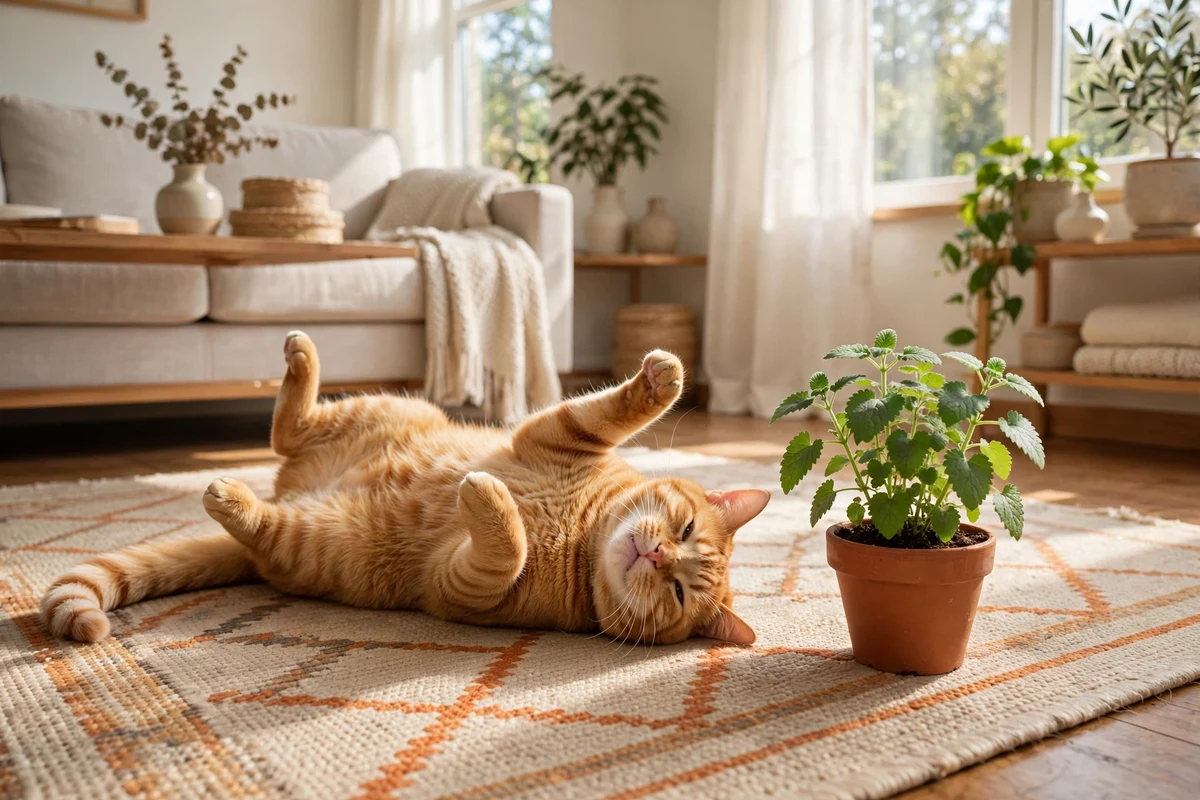
What Is Catnip?
Catnip turns some cats into rolling, purring, wide eyed bundles of energy, leaves others completely unimpressed, and sends a few straight to sleep. That range of reactions is normal, and it comes down to one plant compound, one inherited sensitivity, and whether your cat sniffs the plant or eats it. This guide explains what catnip is, how it works, which cats respond, and how to use it safely as play and enrichment.
This article is general information only and is not veterinary advice. If your cat reacts with aggression, distress, or digestive upset after catnip, stop using it and ask your vet if you are unsure whether to try it again.
Key Takeaways
- Catnip is Nepeta cataria, a perennial herb in the mint family, and its active compound is nepetalactone, an oil found mainly in the leaves and stems.
- Sniffing catnip usually stimulates play, while eating it more often has a calming, mellow effect.
- Effects usually last about 10 to 15 minutes, followed by a refractory period when the cat temporarily stops responding.
- Sensitivity is inherited: roughly a fifth to a third of cats do not respond to catnip at all, and kittens often do not respond until they are several months old.
- Catnip is generally considered non-toxic and non-addictive for cats, but large amounts eaten at once can cause mild digestive upset.
- If your cat ignores catnip, silver vine is the alternative most likely to work, based on published response studies.
What Is Catnip, Botanically?
Catnip, Nepeta cataria, is a hardy perennial herb in the mint family, originally native to Europe and Asia and now grown widely as a garden plant and a cat enrichment plant. It has soft, heart shaped, slightly grey green leaves, square stems like other mints, and small white or pale lavender flowers in summer. Like other mints, it spreads enthusiastically, which is why growing it in a pot, rather than open ground, is the usual advice for gardeners who do not want it everywhere.
The plant’s effect on cats comes from nepetalactone, a volatile oil concentrated in the leaves and stems, with smaller amounts in the seeds. Crushing or bruising fresh leaves releases more of it, which is why a cat rolling on a fresh plant, or a toy stuffed with freshly dried leaves, often gets a stronger reaction than an old, stale sachet that has sat in a drawer for a year. Dried catnip keeps its potency best in a sealed container away from light and heat.
How Does Catnip Work?
When a cat sniffs catnip, nepetalactone enters the nasal tissue and binds to receptors that stimulate sensory neurons, which in turn send signals through the olfactory system to brain regions involved in emotion and behaviour. Researchers describe the result as resembling a response to a feline pheromone, which fits the behaviours owners see: face rubbing, head butting, rolling, licking, drooling, purring, vocalising, leaping, and the sudden bursts of energy often called zoomies. Blocking the brain’s opioid receptors in experimental work stopped the classic rubbing and rolling response, which is part of why the effect is often described as pleasurable rather than merely reflexive.
Eating catnip works differently. When a cat chews and swallows the leaves, the same plant tends to act as a mild sedative, producing a calmer, sleepier cat rather than a playful one. That sniff versus eat distinction explains a common owner puzzle: the same plant that sends a cat racing around the room in the morning can leave it dozing in a sunny spot after a long chew in the afternoon.
How Long Do the Effects Last?
For most cats, the visible response to sniffed catnip lasts about 10 to 15 minutes. After that, the cat enters a refractory period, a temporary window during which it stops responding to catnip no matter how much is offered. Sources differ on the length of that window, with estimates ranging from about half an hour to a couple of hours, so the practical rule is simple: put the catnip away, let your cat reset, and try again another day rather than offering more in the same session. Repeated exposure inside one session does not extend the effect, it just wastes good catnip.
Why Some Cats Do Not Respond
Catnip sensitivity is inherited. Cats either carry the sensitivity or they do not, and no amount of fresh catnip will change that. Estimates vary by study, but roughly 20 to 30 percent of cats show no response at all, with some sources putting the non-response share higher. That is not a sign that something is wrong with your cat, and it is not a reason to keep trying stronger products.
Age matters too. Kittens under about three to six months often show little or no response, with sensitivity typically appearing as they mature. A kitten that ignores catnip today may respond perfectly well at a year old. If an adult cat that used to respond suddenly stops, check the freshness of the catnip first, since stale product is the most common fixable cause, and mention any wider behaviour change to your vet.
Is Catnip Safe?
Catnip is generally considered non-toxic to cats and non-addictive, and it does not carry the risks associated with substances that are genuinely harmful to cats. That does not mean unlimited amounts are wise. Eating a large quantity of dried catnip at once can cause mild vomiting or diarrhoea in some cats, and a cat that becomes overstimulated may become rough, territorial, or aggressive, especially if approached or handled during the excited phase. Offer a small amount, watch the first few sessions, and remove the catnip if play turns tense.
Use catnip as enrichment, not as a behaviour fix. It can encourage a reluctant cat to play, to use a scratching post, or to explore a new bed, and a short session before interactive play can help a high energy indoor cat burn off steam. It is not a treatment for anxiety, aggression, or any medical problem, and it should not be used to calm a cat for a vet visit or a journey unless your vet has suggested a proper plan for that situation. Cats that are ill, very young, or in a multi-cat home where one cat becomes aggressive on catnip are best kept away from it, or given it only separately, with supervision.
Forms of Catnip and How to Use Them
- Fresh leaves. The most potent form. Offer a sprig, or let your cat rub on a potted plant under supervision, since an enthusiastic cat can shred a plant in minutes.
- Dried leaves. Sprinkle a small pinch on a scratching post, a mat, or the floor for rolling and play. Store the rest sealed, cool and dark.
- Catnip toys. The easiest low mess option. Refresh older toys by storing them with dried catnip, or replace them when the scent fades.
- Catnip spray. Useful for refreshing toys and scratchers, but check the label for other ingredients, since sprays vary more than plain dried leaf.
- Catnip sticks and chew pieces. Appeal to cats that prefer chewing to sniffing, and often suit cats that like to gnaw.
Start with a small amount and one form at a time, so you learn what your cat actually enjoys. A pinch on the floor for ten minutes of play, then put away, is a better session than a pile left out all day, which your cat will ignore once the refractory period sets in anyway.
If Your Cat Ignores Catnip: Alternatives That Often Work
Silver vine, Actinidia polygama, is the strongest alternative in published response work. In one study of 100 cats, of the 31 that did not respond to catnip, about 71 percent responded to silver vine, compared with about 32 percent for Tatarian honeysuckle and about 19 percent for valerian root. Silver vine contains actinidine and related compounds rather than nepetalactone, and its effect often lasts longer than catnip, sometimes up to about 30 minutes. It is commonly sold as sticks, powder, or in toys.
Valerian root can also stimulate cats, and its roots are the part cats respond to, though its strong smell puts many humans off. Tatarian honeysuckle wood can attract cats, especially when lightly moistened, but only the woody part should be offered, since the berries of that plant are poisonous to cats. Cat thyme, which is not the culinary thyme used in cooking, is a slower acting option some cats enjoy. As with catnip, introduce any alternative in a small amount, watch the response, and stop if your cat becomes distressed or aggressive.
Growing Catnip at Home
Catnip is easy to grow, which is part of its appeal. Start with a pot rather than open soil, since mint family plants spread by runners and by seed. Give it sun, well drained soil, and water when the top of the soil dries out, and pinch back the stems to keep it bushy. Protect a young plant from your cat until it is established, or the first enthusiastic rolling session will be its last. Harvest by snipping leaves, use them fresh, or dry them in a dark, airy spot and store sealed. If you grow other plants for your cat, the same slow introduction approach in our new cat owner starter kit applies here too: introduce one new thing at a time, in a safe space, and watch how your cat responds before making it a permanent fixture.
One caution for households with cats that love to chew plants: keep catnip and any other plant your cat chews in a spot where you can supervise, and check that neighbouring plants are safe too, since a cat that chews one pot often samples the next one along.
Frequently Asked Questions
Why does my cat go crazy for catnip but my other cat ignores it?
Sensitivity to catnip is inherited, so two cats in the same home can react completely differently. The non-responder is normal, not broken, and may respond to silver vine instead.
How long does catnip last?
About 10 to 15 minutes of visible effect, followed by a period when the cat temporarily stops responding. Offer it again another day rather than adding more in the same session.
Is catnip safe for kittens?
Catnip is generally considered non-toxic, but kittens under about three to six months often do not respond to it at all. There is no need to rush it; try again when your kitten is older.
Can cats get addicted to catnip?
Catnip is described in veterinary and scientific sources as non-addictive. Cats lose interest after a session and need a break before they respond again, which is the opposite pattern from dependence.
What is the best alternative if my cat does not like catnip?
Silver vine, usually as sticks or powder. In published response studies it worked for most cats that ignored catnip, well ahead of valerian root and Tatarian honeysuckle.
Please note: this article is general information only and is not veterinary advice. If catnip causes aggression, distress, or digestive upset in your cat, stop using it and ask your vet for guidance.