Your Cat Sleeps Behind a Little Paw for the Sweetest Reason
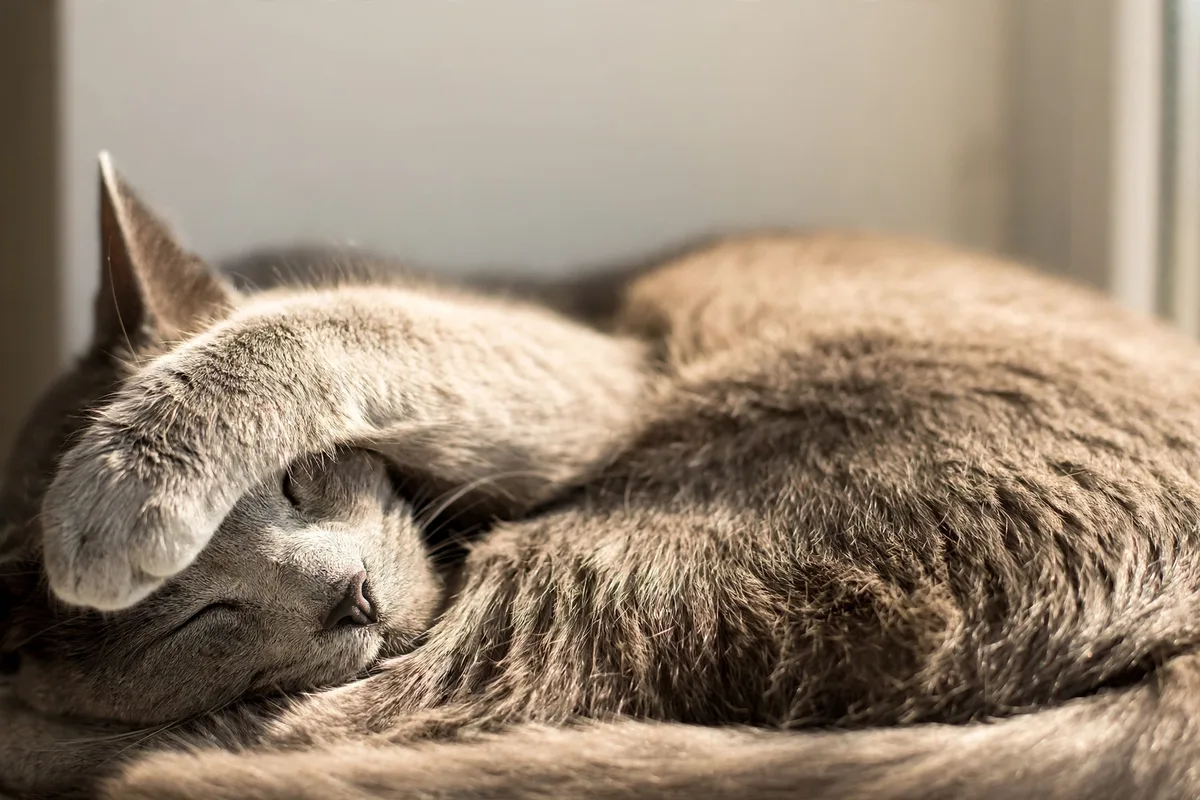
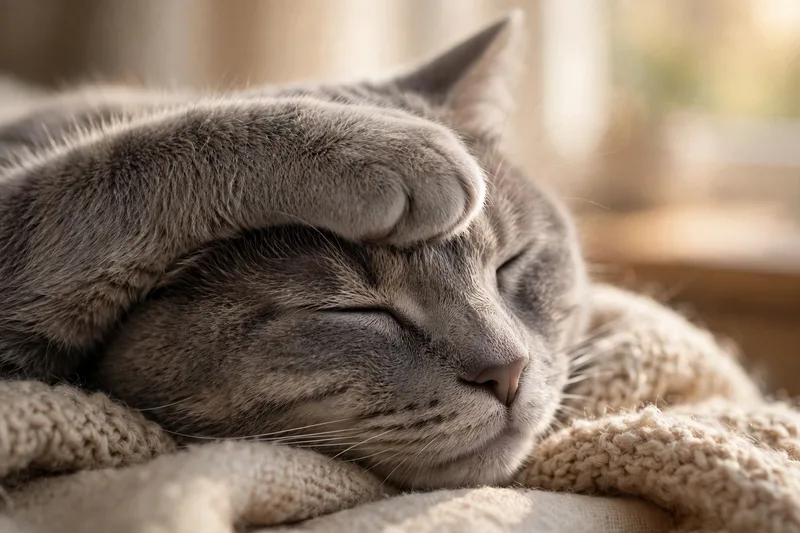
You look across the room and your cat is asleep with one paw draped over its eyes, or both paws tucked over its nose like a mask. The short answer to why do cats cover their faces when they sleep is that your cat is probably blocking out the light. That is the explanation the behaviour experts reach for first: a paw over the eyes works like an eye mask, and cats nap during the day when the house is bright. Warmth, protection, comfort, and falling asleep mid groom are the other reasons, and most cats are doing more than one of these at once. A cat sleeping with paw over face is a common sight, and in a healthy cat it is normal.
Five reasons a sleeping cat covers its face
There is no single reason, and the best pages on the topic all say so. Light comes first: a cat covers face when sleeping to shut out daylight, and the paw is the simplest eye mask she owns. Warmth comes second: a paw over the nose keeps warm air in, and a cat who is a little cold will tuck her face in tighter. Protection comes third: a sleeping cat is at her most exposed, and covering the eyes and nose guards the softest parts. Comfort comes fourth: the curled, tucked position is simply how a relaxed cat folds herself up, and a kitten covering face while sleeping is common because kittens are small, lose heat fast, and feel safer tucked in. Falling asleep mid groom comes fifth: a cat who was washing her face when sleep took her may simply stay that way, paw still on her cheek. Cats sleep for around 16 hours a day, going through cycles of light sleep, deep sleep, and dreaming, so a cat sleeping face covered is often just a cat in the middle of a long, ordinary nap.
Asleep or awake: the same paw means two different things
This is the distinction that matters. The same paw on the same face means two different things depending on whether the cat is asleep or awake. A sleeping cat with a paw over her eyes is resting. An awake cat pawing at her face, squinting, or rubbing one eye again and again is telling you something hurts. The eye is the part to watch, because the eye is where a sleep habit turns into a health problem. The VCA guide to conjunctivitis in cats explains the most common eye inflammation in cats, and the VCA guide to uveitis in cats covers the deeper inflammation that needs a vet quickly. Watch for discharge, a cloudy eye, a third eyelid showing, or a cat who keeps one eye shut. Face covering becomes a worry when it changes: a cat that suddenly starts covering its face far more than usual, or starts pawing at its face while awake, needs a vet check. Stress at home can play a part too: cats in noisy flats or multi pet homes may cover their faces more, because the paw shuts out the world as well as the light.
Building a sleep spot your cat will actually use
You do not need to stop face covering, and you should not try. You can make the sleeping spot better so the cat does not need to work so hard to block out light and cold. Give her a dark corner or a covered bed, away from the brightest window, with a soft blanket she can tuck into. Keep the spot quiet and out of the main walkway, and keep it warm in winter. The International Cat Care guide to sleeping in cats explains how cats choose their sleeping places and what a good one looks like. The one change to watch for is a change in the habit itself: a cat who has always slept with a paw over her eyes is fine, and a cat who suddenly starts, or suddenly stops, is the one to watch. This is general information only, not veterinary advice.
Your cat covers her face when she sleeps mostly because she is blocking out the light, like wearing an eye mask. Warmth, protection, and comfort do the rest. Let her sleep behind that little paw, and watch the eyes, not the pose.