
Your Cat Covers Her Food Because Her Ancestors Hid Their Meals
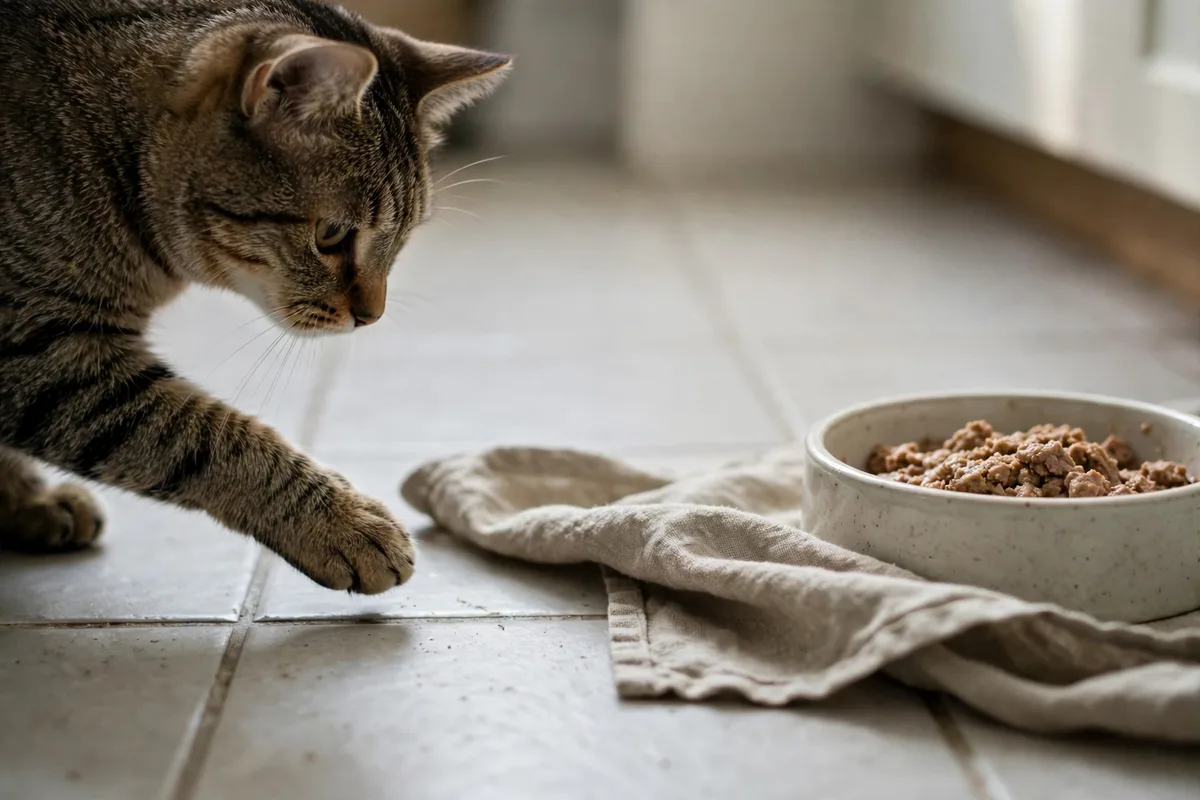
Your cat eats half its dinner, scratches at the floor beside the bowl, drags a tea towel toward the food, and walks away. Why do cats cover their food at all, when the food is already in a bowl in a safe house? The short answer is that your cat is trying to cover its food. Owners usually phrase the question as why does my cat bury its food, and the answer is the same either way. This is normal feline behaviour, usually called food caching in cats, and it is inherited from wild ancestors that hid leftovers to keep them safe. A cat tries to bury food for the same reasons a wild cat buried a kill: to save it for later, to hide the smell from predators and rivals, and to keep the feeding area clean. Covering food on its own is not a complaint about the food, and it is not a sign that the cat is unhappy.
Six ways cats cover food, and why wet food gets covered more
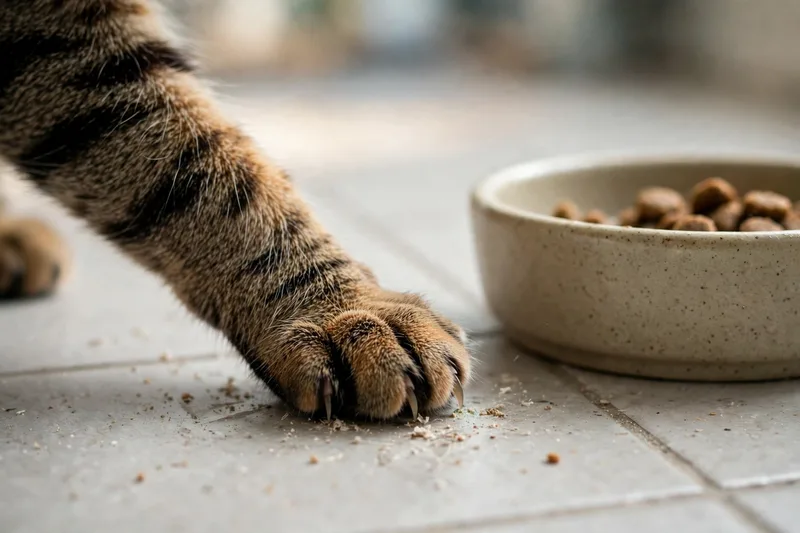
No two cats cover food in quite the same way, and the style tells you something about what the cat is trying to do. Some scratch at the floor beside the bowl, some drag a tea towel over the food, and some paw at the air above the bowl, as if the floor were soil. All of it is the same instinct, played out on a kitchen floor that cannot be dug. Wet food triggers covering more often than dry food, because of smell. Wet food has a stronger odour, and a stronger odour is exactly what a wild cat would want to hide. Covering is also more common in homes with more than one cat, because a cat that shares a house with other cats, or with a dog, may cover its food to keep a rival from finding it. A cat covering food bowl after bowl in a multi cat house is usually guarding a meal, not rejecting it.
Covering alone is normal. Covering plus not eating is not
This is the split the whole guide turns on. Watch the eating, not the pawing. A cat that covers its food and then comes back to finish it later is doing exactly what its ancestors did. A cat that covers its food and does not eat at all is a different story. A healthy adult cat that has eaten nothing for about 24 hours needs a vet exam promptly, and total food refusal beyond 48 to 72 hours is an emergency. The reason the rule is strict is hepatic lipidosis, or fatty liver disease: when a cat stops eating, the body starts breaking down fat for energy, and the liver can become overwhelmed by fat. If your cat starts covering food more than usual, or starts eating less, keep a simple log for three days and take it to the vet: what was served, what was eaten, what was covered, and how the cat behaved. The Cornell Feline Health Center guide to feeding your cat explains how much to serve and how often, and the International Cat Care guide to feeding your cat covers the routine that keeps most cats eating well.
Setting up feeding so covering fades
You do not need to stop the covering, and you should not scold the cat for it. Covering is instinct, and punishment will only stress the cat and make the behaviour worse. What you can do is change the feeding setup so the instinct has less to do. Serve half the usual amount, in a quiet spot, and see what happens. Give each cat its own bowl out of sight of the others, away from the litter tray. The ASPCA cat nutrition tips add the other half of the setup: feed a complete and balanced food, measure it rather than guessing, and keep fresh water available at all times. The most common misreading of food covering is that the cat hates the food. Fresh preferred food can still trigger covering, because the behaviour is about caching, not about taste. Start tonight with the simplest change: serve half the usual amount, in a quiet spot, and watch what she does with it. This is general information only, not veterinary advice.
Your cat is not telling you the food is bad. She is telling you she comes from hunters who hid their meals. Let her hide it, watch her eating, and only worry when the eating stops.