
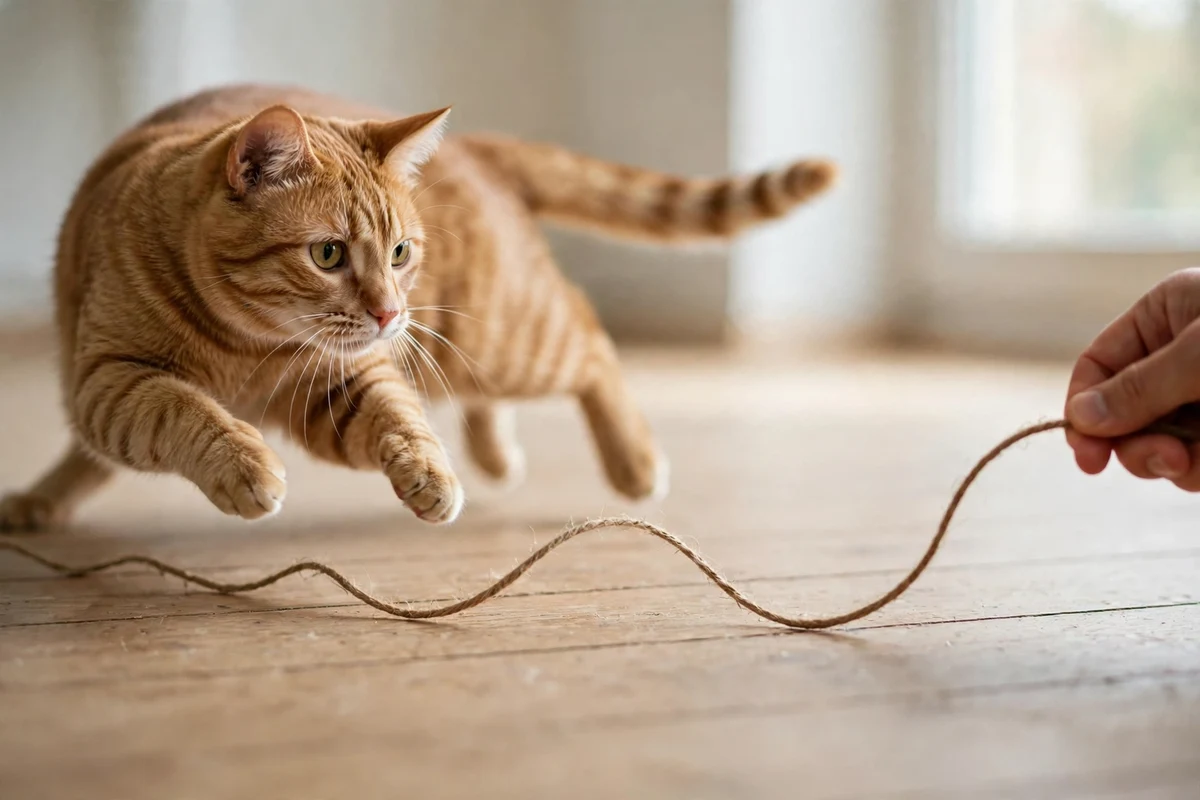
String Is Your Cat’s Favourite Prey. Never Leave It Lying Around
Give a cat a choice between a twenty dollar toy and a piece of string, and the cat will choose the string. Drag that string across the floor and the cat will stalk it, pounce on it, bite it, and carry it off like a prize. The short answer to why do cats love string is that a trailing thread is nearly perfect prey: thin, quick, and slippery, looking like a tail disappearing into grass. The same qualities that make string exciting make it dangerous. A cat that bites string can swallow it, and a swallowed thread can block the gut and need emergency surgery. So is string safe for cats? Only when you are holding the other end. String is a toy you operate, never a toy the cat owns, and it goes away in a drawer the moment play ends.
The tongue trap: why cats cannot spit string out
Here is the bridge between the attraction and the danger, and it is the part most light pages skip. A cat tongue is covered in tiny backward facing spines called papillae, which mean anything long and thin on the tongue tends to move one way: down. Once string gets onto a cat tongue, she cannot spit it out the way you could. When a cat swallows string, vets call it a linear foreign body in cats. That means a long thin object, not a solid lump. One end can catch in the stomach or gut while the rest travels on, and the intestine bunches up around the thread like a curtain on a cord. That bunching is what makes a swallowed thread so dangerous, and why it so often needs surgery rather than waiting to pass.
The signs that say call the vet now
A cat ate string does not always show signs at once. The thread can sit in the stomach for hours before the gut bunches up, so a cat that looks fine an hour after play is not in the clear. Call the vet straight away if you see her retching, vomiting, drooling, pawing at her mouth, refusing food, hiding, or passing no stool, or if her belly looks tight and tender. Act quickly and stay calm: do not pull a thread you can see coming from her mouth or her rear end, because pulling can cut the gut. Keep the string or the packaging if you know what she swallowed, and take it with you to the vet. If you cannot reach your vet, the ASPCA Animal Poison Control page is the number to keep for a swallowing scare. Hair ties deserve the same warning, because the pattern is different from string: one cat swallowed almost 40 hair ties, a few at a time over weeks, before anyone knew. Cat eating hair ties is not a funny habit. It is the same danger, swallowed in multiples. If your cat seeks out string, fabric, and wool to eat every day, that is different again: regularly eating non food items is called cat pica, and it needs a vet visit of its own.
How to play with string without ever leaving it out
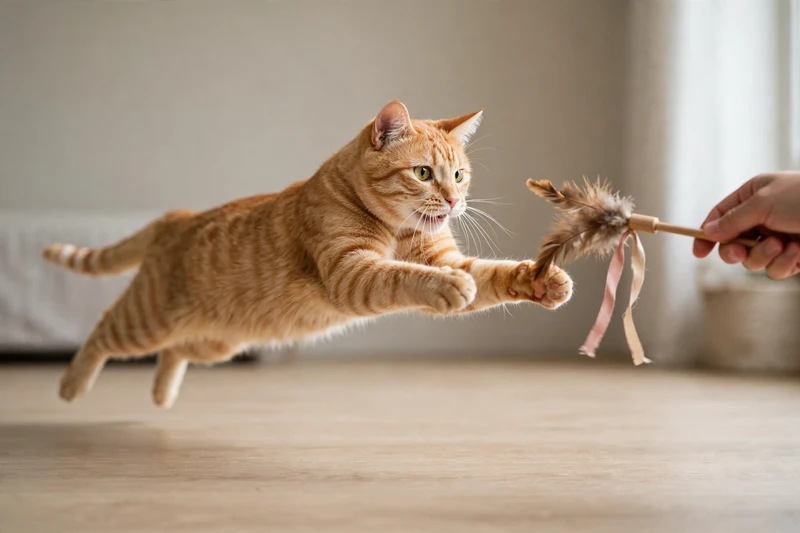
The safe play protocol is one sentence long: string is a toy you operate, never a toy the cat owns. Drag it across the floor, let her stalk and pounce, then put it in a drawer with the door shut. The International Cat Care guide to playing with your cat explains how supervised play gives a cat the hunt she needs, and the International Cat Care guide to pica in cats covers what to do when a cat keeps eating things she should not. Walk through your house once and do a string audit: the sewing kit, the gift wrap drawer, the bathroom, the Christmas decorations, and any loose thread on a cushion. Toys that give the same hunt without the risk are easy to find: a wand toy with a feather, a ball she can chase, or a puzzle feeder that makes her work for food. This is general information only and is not veterinary advice. If your cat has swallowed string, or you think she may have done, contact your vet straight away, even if the cat looks fine.
Your cat loves string for good reasons. It moves like prey, it feels right in the mouth, and it turns an ordinary floor into a hunting ground. Keep the game, and lose the risk: play with string, then put it away.