
That Half Eaten Bowl Usually Means Your Cat Is Grazing, Not Rejecting Dinner
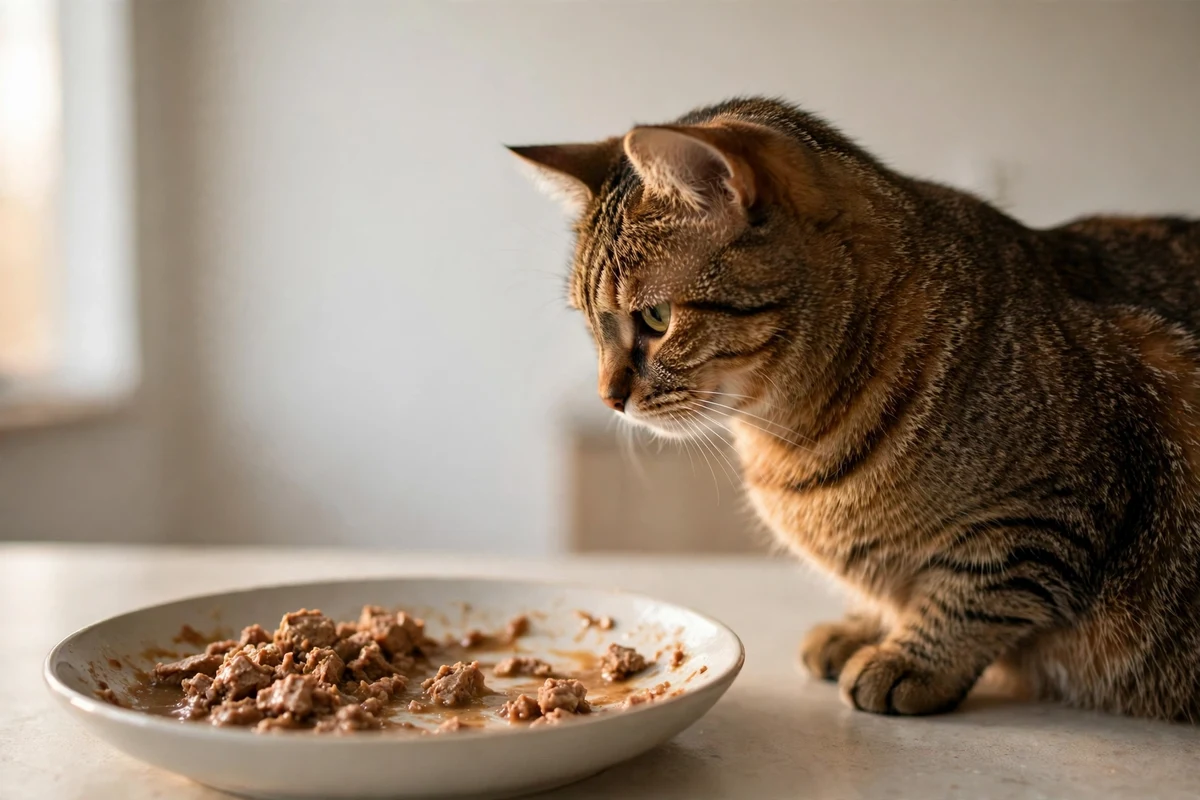
You put the bowl down at seven in the morning. Your cat takes four bites, licks her lips, walks to the window, and leaves the rest sitting there. By lunch the food looks exactly the same, except drier. Most of the time, that half eaten bowl is normal. A cat not finishing food is usually grazing the way cats are built to graze, in small amounts spread through the day, not clearing a plate in one sitting the way a dog does. Cat grazing is the design, not a fault in it. The worry starts only when the pattern changes: a cat that always grazed and still grazes is fine, while a cat that used to finish and suddenly stops needs a vet.
Read the leftovers first
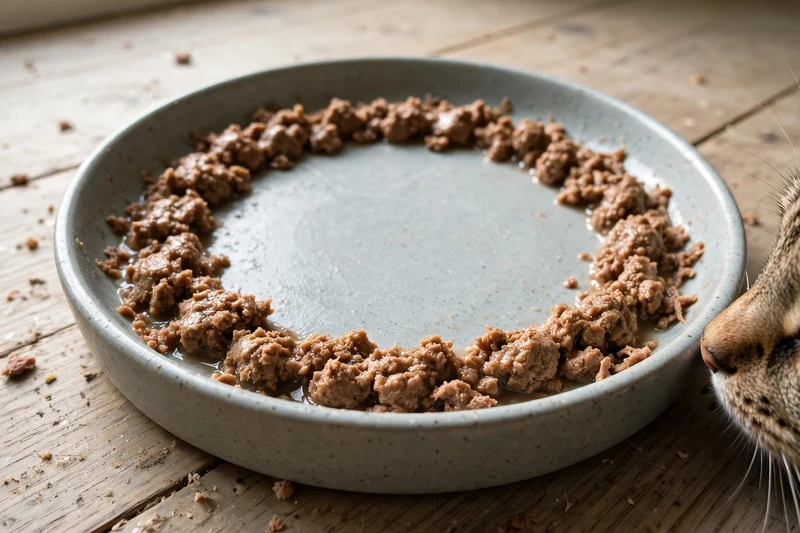
When a cat leaves food in bowl after bowl in exactly the same shape, she is repeating the same message every time. A ring of food round the edge, with the middle eaten, often means the bowl is too deep or too narrow and her whiskers brush the sides. That discomfort is called whisker fatigue, and the fix is a wide flat plate. Jelly licked clean with the meat left behind usually means she likes the gravy and has gone off the meat, or the meat has dried out. Food untouched all day, from a cat who used to eat, is the pattern that matters most: check the fresh food, the bowl, and then the vet, in that order.
The freshness clock, and the portion check
Wet food has two clocks, and owners mix them up. The safety clock says wet food should not sit out for more than 4 hours, and refrigerated leftovers keep up to 24 hours. The freshness clock is shorter: wet food can lose its appeal after 30 to 60 minutes at room temperature, as the smell fades and the surface dries. A cat that leaves food after an hour may simply be telling you it has gone stale to her nose, not that she dislikes the food. Serve less, more often, and do not top fresh food up on top of old food. Replace it. Portions matter too. A cat stomach is about the size of a ping pong ball and holds only 1 to 2 tablespoons of food at a time, and cats need about 24 to 35 calories per pound of body weight a day, about 250 calories a day for an average cat. If you are pouring a full bowl for a cat who only needs a small one, the leftovers are your portion, not her appetite. Ask your vet for the right daily amount for your cat, and check the ASPCA cat nutrition tips for how treats fit into that daily total.
One meal, two bowls: the test that settles it
Guessing is slow. This test takes one meal and gives you an answer. Serve the same food in two dishes side by side: the usual bowl, and a wide flat plate. Put half the usual amount in each. If she eats from the plate and leaves the bowl, the bowl was the problem. If she eats from both and still leaves some, the portion was too big. If she eats from neither, try fresh food from a new pouch, and if she still will not eat, call the vet. Two more causes are worth a quick check. A cat full of treats will not finish her main meal, because treats are calorie dense and a small stomach fills fast. And the same food every day can bore a cat: a 2026 study in Physiology and Behavior found cats lose interest in a smell they meet too often, so rotating flavours can bring the appetite back. Keep a seven day feeding log before a vet visit, with what was served, what was left, and how the cat behaved. The International Cat Care guide to feeding your cat explains how to build a routine around small, fresh meals, and the Cornell Feline Health Center guide to feline dental disease covers the mouth problems that can quietly cut a cat appetite. This is general information only, not veterinary advice.
A half eaten bowl is usually your cat eating exactly as cats eat. Read the pattern, run the one meal test, and you will know by tonight whether you have a portion problem, a freshness problem, a bowl problem, or a vet problem.