
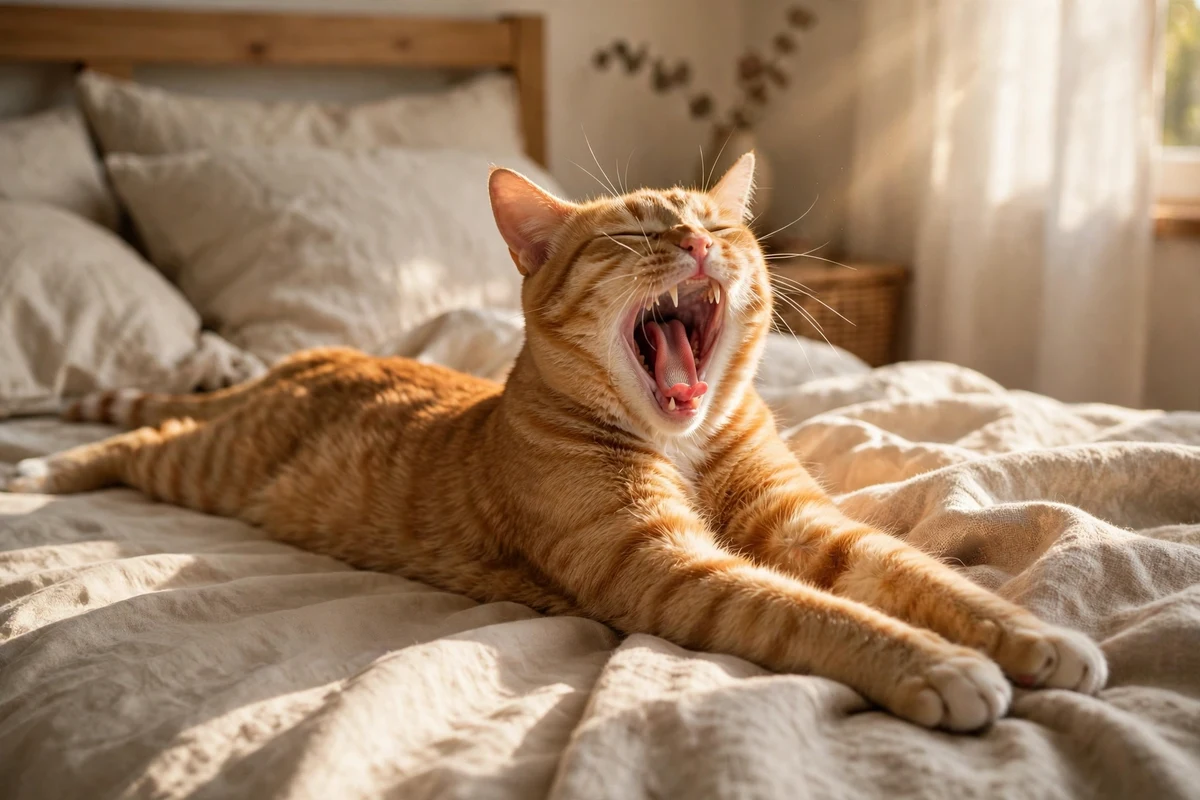
That Big Yawn Means Your Cat Is Winding Down
Your cat wakes from a nap, stretches her front legs out long, and opens her mouth in an enormous yawn. Or she sits quietly beside you in the evening and yawns for no obvious reason. The short answer is that nobody knows exactly why cats yawn, and nobody knows exactly why humans yawn either. Most cat yawns mean sleep, waking up, boredom, or contentment, and they come with a stretch and a relaxed body. That calm yawn is one of the most peaceful things your cat does.
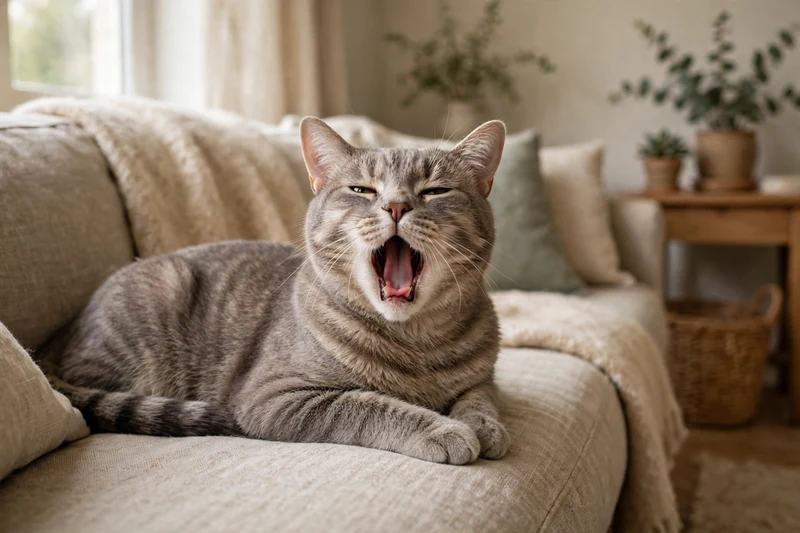
What a normal yawn looks like
A yawn is a reflex. The jaw opens wide, a deep breath comes in, and a shorter breath goes out again. A normal yawn arrives when your cat wakes up, when she is settling down to sleep, when she is bored, or when she is simply content. Watch the body around it. A relaxed cat stretches as she yawns, her eyes half close, and she settles again straight after. That is the cat yawning meaning most owners see most days: she is winding down, not asking for help.
Why scientists think cats yawn
Two ideas lead the research, and neither is proven. The brain cooling theory says a yawn draws cooler blood to the brain and helps keep its temperature balanced. The extra oxygen idea says the deep breath refreshes the blood after a long sleep. Both may play a part, and neither changes what you should do. A yawn can also work as a calming signal. A cat who feels uneasy, for example when a stranger walks in or her routine changes, may yawn to show she is not a threat. The test is the body: a tense cat yawns without stretching, a calm cat yawns with one.
Can your cat catch your yawn?
People catch yawns from each other, but cats do not seem to do the same. Rover reports a 2019 study that found cats did not yawn back when their owners did, so contagious yawning looks like a human habit, not a cat one. If your cat yawns after you, she was probably ready to yawn anyway. That is good news in a way: her yawns are about her own state, not yours, which makes them easier to read.
When extra yawning points to a sore mouth
A cat yawning a lot is different from a cat yawning after a nap. Yawning excessively can point to mouth pain, and the condition vets name most often is tooth resorption, where the tooth wears away under the enamel and becomes painful to touch. Dental disease is common in cats and easy to miss, because cats keep eating through pain. The Cornell Feline Health Center guide to feline dental disease explains what healthy gums look like and why regular checks matter. The VCA guide to tooth resorption in cats describes how the condition erodes the tooth beneath the enamel. The International Cat Care guide to dental disease in cats covers the same ground for owners. If yawning has clearly increased, or your cat paws at her mouth, drools, or drops food, book a vet visit and mention the yawning. You can look at her mouth at home first, gently and only if she allows it: lift the lip at the side for a second and look for red gums or a broken tooth, then stop. If she is bored rather than sore, the fix is play, not worry: a couple of short play sessions a day, one in the morning and one before bed, give a bored cat something better to do than yawn.
Most yawns need nothing from you except a smile. Learn the calm yawn, with its stretch and sleepy eyes, and you will know the one that matters: the sudden increase, with no stretch and a sore mouth behind it. This is general information only, not veterinary advice.