
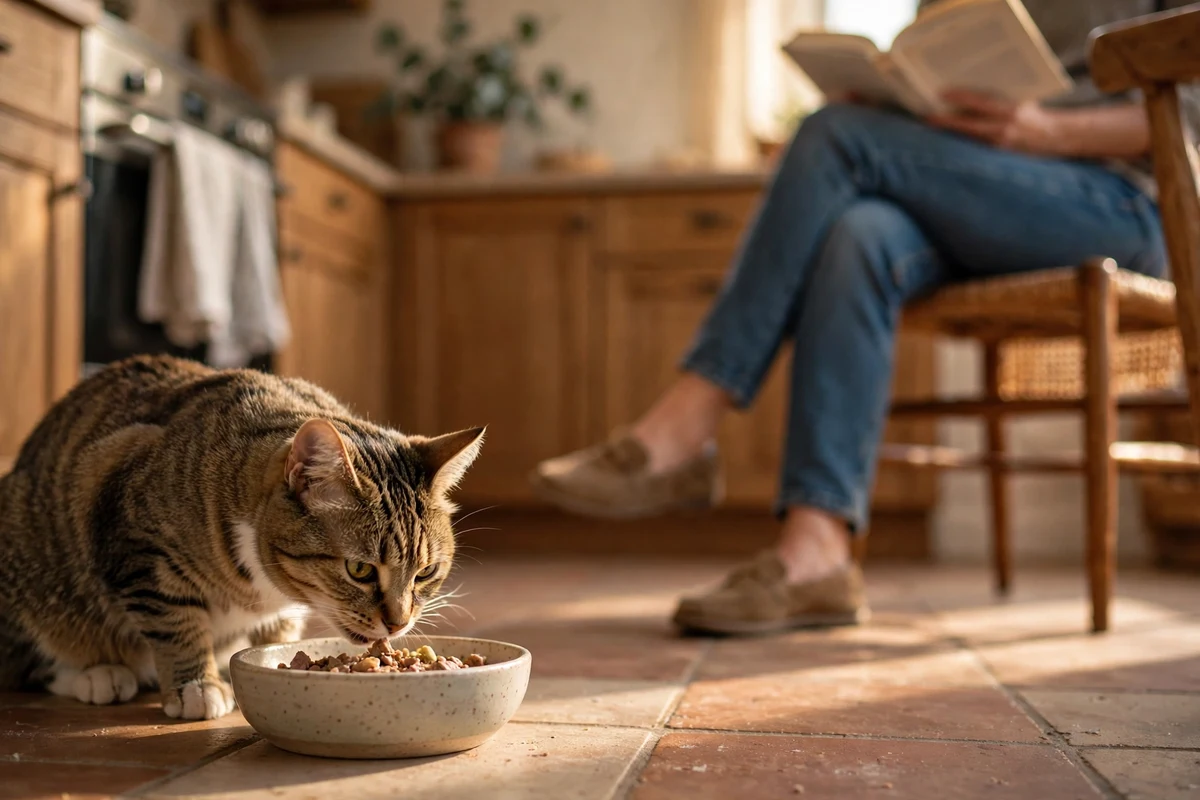
She Eats Better With You There. That Is Affection, Not Fussiness
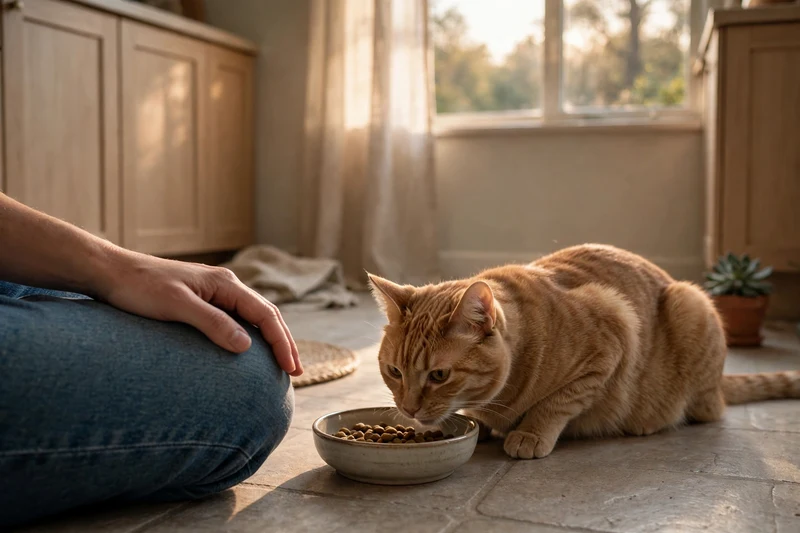
She waits by the bowl until you sit down. Then she eats. You stand up to leave the room, and she stops eating and follows you. If that sounds like your house, your cat is probably an affection eater, and in most cases there is nothing wrong with her. If you have ever typed cat wants me to watch her eat into a search box, you are not alone. Eating is the moment a cat feels most exposed, with her head down and her eyes off the room, and your presence makes her feel safe enough to lower her head and eat. Affection eating cats eat better, or only eat, when a person is with them, and the term comes from the San Francisco SPCA, which wrote a handout for new adopters about exactly this habit.
Why the bowl feels safer with you in the room
The strongest explanation is safety, and it is the one most behaviourists reach for first. In the wild, a cat eating has her head down and cannot see around her, so company means a second pair of eyes. For many cats the habit starts in kittenhood, when food and comfort arrived together: kittens hand fed by humans learn that eating happens with a person attached. A cat who only eats when I am there is not being difficult. She is doing what she was taught, in the only way she knows. Not all affection eating is the same, so place her honestly on a scale from sweet to serious. At the sweet end, she eats alone but eats better with you. In the middle, she waits for you before she starts. At the serious end, she will not eat at all without you, and that is where a vet needs to be involved before any training.
Teaching your cat to eat alone, one step at a time
This plan is for the mild end of the scale, and for the serious end only after a vet has checked the cat. It is slow on purpose. Start by sitting beside the bowl while she eats, then move your chair a little further away each day, then sit in the doorway, then just outside the room. If she stops eating, go back one step and stay there for a few days. Give her a safe room for meals: one quiet room with her food, water, litter tray, bed, and a hiding place, and keep the rest of the house closed off for the first days. That shelter advice works at home too, and it is the same advice the International Cat Care guide to bringing your cat home gives for a new cat settling in. A separation anxiety cat not eating is a real pattern of its own: a cat with separation anxiety may follow you from room to room, cry when you leave, overgroom, and refuse food until you return, and the International Cat Care guide to separation related problems in cats explains how to tell it apart from simple affection eating.
Red flags that outrank reassurance
Training is only for cats that are otherwise well. A cat that stops eating entirely, even with you present, is not an affection eater. She is a sick cat. A cat that goes without food for 24 to 48 hours can develop hepatic lipidosis, fatty liver disease, so do not wait a week to see if she comes round. Other red flags are vomiting, weight loss, hiding all day, or a sudden change in a cat who used to eat happily alone. Any one of them means the vet comes first. The VCA guide to anorexia in cats explains why loss of appetite in cats is always worth investigating. The first mistake owners make is hand feeding every meal: it feels loving, and for a day or two it is the right bridge, but a cat hand fed for a month learns that food only comes from your hand. Use your hand to start her off, then put the bowl down and step back. This is general information only, not veterinary advice.
Most affection eaters just want a little company at the table. Give her the company, then gently move it further away, and she will learn that the bowl is safe even when the room is empty.