
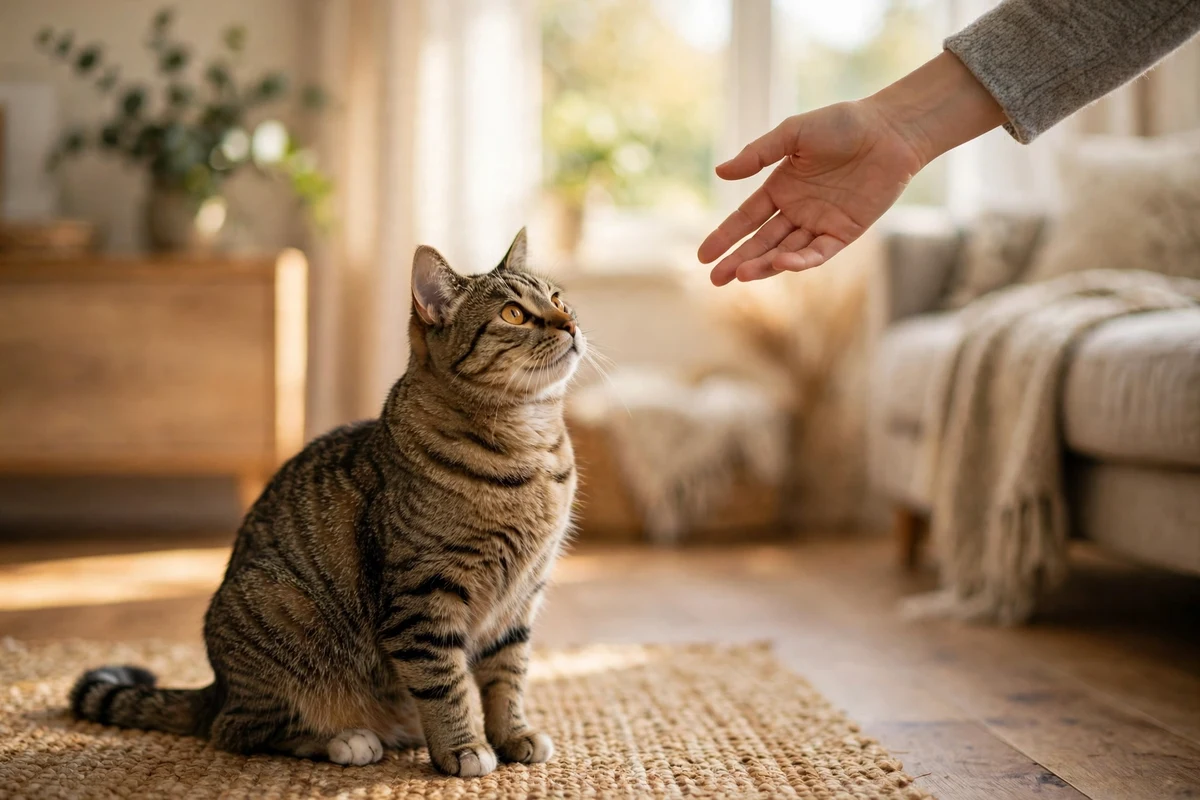
Your Cat Still Loves You, She Just Hates Being Held
You lift your cat and she goes stiff, squirms, and pushes away. Most cats do not like to be held because being lifted takes away their control. A held cat cannot run or leave, and that feels unsafe to an animal built to escape. It is not rejection, and it is not a sign that your cat does not love you. If your cat doesn’t like being picked up, you are in the majority. A cat that used to enjoy being held and suddenly stops may be in pain, so see the vet before any handling practice.
The 7 Reasons, Short and Honest
1. It is not natural for cats. Cats never pick each other up. They greet each other with trilling, scent, and rubbing, never by lifting. In the wild, only a predator lifts a cat.
2. She likes to climb by herself. Some cats object less to the hold and more to the lift. They want to reach the high shelf or your lap under their own power.
3. Fear and anxiety. Anxious cats feel the loss of control most sharply. A nervous cat that is lifted may freeze, go limp, or scramble. Freezing looks like calm, but it is not.
4. A bad experience in the past. A kitten that was dropped, held too tightly, or restrained during a painful vet procedure can link being held with that memory for years.
5. Dislike of restraint. Some cats will sit on your lap for an hour and still fight the moment your arms close around them. A lap is an open surface the cat can leave. Arms that close are a trap.
6. A missed socialisation window. Kittens handled gently between 2 and 7 weeks usually tolerate handling better as adults. Kittens handled roughly, or not at all, often grow into cats that fear touch.
7. Pain or illness. A cat in pain may still want company and still hate being lifted, because lifting presses on the sore place. Arthritis is the most cited cause, and Embrace Pet Insurance notes it can make being touched extremely painful.
Read the Warning Signs Before the Scratch
Cats almost always warn you first. A flicking tail means irritation is rising. Flat ears mean fear or anger. A head turned toward your hand warns of a bite, and sudden stillness is fear, not calm. The ASPCA describes the same pattern for petting induced aggression. Put your cat down at the first sign.
When a Sudden Change Means a Vet Visit
A gradual dislike is a preference. A sudden dislike is a symptom. Cats hide pain well, so a change in holding tolerance may be the only sign you see. Tell the vet when it started, what the cat used to accept, and what else changed. Never give a cat human painkillers. They are toxic to cats.
A Gentle 4 Week Plan
Build tolerance slowly, one week at a time. Week 1: sit on the floor, offer a hand to sniff, stroke the cheeks, then stop and treat. No lifting at all. Week 2: a hand under the chest, hold for three seconds, then treat. Week 3: a tiny lift for three seconds, then set her down. Week 4: lift her, hold her against your chest with her back end supported, count to ten, then set her down before she asks. Never punish a cat for objecting, and never practise when she is asleep, eating, or stressed.
How to Hold a Cat That Tolerates It
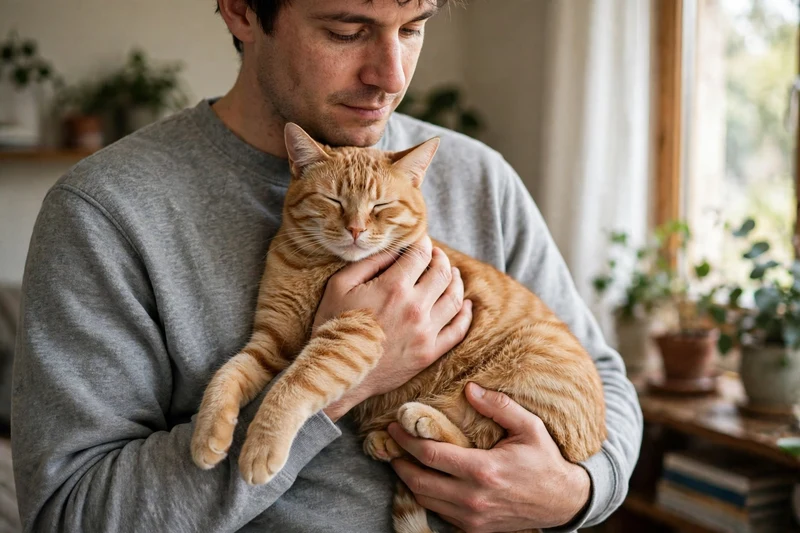
Crouch to the cat’s level first. Slide one hand under the chest and the other under the back end. Lift in one smooth motion and bring her against your chest at once. International Cat Care gives the same method, and states plainly that cats should never be scruffed. For the full technique, read how to hold a cat without getting scratched.
Bonding Without Picking Her Up
You do not need to hold your cat to have a close bond with her. Play builds the strongest bond for many cats. A daily wand toy session gives the cat the hunt it needs. Grooming is another: a cat hates being held yet loves a gentle brush, because brushing is contact she can walk away from. Our guide on how to show your cat affection the right way starts from the same rule: let the cat choose. A cat that sleeps near you and slow blinks at you loves you. She simply does not like being lifted.