
Why Does My Cat Run Away From Me?
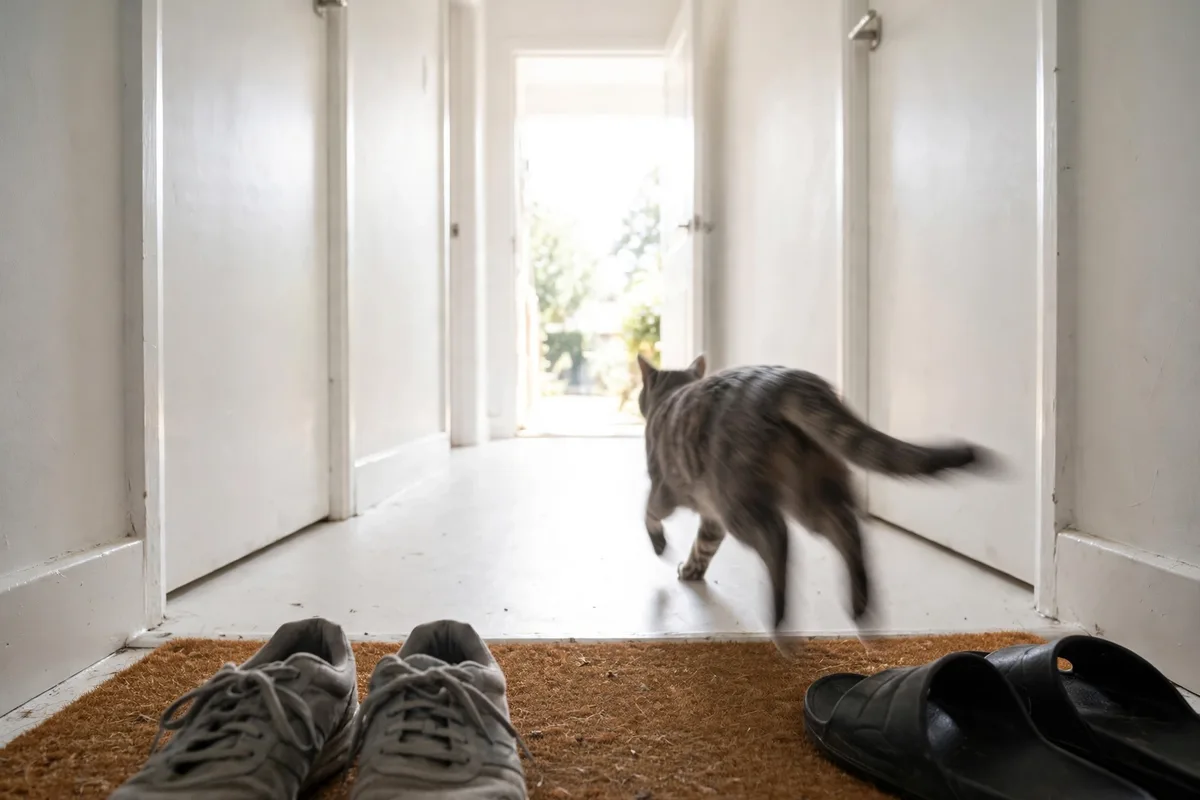
You walk into the room, your cat sees you, and it is gone. Under the bed, behind the sofa, out of the cat flap, vanished before you even reached out a hand. It hurts. You feed this cat, you clean its litter tray, you buy the good food, and it runs away from you like you are a stranger.
It is almost never about you as a person. A cat runs away when the situation feels like too much: the approach is too direct, the handling that usually follows is unwanted, the house has changed, or something hurts. Retreat is a cat first defence, and it is also useful information. Your cat is telling you exactly what feels wrong, if you know how to read it.
The information here is general information only and is not veterinary advice. If a cat that was social suddenly starts running away, or the running comes with eating less, hiding, or a change in toileting, contact your vet before you try any training.
Key Takeaways
- Running away does not mean your cat dislikes you. It usually means the approach, the distance, or the handling that follows feels like too much right now.
- First work out which kind it is: running away from you indoors is a trust problem, while running away from the house outdoors is usually about roaming, territory, or fear.
- A direct approach feels threatening. Walking straight at a cat, reaching over it, or looming above it can trigger flight in seconds.
- Cats that expect to be picked up will leave before the handling starts. Letting the cat choose every interaction is the fastest way to rebuild trust.
- Never chase, corner, or grab a fleeing cat. It confirms the fear and makes the next flight faster.
- Kittens that miss positive human contact between roughly 2 and 7 weeks of age can grow up fearful of people, and they need more time, not more handling.
- Unneutered cats roam for mates, and unneutered females come into season roughly every three weeks when not pregnant. Neutering is the main fix for roaming.
- A sudden change in a social cat is a vet matter first. Pain hides well in cats, and withdrawal is often the first sign owners notice.
The Short Answer: Why Does My Cat Run Away From Me?
Your cat runs away from you because something about the moment feels unsafe or unwanted, and running is the safest option a cat has. It may be your approach: too fast, too direct, or too close. It may be what usually happens next: being picked up, held, or stroked when the cat did not ask for it. It may be fear of a noise, a visitor, or another cat. It may be pain, or it may be play, with the cat bolting and looking back to see if you will chase.
The important point is that retreat is about the situation, not about you. The same cat that runs from you in the hallway may sleep on your lap an hour later, when the room is quiet and the cat chose the approach. Cats decide when interaction happens, and they trust people who respect that decision.
First, Which Kind of Running Away Is It?
Running Away From You Indoors
This is the cat that leaves the room when you enter it, hides under the bed when you reach out, or bolts when you stand up. The cat stays in the house, but it keeps its distance from you. This is a trust and approach problem, and it is fixed indoors, with slower approaches, choice, and treats. Most of the advice below is for this kind.
Running Away From the House Outdoors
This is the cat that slips out of the door, jumps the fence, or disappears for hours or days. The cat is not running from you, it is running toward something, or away from something outside: a mate, a hunt, a rival cat, or a frightening noise. The fix here is about neutering, safe outdoor access, and making home more attractive than the street. If your cat goes missing outdoors, the priority is safe return, not training, and that is covered in the FAQ below.
8 Reasons Your Cat Runs Away From You
Work through these in order. Most cats have one main reason and one or two smaller ones, and the main reason decides the fix.
1. Your Approach Feels Too Direct
Humans approach each other face first, walking straight ahead and reaching out a hand. To a cat, that is how a threat approaches. A person walking straight at a cat, leaning over it, and reaching down from above looks large, fast, and unavoidable. The cat has two choices, freeze or run, and most cats run.
Small things make it worse: walking fast, talking loudly, wearing a rustling jacket, carrying something bulky, or approaching while the cat is eating, sleeping, or using the litter tray. The fix is in the steps below, and it starts with approaching sideways, low, and slow.
2. Being Caught Means Handling the Cat Did Not Choose
Many cats learn a simple pattern: a person approaches, the person picks the cat up, the cat is held, stroked, or carried somewhere it did not want to go. After a few repeats, the cat leaves early, before the handling starts. The cat is not being difficult. It is solving the problem at the earliest point it can.
3. Fear, Stress, or a Recent Change
Cats build their world around routine, and change breaks it. A move, new furniture, building work, a new baby, a new pet, a new partner, or a holiday can all make a cat fearful for days or weeks. Loud noises are a common trigger too: thunder, fireworks, a blender, a vacuum cleaner, or a door slamming. A cat that is scared will run first and ask questions later, and it may stay hidden long after the noise stops.
Stress also shows up in other ways: hiding more, eating less, overgrooming, spraying, or avoiding the litter tray. If the running started at the same time as a change in the house, the change is probably the cause, and the fix is time, quiet, and routine, not more handling.
4. Pain or Illness
This is the reason that matters most, because it is the one owners miss. Cats hide pain well. They do not limp or cry the way a dog might. They withdraw, hide, eat less, groom less, and avoid being touched, because being touched hurts. A cat that used to enjoy strokes and now runs away when you reach for it may be telling you that something hurts.
Arthritis, dental pain, urinary problems, and stomach pain are common causes, and older cats are most at risk. The vet section below lists the signs to watch for, and the rule is simple: if a social cat suddenly starts running away, book a vet check before you treat it as a training problem.
5. Poor Socialization as a Kitten
Kittens learn whether humans are safe during a short window in early life, roughly from 2 to 7 weeks of age. Kittens that get gentle, positive human contact in that window usually grow up confident around people. Kittens that get little contact, rough contact, or frightening contact can grow up fearful, and that fear can last into adulthood.
This is common in rescue cats and in cats adopted as adults, where nobody knows how the kitten was raised. It is not a flaw in the cat, and it is not your fault. It means the cat needs more time and more patience than a well socialized cat, and the trust plan below is written for exactly this cat.
6. It Is Play, Not Fear
Not every bolt is fear. Some cats run away as a game: they dash off, stop, look back, and wait. If you follow, they run again. If you stop, they come back for more. This is the hunting and chase sequence in play form, and it is most common in young, confident cats with plenty of energy.
The giveaway is the body language. A playful cat has a high tail, ears forward, and a relaxed body, and it stops to check whether you are following. A fearful cat has a low tail, flat ears, and a tense body, and it does not stop until it is hidden. If your cat plays this game, the answer is more structured play with a wand toy, not more chasing around the house.
7. Another Cat, a Visitor, or a New Person in the House
Your cat may not be running from you at all. It may be running from something that arrived with you: a visitor behind you, a new baby, a new partner, a dog, or another cat that has moved into the territory. Outdoor cats cause this too. A rival cat outside the window can make a less confident cat avoid whole rooms, and the owner only sees the running.
Watch what else changed. If the running started when a new person or pet arrived, or when a neighbourhood cat started visiting the garden, that is the cause. The fix is to give your cat a safe room and a safe route, and to introduce new people slowly, with the cat in control of the distance.
8. Mating and Roaming in Unneutered Cats
Unneutered cats have a reason to leave that has nothing to do with you. An unneutered male will roam widely looking for a mate, and an unneutered female comes into season on a repeating cycle, roughly every three weeks when she does not become pregnant. Both will slip out at the first open door, and both may stay away for hours or days.
This is the most fixable reason of all. Neutering removes the roaming drive for most cats, and it is the single most effective step for a cat that keeps leaving the house. Talk to your vet about the right age and timing, and keep the cat indoors until it is done.
Read Your Cat Before It Runs: A Body Language Decoder
Cats warn you before they run, usually in the few seconds before the bolt. Learning the signs lets you back off before the flight, and that is how trust is built: the cat learns that you listen to warnings instead of pushing past them.
A cat that is about to run goes tense first. The body lowers, the ears flatten or turn sideways, the pupils widen, the tail goes low or starts lashing, and the whiskers pull back. The cat may freeze for a second, looking at the exit. That freeze is your warning. If you stop, turn sideways, and look away, most cats will relax within a minute. If you keep approaching, the cat runs.
A relaxed cat looks different in every way: ears forward, pupils normal, tail up or resting, body loose, whiskers forward. A cat that is inviting interaction will often approach you, rub against your leg, or blink slowly at you. Let the cat make that approach. Your job is to be easy to approach, not to close the distance yourself.
The New Cat Trust Plan: Week 1, Week 2, Week 4
A new or rescue cat needs a plan, not just patience. Give the cat one quiet room with food, water, a litter tray, a hiding place, and a high perch, and leave the door open so the cat can explore when it chooses. Sit in the room for short periods, reading or working quietly, without looking at the cat or reaching for it. Let the cat come to you.
How to Stop Your Cat Running Away From You: 6 Steps
These steps work together. Do them in order, and give each one a few days before you judge it.
Step 1: Stop Chasing and Cornering, Today
Never follow a fleeing cat, corner it, or pull it out of a hiding place. Every chase confirms the fear and makes the next flight faster. When the cat runs, let it go. It will come back when it feels safe, and that return is the start of trust.
Step 2: Approach Sideways, Low, and Slow
Walk toward the cat in a curve, not a straight line. Crouch or sit down, turn your body sideways, and avoid eye contact. Offer a hand low and still, and let the cat come to it. A small, low, sideways person is far less frightening than a tall person looming over the cat.
Step 3: Let the Cat Choose Every Interaction
Do not pick the cat up for a week or two, unless you must for safety or a vet visit. Let the cat decide when strokes happen and when they end. When the cat walks away, let it walk away. Choice is what turns a feared person into a safe person.
Step 4: Make Yourself the Source of Good Things
Be the person who brings food, treats, and play, and do it quietly. Put a treat down near you and look away. Play with a wand toy so the cat can play at a safe distance. A cat that links you with food and fun will start approaching on its own.
Step 5: Give the Cat Escape Routes and Safe High Places
A cat that can leave will stay. Make sure every room has an exit the cat can reach, and add a high perch or a cat tree where the cat can watch the room from safety. A cat that sleeps on your lap does so because it chose to, and cats that sleep on their owners are cats that feel safe enough to be vulnerable. Give your cat that safety first, and the lap will follow.
Step 6: Fix the House, Not Just the Cat
Look for the trigger and remove it. Keep the vacuum cleaner routine predictable, give visitors a rule to ignore the cat until it approaches, and keep a rival cat out of the garden with a secure fence or a motion sprinkler. A cat that follows you from room to room is a cat that wants company, and cats that follow their owners are usually bonded, not clingy. If your cat follows you sometimes and runs at others, the difference is the approach, not the bond.
When Running Away Means Something Is Wrong: Vet Red Flags
If a social cat suddenly starts running away, book a vet check before any training. Cats Protection lists the pain signs to watch for: becoming less tolerant of people, withdrawing or hiding more, sleeping more than usual, hesitating to jump down from furniture, stiffness after resting, a hunched crouch with squinty eyes, eating or drinking less, more anxiety, pacing or circling, a scruffy coat or overgrooming, and making noise when moving or using the litter tray. The Feline Grimace Scale, from the University of Montreal, scores five parts of the face out of 10, and a score of 4 or higher is the point at which a cat might need pain relief. It is a tool to discuss with your vet, not a home diagnosis. For the full pain list, Cats Protection explains the signs of pain in cats. Never give a cat human painkillers, because many are dangerous to cats.
What NOT to Do
Do not grab, hold, or trap the cat to force affection, and do not punish it for running. Punishment teaches the cat that people are dangerous, which is the opposite of what you want. Do not use a spray bottle, loud noises, or a scare to stop the flight, and do not shut the cat in a room with no hiding place. A frightened cat with nowhere to hide will panic, and a panicking cat can injure itself and you.
FAQ
Why does my cat run away from me but not my partner?
Your approach is probably different. You may be taller, louder, faster, or more likely to pick the cat up. Ask your partner to watch how you approach, and copy the slower, quieter version for a week.
Why does my cat run away when I try to pick it up?
Most cats dislike being picked up, held, or carried. It takes away their control and their escape route. Stop picking the cat up for a while, and let it come to you instead.
Why does my cat run away and hide under the bed?
Under the bed is dark, enclosed, and safe, which is what a frightened cat wants. Leave the cat there. Put food and water nearby, sit quietly in the room, and wait for the cat to come out on its own.
My new cat runs away from everyone. Is that normal?
Yes, for the first days and often for the first weeks. A new home is a new territory with new smells, sounds, and people. Follow the trust plan above, and expect slow progress, not instant affection.
Why does my cat run away outside and not come back?
It may be roaming for a mate, hunting, or scared by a rival cat or a noise. Check the usual hiding places nearby first, then ask neighbours, and call at dusk when it is quiet. Neutering and keeping the cat indoors will prevent most repeat escapes.
Will my cat ever stop running away from me?
Most cats do, once the approach changes and the cat learns it has a choice. Some take weeks, and poorly socialized rescues can take months.
The Bottom Line
Your cat runs away because the moment feels like too much, not because it dislikes you. Slow the approach, stop the chasing, let the cat choose, and make yourself the source of food, play, and calm. Most cats come back within a few weeks, and the ones that do not are usually telling you about pain, fear, or a change in the house that needs attention first.