
Why Does My Cat Attack My Feet? (Ankle Attacks)
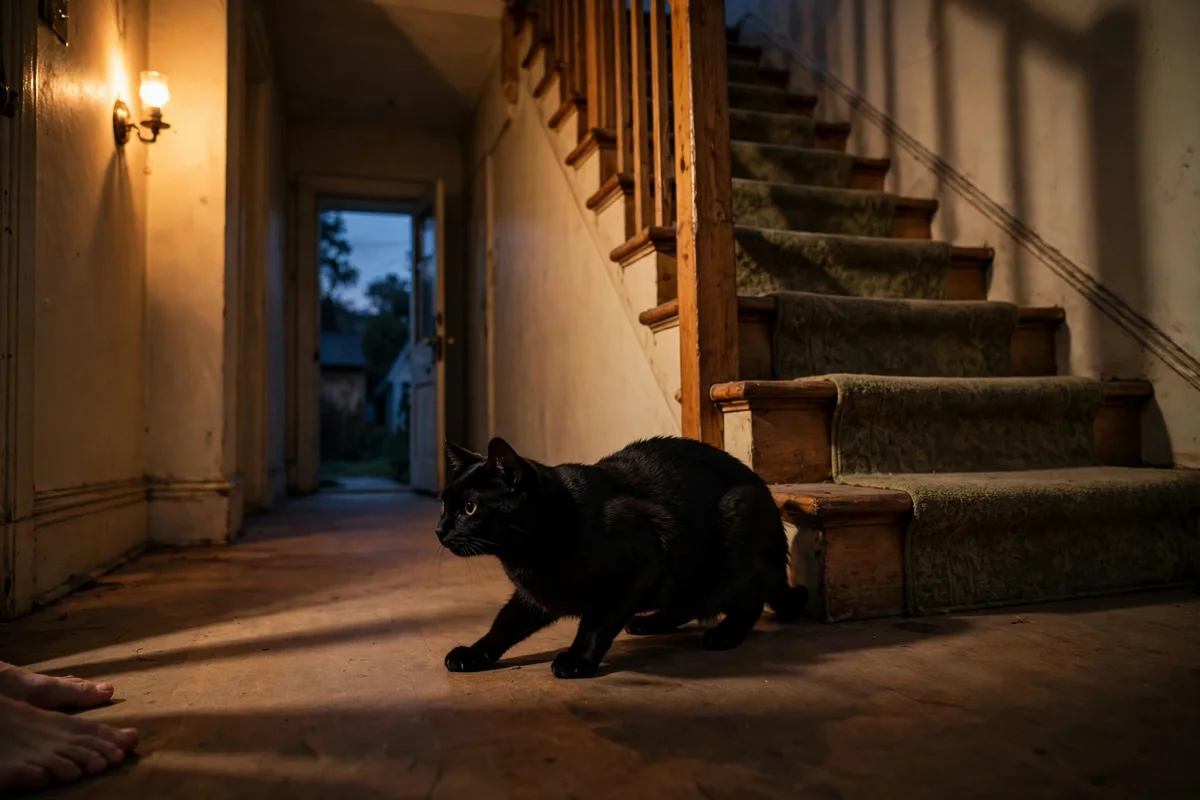
You walk down the hallway, and your cat launches out from under the sofa, grabs your ankle, and bites your foot. Or your toes move under the blanket and there is a pounce, a grab, and a bunny kick. If your cat attacks your feet, your cat is not angry with you. Most foot attacks are play aggression, not real aggression. Your moving feet trigger the same stalk and pounce sequence your cat would use on a mouse, and the fix is a 4 week retraining plan: more play, a better target, and a freeze instead of a flinch.
The information here is general information only and is not veterinary advice. If the attacks started suddenly, are getting worse, or come with hiding, appetite change, or pain, contact your vet first.
Key Takeaways
- Most foot attacks are play aggression, not anger. Moving feet trigger the hunting sequence of stalk, crouch, pounce, grab, and bite.
- Play aggression is most common in kittens and young cats under 2 years, and in cats that missed littermate play.
- Freeze, do not yank your foot away. Pulling away reads as fleeing prey.
- Two short wand toy sessions a day, 10 to 15 minutes each before meals, is the standard fix.
- Never use hands or feet as toys, and never punish a cat for play aggression. Hitting, scruffing, and spraying make it worse.
- Feet under a blanket look like hidden prey, which is why night attacks are the most common kind.
- Improvement takes 1 to 3 weeks for most households, and a month or more for a long reinforced habit.
- Sudden onset, hard bites that draw blood, or attacks paired with hiding or appetite change need a vet check before training.
Is It Normal for a Cat to Attack Your Feet?
Yes. Pouncing on feet is normal cat behaviour, and one of the most common complaints cat owners have, especially with kittens and high energy indoor cats. Your feet are low, move in short jerky bursts, and are about the size of a mouse. Cats are built to chase that kind of movement. The behaviour is called play aggression, and it is different from real aggression. In play, the cat is practising hunting. In real aggression, the cat is frightened, in pain, or defending something. Most foot attacks are play, and play can be retrained.
A small number are redirected aggression, overstimulation, or pain, and those need a different response, covered later in the article.
Why feet are the perfect target
Feet move like prey. A mouse scurries in short bursts and stops, and your toes wiggling under a desk do the same thing. The movement flips a switch, and the body goes into hunting mode before the brain catches up.
Feet under a blanket are even better, from the cat’s point of view. The fabric hides the foot, muffles the sound, and adds a rustling bump, which makes the trigger stronger than bare feet in daylight. Hallways and doorways are classic ambush spots, because the cat can hide and pounce as you pass. Our guide on why cats get the zoomies explains the dawn and dusk energy burst in full.
Why Does My Cat Attack My Feet? 7 Reasons
Most foot attacks come from one of these seven reasons, and more than one may apply to your cat. Read them in order, and note which ones fit your household.
1. Your feet move like prey
This is the most common reason. Cats are tuned to small, jerky movement at ground level. A foot appearing around a doorway, or toes wiggling under a desk, look like a mouse to a cat’s hunting brain. The cat stalks, crouches, pounces, grabs, and bites, in that order. The cat is not being mean. It is doing what cats do.
2. Play aggression, especially in kittens and young cats
Play aggression is most common in kittens and young cats under about 2 years old, and in cats that missed littermate play. Kittens learn to hunt by playing, and bite control from their littermates. A kitten that missed that lesson plays too hard with people, because no one taught it where the line is. Adult cats can show it too, especially if they were encouraged to chase hands and feet as kittens.
3. Boredom and unused energy
Indoor cats that do not get enough physical or mental stimulation create their own entertainment. If your cat has no toys, no window perch, and no daily play session, your feet become the most exciting toy in the house. Owners often miss this reason, because the cat looks busy and active, not bored. A cat that attacks feet every evening after a day alone is usually bored.
4. Attention, and the reaction that rewards it
Cats soon learn what behaviours get a reaction. A shout, a laugh, a jump, or food given right after a bite all teach the cat that attacking feet works. To a bored or lonely cat, any attention is better than none. A shout teaches the cat that feet equal a big reaction. Feeding it to make it stop teaches the cat that feet equal food. Both lessons make the behaviour worse.
5. Toes under the blanket
Feet moving under a blanket look and sound like small prey rustling through grass or brush. The fabric hides the foot, muffles the sound, and adds a rustling bump. This is why night attacks are the most common kind, and why they are the hardest to stop. The cat is attacking a moving bump under a blanket, and it cannot tell the difference in the dark. A play session before bed, followed by a small snack, takes the edge off this trigger.
6. Someone taught your cat that feet are toys
If anyone in the house has wiggled their toes to tease the cat, or let a kitten chase their feet under a blanket, the cat has learned that feet are toys. This is the hardest reason to fix, because the lesson came from a trusted person. The fix is consistency: no one uses hands or feet as toys, ever, and everyone gives the same boring response to a foot attack. One family member who keeps teasing the cat can undo a month of retraining.
7. Overstimulation, stress, redirected aggression, or pain
Sometimes the attack is not about play at all. Some cats get overstimulated by petting and bite whatever is closest once they hit their limit. Some cats are stressed by a move, a new pet, or a change in routine, and act out by attacking feet. Redirected aggression happens when a cat is aroused by something it cannot reach, most often another cat seen through a window, and attacks the nearest person. Pain can also do it: sore joints, dental disease, or hyperthyroidism can make a cat reactive.
Play vs Real Aggression: Tell the Difference in 10 Seconds
Before you retrain anything, check what you are dealing with, because the response is different. Run through this checklist the next time it happens.
- The ears and body. In play, the ears are forward, the body is loose, and the cat may crouch and wiggle its back end. In real aggression, the ears are flat or pinned back, the body is tense, the fur is raised, and the tail is puffed or thrashing.
- The claws and bite. In play, the claws are often retracted, and the bite is a grab and hold with little pressure. In real aggression, the claws are out and the bite is hard.
- The escape route. In play, the cat lets go and runs off, or flops over and shows its belly. In real aggression, the cat keeps attacking or blocks your path.
- What came first. In play, the trigger was movement, a toy, or boredom. In real aggression, the trigger was fear, pain, or an unfamiliar cat outside the window.
- What happens after. In play, the cat calms quickly and may go and play with a toy. In real aggression, the cat stays tense for minutes or hours. After redirected aggression, arousal can last for minutes to days.
| Signal | Play Aggression | Real Aggression |
|---|---|---|
| Ears | Forward | Flat or pinned back |
| Body | Loose, low, wiggly back end | Tense, fur raised |
| Tail | Up or still | Puffed, thrashing |
| Claws | Often retracted | Out, hard bite |
| Trigger | Movement, boredom | Fear, pain, another cat |
| Afterwards | Calms fast, plays on | Stays tense, hard to settle |
| Response | Freeze, redirect, retrain | Give space, find the cause |
If most rows point to play, you are in the right place. If most point to real aggression, stop training and look for the cause first.
Kittens and Littermates: Where Bite Inhibition Comes From
Kittens learn bite inhibition from their littermates. When a kitten bites too hard, the other kitten squeals and stops playing. The lesson is instant: bite hard, and the fun stops. Kittens that were separated too young, or raised alone, miss that lesson. They often play too hard with people, because no one ever taught them where the line is. This is why kittens are the most common ankle attackers. They never got the lesson.
The critical socialisation window for a kitten is roughly 2 to 7 weeks of age. Kittens that meet people and other cats during that window, and play with their littermates, are far more likely to learn gentle play.
If you are raising a young kitten, never use your hands or feet as toys. Always redirect to a wand toy or a small soft toy. When the kitten bites too hard, freeze and stop the game immediately. That is the closest human equivalent of the squeal and walk away a littermate would give. Our guide on why cats lick people explains gentle mouthing in a friendly context, a useful contrast to the hard grabs of play aggression.
The 7 Day Trigger Diary
Guessing why your cat attacks your feet is a bad way to fix it. A 7 day diary is better, and it takes less than a minute a day. Write down the time, where you were, what your feet were doing, and what happened in the 5 minutes before.
| Day | Time | Where | Feet doing | What happened before | Play or real? |
|---|---|---|---|---|---|
| Mon | |||||
| Tue | |||||
| Wed | |||||
| Thu | |||||
| Fri | |||||
| Sat | |||||
| Sun |
After 7 days, look for the pattern. Attacks at 6am in the hallway mean the cat is hungry and full of energy. Attacks at 11pm in bed mean the blanket trigger. Attacks only after a neighbour’s cat appears at the window mean redirected aggression. Once you know the trigger, you know what to change. A cat that attacks in the hallway needs a play session before you walk that route. A cat that attacks in bed needs the night fix below.
The 4 Week Retraining Plan
Retraining takes about 4 weeks for most households. The plan has four phases, and each one builds on the last. Do not expect the attacks to stop in week 1.
| Week | Goal | What to do |
|---|---|---|
| 1 | Find the trigger | Run the 7 day diary. No punishment, no new rules yet. Just watch and write it down. |
| 2 | Give the energy an outlet | Start two 10 to 15 minute wand toy sessions a day, before meals. Keep a wand toy near the hallway ambush spot. |
| 3 | Fix the worst time of day | Apply the night fix or the morning fix, whichever your diary shows is worst. Add a small meal or snack after evening play. |
| 4 | Review and adjust | Count attacks this week and compare with week 1. If they are down by half, keep going. If not, change the timing of the play sessions. |
Improvement takes 1 to 3 weeks for most households, and a month or more for a long reinforced habit. If the attacks are not dropping after 4 weeks, the trigger is probably not play. Go back to the diary, check for a neighbour cat, a pain sign, or a routine change, and talk to your vet.
The Daytime Fix: Freeze, Then Redirect
When your cat grabs your foot, freeze. Do not pull away, do not kick, and do not shout. A moving foot reads as fleeing prey, so pulling away makes the chase more exciting. Freezing makes the foot boring, and most cats let go within a few seconds. Once the cat lets go, redirect immediately. Toss a small toy across the room, or pick up a wand toy and move it away from you. Then walk away calmly. If the cat attacks again, repeat the freeze and redirect. Everyone in the house must do the same thing, every time.
The daily play routine is what makes the freeze work. Give your cat two 10 to 15 minute wand toy sessions a day, before meals. Move the toy like prey: low to the ground, in short bursts, with pauses. Let the cat catch the toy at the end. A cat that has hunted and caught something is far less likely to hunt your feet. This is the hunt catch eat sleep sequence: play, then a small meal or snack, then rest. Our guide on why cats hide explains the hiding spots cats use as ambush points.
The Night Fix: Toes Under the Blanket
Night attacks need a different fix, because the trigger is toes moving under a blanket. Play with your cat for 10 to 15 minutes before bed, then give a small snack. Wear socks to bed, and tuck the blanket in tightly. Keep a soft toy near the bed, and toss it away from you if the cat starts stalking your feet. If the attacks keep happening, close the bedroom door for a few nights and give the cat a warm bed and a toy outside the room. Most households find the night attacks drop sharply within a week.
The Morning Fix: Dawn Ambushes
Morning attacks happen because cats are most active around dawn, and a hungry cat is a motivated cat. Feed your cat as soon as you get up, before you walk down the hallway. Keep a wand toy by the bedroom door and play for 5 minutes first. If the cat waits by the hallway, toss a toy down it first, so the cat chases the toy instead of your feet.
What Never to Do
- Never use hands or feet as toys. No wiggling toes, no tickling paws, no letting a kitten chase your feet.
- Never hit, kick, or scruff your cat. Physical punishment makes a cat fearful, and a fearful cat bites harder.
- Never shout or spray water. It startles the cat, damages trust, and teaches it nothing.
- Never pull your foot away sharply. It triggers the chase instinct and can make the bite deeper.
- Never punish after the fact. A cat cannot connect a punishment to something it did minutes ago.
- Never give food right after an attack to make it stop. That teaches the cat that attacking feet earns a treat.
When to See a Vet or a Behaviourist
See a vet first if the attacks started suddenly, if the cat is also hiding, eating less, or showing signs of pain, or if the bites draw blood. Pain, arthritis, dental disease, hyperthyroidism, and feline hyperesthesia can make a cat reactive. A vet can rule those out and refer you to a behaviourist if needed. See a behaviourist if the attacks have not improved after 4 weeks of retraining, or if the cat is aggressive in other situations.
If a Bite Breaks the Skin
Cat bites can become infected quickly, because sharp narrow teeth push bacteria deep into the tissue. Wash the bite with soap and running water for several minutes. Do not squeeze it. Cover it with a clean dressing. Seek medical advice promptly if you see spreading redness, swelling, warmth, discharge, or worsening pain, or if the bite is deep, on a joint, or on your hand. Tell the clinician it was a cat bite.
Children, Elderly People, and Guests
Children are the most at risk, because they move fast, squeal, and run, which triggers a chase. Teach children to freeze and stand still when the cat grabs their foot. Do not let small children play with the cat using their hands or feet. Elderly people and guests with thin skin should wear socks and shoes, and not walk barefoot past the cat’s hiding spots. Warn guests about the ambush spots, and keep a wand toy near the door.
Frequently Asked Questions
Why does my cat only attack my feet at night?
Toes moving under a blanket look like prey rustling through grass. A play session before bed, a small snack, and tucked in blankets usually fix it within a week.
Why does my cat attack only one person in the house?
That person is usually the one who reacts the most, or the one who walks the ambush route most often. Everyone must give the same boring freeze response.
Is my cat angry with me?
Almost certainly not. Most foot attacks are play aggression, not anger. Forward ears and a loose body mean play, while flat ears and raised fur mean real aggression.
Will my cat grow out of it?
Some kittens do, but most do not without retraining. Two daily play sessions and a consistent freeze response work far better than waiting.
Should I get a second cat to tire mine out?
Sometimes it helps, because a second cat gives the first a playmate, but it can make things worse if the cats do not get on. Fix the play routine first.
The Bottom Line
Your cat is not angry, and it is not being naughty. Your feet move like prey, and your cat is doing what cats do. Freeze when it grabs you, redirect to a toy, and give it two real play sessions a day. Most households see the attacks drop within 1 to 3 weeks. The fix is patience and play, not punishment.