
Javanese Cat Breed Profile: Personality, Care & Facts
The Javanese is the Siamese family’s color rebel: a long-haired, blue-eyed, pointed cat in the colors the family was never supposed to wear. Where its sibling the Balinese is restricted to the four classic Siamese point colors, seal, chocolate, blue and lilac, the Javanese wears the rest of the palette: striped lynx points, mottled tortie points, flame-red and cream points, and two dozen more combinations. Under the silk sits the same cat as the Balinese and the Siamese: wedge head, huge ears, athletic body, sharp mind, and a voice that expects an answer.
One warning before anything else, because this breed’s name is a trap: in some registries, “Javanese” means a completely different, non-pointed cat (the Oriental Longhair under another name). This profile is about the pointed, CFA cat, the one almost everyone searching the name is looking for, and the “Two Cats, One Name” section below explains the split honestly.
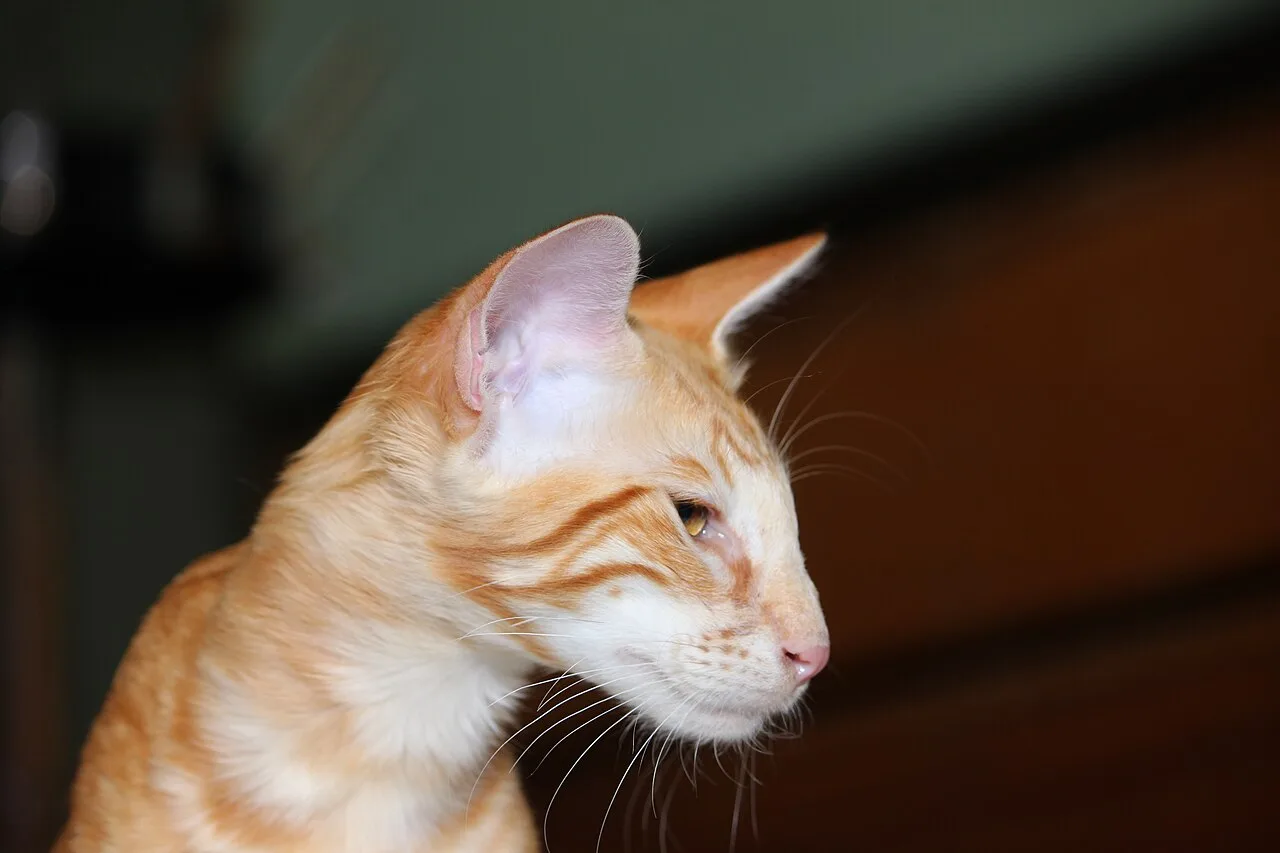
History: The Balinese in Every Other Color
📖 Breed History
The Javanese began as a paperwork problem. When long-haired Siamese-family cats started appearing in the newer point colors in the 1970s, the reds, creams, tabbies and torties that breeders had developed in the short-haired Colorpoint Shorthair, the Cat Fanciers’ Association (CFA) would not register them as Balinese, whose standard allowed only the four traditional colors. The cats needed a name of their own, and in 1979 they got one.
Around 1978, Balinese breeders in Canada and the United States, working through clubs such as Balinese Internationale, campaigned for acceptance of their “new colors.” The CFA accepted the cats for registration in 1979, but only as a separate breed rather than as part of the Balinese. For the name, the breeders looked at a map and picked the island next to Bali: Java. (The word had floated around the cat fancy before, breeder Helen Smith had coined “Javanese cat” around 1950 for a different variety she was working on, but the 1979 choice was made independently, straight from the atlas.) The breed won provisional status in 1984 and full championship status in 1986.
Then the paperwork swung back. Most other registries had never separated the colors in the first place, they simply showed all long-haired pointed cats as Balinese, and in 2008 the CFA merged its two breeds back together. Since May 1, 2008, the Javanese has officially been the Javanese Division of the Balinese: one breed, one standard, judged in two color divisions. The Balinese Division keeps the classic four colors; the Javanese Division covers everything else, solid red, cream, cinnamon and fawn points, lynx points in eight base colors, and the tortie and parti-color points, 24 combinations in all by CFA’s count. Breeders still use the name Javanese daily, and so does this page, but on modern CFA paperwork your Javanese is a Balinese of the Javanese Division.
Two Cats, One Name
Here is the part most breed profiles skip. The CFA’s pointed Javanese is not the only cat that has carried this name. In a number of other registries, in parts of Europe, and in standards such as New Zealand’s, whose breed code JAV is written for it, “Javanese” has been used for the Oriental Longhair: the long-haired version of the Oriental Shorthair, also called the Mandarin and formerly the British Angora. That cat is a close Siamese cousin, but a different animal in the one way you can see across a room: it has no points at all. Its color covers the whole body, and its eyes are usually green. The international federation FIFe recognizes this cat only as the Oriental Longhair, you will not find a breed called Javanese in its lists at all.
| Javanese (CFA) | “Javanese” (Oriental Longhair name) | |
|---|---|---|
| What it is | The Balinese in non-traditional point colors, a color division of the Balinese since 2008 | The long-haired Oriental: the Oriental Shorthair’s long-coated sibling |
| Coat pattern | Pointed only: pale body, darker face, ears, legs and tail, in lynx, tortie, red, cream and other non-classic points | No points: solid, tabby, tortie, smoke or white color over the whole body |
| Eyes | Always blue | Usually green (whites may be blue-eyed or odd-eyed) |
| Where the name is used | CFA (North America), as the Javanese Division of the Balinese | Some European and other registries as a name for the Oriental Longhair; FIFe and TICA use “Oriental Longhair” instead |
The quick field test: blue eyes and points mean the CFA cat; full-body color and green eyes mean the Oriental. For the short-haired side of that family, see our Oriental Shorthair breed profile.
Appearance: A Siamese Frame in Silk
A Javanese is built exactly like its Balinese and Siamese relatives, because genetically that is what it is. The CFA standard describes a svelte cat with long, tapering lines, lithe, but strong and muscular under the refinement. The head is a long wedge flowing in straight lines out to strikingly large, pointed ears. The eyes are almond-shaped, slanted toward the nose, and a deep, vivid blue, in the pointed pattern, blue eyes are not a preference but a rule; the standard disqualifies any other eye color. The body is tubular and fine-boned, carried on slim legs with the hind pair slightly higher than the front, and the long, thin tail finishes the outline.
The coat is where the breed fools people. It looks like a longhair’s coat, but it is a single coat, fine and silky, with no downy undercoat (a definite double coat is actually a fault under the standard). With nothing to puff it out, the hair lies close to the body and follows the cat’s lines, medium in length and longest on the tail, where it spreads into a graceful plume. Color lives only in the points: the mask, ears, legs, feet and tail sit in dense, clearly defined contrast against a much paler body that darkens slowly with age. Kittens, as with all pointed cats, are born plain cream or white; the points, and with them the clue to which of the 24 Javanese-division colors you have, emerge over the first weeks of life.
Temperament & Personality: The Devoted Commentator
Ask the CFA what living with this breed is like and the answer is cheerfully blunt: these cats believe they are people. The Balinese breed profile, which today includes the Javanese Division, describes cats eager to assist with every daily activity, happy to sleep under the covers, and willing to learn fetch, then open the drawer you hid the toy in and start again. Under the regal bearing there is, in the CFA’s words, a bit of a clown. Alert, affectionate and always curious, they are devoted family members, appear quite fond of dogs, and do best in homes where someone can keep up with a high activity level.
The voice is pure Siamese family. Javanese are noted as intelligent cats that vocalize readily, sometimes, owners report, for no apparent reason at all. Expect a running commentary, delivered with conviction, on meals, closed doors and your decision to sit in the wrong chair. They are fond of play, jumping and human contact, and they insert themselves into whatever their people are doing. That devotion comes with a demand: breed references note that a Javanese left regularly unentertained by humans or other pets can become genuinely down. This is not a cat that tolerates being an afterthought; it is a small, elegant supervisor who has appointed itself to your household and expects the position to be full-time. Our Siamese breed profile covers the parent breed’s temperament in depth, the Javanese is that personality in a longer coat and wilder colors.
Care & Grooming
The glamorous coat is the easy part. Because it is a single coat with no undercoat to felt and mat, the silky hair lies smooth and rarely tangles, breeders have long noted that it does not mat the way other long-haired breeds’ coats do. A gentle combing once or twice a week removes loose hair, keeps the tail plume flowing, and is genuinely all the coat asks for. Shedding is low for a long-haired cat. Add regular nail trims and a weekly ear check and the beauty routine is done.
The real work is everything else. Teeth first: dental disease is on the Siamese family’s watch-list (see Health Notes), so dental treats, vet dental checks and brushing, if your cat allows it, earn their place in the routine. Energy second: this is an athletic cat and a powerful jumper, so cat trees, high perches and daily interactive play are equipment, not decoration, a bored Javanese will find its own entertainment, and you will not always approve. Keep the cat indoors or supervised outside; a cat this trusting is not built for traffic. Bringing home a first cat? Our new cat owner starter kit walks through the setup before the supervisor arrives.
Health Notes
Javanese are generally active, long-lived cats, but they share the Siamese family’s hereditary watch-list rather than owning a separate one, and honest breed references say so plainly. The family items to know are amyloidosis, a condition in which abnormal amyloid protein builds up in the organs, in this family most often the liver; eye conditions including progressive retinal atrophy (PRA), an inherited retinal degeneration for which a DNA test exists in Siamese-related breeds; dental disease; and heart conditions, with hypertrophic cardiomyopathy (HCM) listed among the disorders the breed shares with its Balinese and Siamese relatives. Our Siamese breed profile discusses the family background in more depth.
None of that makes the Javanese a fragile cat, it makes breeder questions matter. Ask about health testing and the parents’ history, keep up annual vet visits with dental checks, and treat routine bloodwork as part of ownership as the cat ages, since the family’s amyloidosis is a condition where early changes are easier to manage than late ones. These are general, widely published breed notes, not medical advice; your vet is the authority on your cat.
Living With a Javanese
The right home for a Javanese is a busy, present one. Families do well, the breed’s high activity level suits households with older children who can keep up, as do multi-pet homes (that fondness for dogs is well documented) and anyone who works from home and wants company with opinions. An apartment is fine if it comes with climbing furniture, window perches and a human who is actually there. The wrong home is an empty one: ten-hour absences and a quiet evening are this breed’s idea of a bad life, and it will tell you so, loudly, at the door. Choose a Javanese and you are choosing years of being followed, supervised, serenaded and adored, most owners would not trade a day of it. Browse the rest of the family and beyond in our cat breeds hub.
Best Names for a Javanese
Named from a map, dressed in every color, this breed’s names should be a little regal, a little exotic. Every meaning below comes from our name database; names the database records without a meaning are described honestly, with no invented translations.
Start with the obvious: Java itself, the island the breeders found on the map, no translation, just the name, and it suits the cat perfectly. For the breed’s regal bearing: Raja (“king”), Rani (“queen”) and Sultan (“ruler; authority”), plus Bima (“formidable,” the Mahabharata hero), a pick our database records for a brave Balinese, the Javanese’s own sibling division. For the colors only this division wears: Cinnamon (“sweet bark spice”) for a cinnamon point, Lynx (“lynx”) for a lynx point, Ember (a glowing ember) and Saffron (a golden spice) for flame, red and cream points. For the voice: Echo (“sound”) and Aria (“air; melody”). And for a tortie point’s shifting colors, Opal (“precious stone”), the iridescent gemstone.
See Siamese Cat Names → · Royal Cat Names → · Try the Name Generator →
Frequently Asked Questions
Is a Javanese just a Balinese?
In the CFA today, essentially yes, that is exactly what the paperwork says. The Javanese is not a separate breed but the Javanese Division of the Balinese, split only by point color: the four classic colors (seal, chocolate, blue, lilac) are shown as Balinese, and every other point color as Javanese. The body, coat, eyes and personality are judged by one shared standard. It was a standalone CFA breed from 1979 until the two merged in 2008.
Is the Javanese from Java?
No. The breed was developed in North America, in Canada and the United States, from Siamese-family stock. The name was picked from a map in 1979, Java is the island next to Bali, and naming Siamese-family breeds after Southeast Asian places was already the tradition (the Balinese is not from Bali either). The irony is complete when you learn that Java’s own native cats are short-haired; the breed’s long silky coat is a North American creation.
What colors do Javanese cats come in?
Every point color except the Balinese four. The CFA’s Javanese Division covers solid red, cream, cinnamon and fawn points (including smokes), lynx (tabby) points in eight base colors, and parti-color points, tortie and cream combinations such as seal-tortie point and blue-cream point, 24 combinations in total. All wear the pointed pattern, with a pale body and darker extremities, and all have blue eyes.
Are Javanese cats vocal?
Yes. They inherit the Siamese family’s famous voice and use it, breed references describe a cat that vocalizes readily, sometimes seemingly for no reason at all. Expect commentary rather than silence: a Javanese talks to bond, to request and to object, and most owners learn to hold up their end of the conversation.
Do Javanese cats need a lot of grooming?
Surprisingly little, and it is the breed’s best trick. The coat is a single layer of fine, silky hair with no undercoat, so it lies close, resists tangling and rarely mats. A gentle combing once or twice a week keeps it flowing and the tail plume full. Shedding is low for a long-haired breed, low, not zero.
How long do Javanese cats live?
Breed profiles commonly cite 10 to 15 years, and well-cared-for indoor cats can live beyond that, into their late teens. Good food, dental care and annual vet checks, including bloodwork as they age, given the family’s amyloidosis watch, give a Javanese the best chance of a long life.
By Brianna Baxter
Featured photo: Photo: Kamée, CC BY 3.0, via Wikimedia Commons.