
Domestic Long Hair Cat: Care, Grooming & Names Guide
If your shelter paperwork or vet records say "Domestic Longhair," here is the honest truth up front: you do not have a breed. You have something more interesting, a mixed-ancestry cat whose only defining feature is a glorious long coat. The Domestic Longhair is the longhaired counterpart of the Domestic Shorthair, and between them, these two coat categories cover the overwhelming majority of cats on Earth.
That is not a downgrade. It is why these cats come in every color, size, and personality, and why they fill homes and shelters everywhere. This guide covers what the label means, the genetics behind the fluff, and how much grooming you are really signing up for when you bring home a domestic long hair cat.
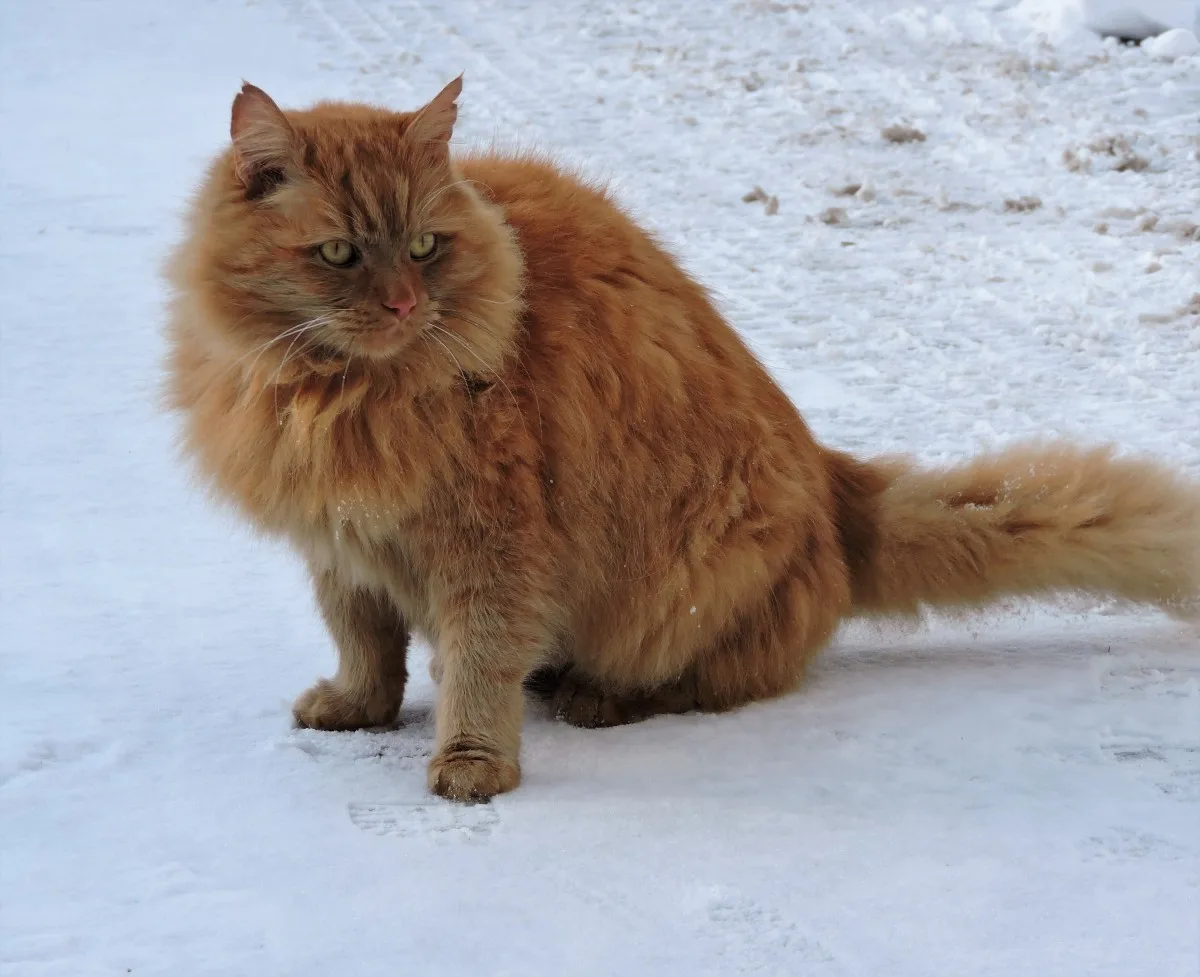
Not a Breed, and Why That's Fine
🐾 The Short Version
"Domestic Longhair" (DLH) is a classification, not a breed. Vets, shelters, and registries use it for any cat of mixed or unknown ancestry that happens to have long fur, the same population of ordinary house cats as the Domestic Shorthair, in a longer coat. No registry, including the Cat Fanciers' Association, recognizes it as a breed, and there is no breed standard because there is nothing to standardize.
The terminology gives it away. The same cat may be recorded as a Domestic Longhair, a "House Cat, Longhair," or shown in a "Semi-Longhair Household Pet" class, labels invented for record-keeping and shelter classification, not descriptions of a lineage. Fewer than 2% of cats in the United States are purebred; roughly 1 in 10 American cats is a longhaired domestic. Most of the cat world is a glorious genetic free-for-all, and the longhairs are its best-dressed members.
Why this is good news: no breed standard means no breed bottleneck. A pedigree breed is a small, closed gene pool bred toward a fixed look, which is how inherited diseases get concentrated. Domestic Longhairs draw from the entire cat gene pool, and it shows in their variety, and, generally, in their robustness. The flip side: mixed ancestry is not a health guarantee, and nobody can promise you a specific size, look, or personality in advance. Many owners consider that a fair trade.
History & Genetics: Where the Long Hair Comes From
🧬 The Fluff Gene, Simply Explained
Hair length in cats is controlled mainly by one gene, FGF5, which tells a growing hair when to stop. The normal version of the gene stops growth early, short hair, and it is dominant. The longhair versions are mutated copies that delay the "stop" signal, so the hair keeps growing. Because long hair is recessive, a cat needs two copies, one from each parent, to be fluffy.
Geneticists have identified four classic FGF5 mutations in cats. Three are largely breed-specific, found in Ragdolls, Norwegian Forest Cats, and Maine Coons, while the fourth, M4, turns up in every longhaired breed and in crossbred cats everywhere. That is the mutation most Domestic Longhairs carry. Research on non-pedigree cats confirms it: shorthaired and longhaired domestics are effectively the same population, separated by this one recessive gene.
That recessive detail explains the classic surprise: two ordinary shorthaired cats can produce a litter with a fluffy kitten or two. If both parents silently carry one longhair copy, roughly a quarter of their kittens inherit two copies and grow the full coat. The fluffy kittens are not a different kind of cat, just siblings with one gene flipped.
As for history, there is no founding breeder and no origin story. Longhaired cats appear to have spread with traders and sailors: VCA Hospitals notes that longhaired domestics reached the Americas aboard European ships in the 1700s, valued as rodent control. A thicker coat was a genuine advantage in cold climates, which likely helped longhair genes persist in northern regions. From there, ordinary cats did the rest, generation after generation, everywhere.
Appearance: Every Combination You Can Imagine
Ask what a Domestic Longhair looks like and the only honest answer is: like a cat, with long hair. The coat runs from semi-long to genuinely flowing, commonly around two to six inches, and often comes with the full accessory set: a neck ruff, fluffy hindquarters ("britches"), a plumed tail, ear furnishings, and tufts between the toes. Texture varies too: silky and flat-lying on some cats, thick and cottony, and determined to tangle, on others.
Color is a free-for-all. Every feline color and pattern exists here, tabby, tortoiseshell, calico, tuxedo, black, orange, smoke, silver, pointed. Size varies just as widely: most land in the typical house-cat range of about 8 to 15 pounds, but smaller and substantially larger individuals are common, and published ranges run roughly 6 to 20 pounds. There is no "correct" anything. Two cats with identical paperwork can look like entirely different species of fluff.
One warning worth giving plainly: a big, fluffy shelter cat is almost certainly not "part Maine Coon" or "part Persian." Without pedigree papers there is no evidence for those guesses: statistically, almost every fluffy cat is simply a Domestic Longhair, a different thing (see the Maine Coon profile) from a cat bred to a standard for generations.
Temperament: It Depends on the Cat (Honestly)
Every breed profile promises a personality. This one cannot, and any source that promises you a "typical Domestic Longhair temperament" is selling you something. VCA Hospitals puts it directly: because of their mixed breeding background, these cats are capable of a wide range of temperaments, some friendly and playful, others shy and quiet, others cheerfully independent.
What can be said honestly: these cats come from the general house-cat population, so the full, familiar spectrum of cat personalities is in play, lap warmers and aloof supervisors, chatterboxes and near-silent types. Owners and shelter write-ups most often describe them as mild-mannered and adaptable, and many are excellent family cats, but "most often" is a tendency, not a trait. Two things predict an individual cat's temperament far better than its coat: its own genetics (unknowable in a mixed cat) and its early socialization.
The practical takeaway: judge the cat, not the label. If you are adopting, spend real time with the individual in front of you and ask shelter staff what they have observed, adult Domestic Longhairs have the underrated advantage that their personality is already formed and on display.
Care & Grooming: The Coat Is the Commitment
Everything else about this cat is standard cat care. The coat is not. Long hair that is not brushed does not stay beautiful, it felts into mats, and mats are a welfare issue, not a cosmetic one. Budget for grooming like you budget for food: it is a recurring, non-optional part of owning this cat.
Brushing. A few sessions a week is the floor; cats with dense, cottony undercoats need daily attention. Work in layers with a slicker brush, then follow with a stainless-steel comb, the comb is the truth-teller, because a coat can look smooth on top while tangling at the skin. Focus on the friction zones where mats start: behind the ears, the armpits, the collar line, the belly, the britches, and the base of the tail. Keep sessions short and pleasant, with treats.
Mats. Small tangles can be teased apart with fingers or a comb, working from the ends inward. Never cut a mat out with scissors: cat skin is paper-thin and tents up into the mat, and groomers and vets treat scissor injuries from this exact mistake. A matted area that will not comb out should be clipped out by a professional groomer or your vet. If the coat has felted tight against the skin over large areas, that is a vet visit: tight mats pull constantly and can hide sores and infection underneath.
Shedding and hairballs. Longhairs shed year-round, with a heavier seasonal blow-out, typically in spring, when the winter undercoat comes out. Step up the brushing then rather than fighting fur on every surface later. Brushing is also your main hairball defense: every loose hair you remove is a hair your cat does not swallow while grooming. An occasional hairball is normal; frequent vomiting is a conversation for your vet.
The rest of the routine. Most indoor longhairs rarely need a bath; an occasional one is fine if the coat gets greasy or dirty. Check nails every couple of weeks and trim as needed (roughly monthly). Long britches can collect litter, so keep the litter box clean. And keep this cat indoors or supervised outdoors: a long coat picks up burrs, debris, and mats fast outside, which is why veterinary references call them poor candidates for free-roaming outdoor life. Indoor living is also the single biggest favor you can do this cat's lifespan.
Health Notes
Here is the honest advantage of not being a breed: there is no list of inherited diseases attached to this cat. Pedigree breeds carry known predispositions because their gene pools are small and closed; this cat's gene pool is the entire species. Veterinary and adoption references describe Domestic Longhairs as hardy, generally healthy cats with no breed-specific conditions. Read that correctly: it means no extra risks, not no risks, mixed ancestry lowers the odds of inherited disease, but guarantees nothing for any individual cat.
The health topics that genuinely apply are mostly coat-adjacent and routine. Neglected coats mat, and skin under mats can become irritated or infected. Hairballs are the other coat tax. Beyond that, the list is the universal cat list: dental disease, obesity (a thick coat hides extra weight, so weigh your cat and learn to feel for ribs), urinary problems, parasites, and the infectious diseases that vaccination and indoor life prevent. Routine vet checkups, parasite prevention, and dental attention cover most of it.
Kept indoors with ordinary veterinary care, Domestic Longhairs commonly live 12 to 18 years, with some references putting the upper end at around 20, one of the quiet perks of a cat with no breed baggage. These are general, widely published notes, not medical advice; your vet is the authority on your cat.
Adopting a Domestic Longhair
There is no breeder to find. Domestic Longhairs fill shelters and rescues everywhere; "DLH" is one of the standard labels you will see on kennel cards. Adoption is not a fallback for this cat. It is simply where these cats are.
Two honest cautions. First, be wary of anyone marketing a "Domestic Longhair" kitten as something rare or exotic, the category is a mixed-breed house cat by definition, and the kitten in your local shelter is the same thing. Second, remember the grooming commitment: shelters regularly receive longhairs surrendered because the coat became more work than expected. Adopt with your eyes open and a comb in hand.
Ask staff what they know, how the cat handles being brushed is genuinely useful information, as is any history with children, dogs, or other cats. Kittens are adorable lotteries; an adult's size, coat, and temperament are already known quantities. Set up the routine from day one: gentle brushing in the first week home builds the habit that keeps the coat comfortable for the next fifteen-plus years. Then comes the best part: choosing a name worthy of all that fluff.
Best Names for a Domestic Longhair
Names that celebrate the coat, lions for the manes, clouds for the fluff. Every meaning below comes from our name database; inspiration-only picks are described honestly, with no invented translations.
Leo, Latin for "lion"; the natural crown for a cat wearing a mane. Aslan, Turkish for "lion," and the great lion of Narnia. Simba, Swahili for "lion," made famous by The Lion King. Nimbus, Latin for "cloud"; stormy and soft at once. Cirrus, Latin for "curl, fringe," after the wispy cirrus cloud. Teddy, the teddy-bear pick for a cat that is basically a plush toy. Casper, Persian for "treasurer"; a gentle classic for white fluffballs. Bianca, Italian for "white." Marshmallow, soft, white, and squashy; no translation needed. Cloud, exactly what a sleeping longhair looks like.
Still deciding? Browse names for white cats, explore the full fluffy cat names list, or try the Name Generator →
Frequently Asked Questions
Is a Domestic Longhair a breed?
No. It is a coat category, not a breed: the label covers any cat of mixed or unknown ancestry with long fur. No cat registry recognizes it as a breed, there is no breed standard or pedigree, and two Domestic Longhairs can differ from each other as much as any two cats alive.
How can two shorthaired cats have longhaired kittens?
Long hair is recessive: it is caused by mutations in the FGF5 gene, and a cat needs two copies, one from each parent, to grow a long coat. A shorthaired cat can carry one copy silently. When two carriers mate, roughly a quarter of the kittens, on average, inherit both copies and turn out fluffy.
How often do I need to brush a Domestic Longhair?
A few times a week at minimum, and daily if the coat is dense or cottony. It prevents mats, which are painful and can damage skin, not just ugly, and cuts down on shedding and hairballs. Step it up during the heavier spring shed, and never cut a mat out with scissors; that is a job for a groomer or vet with clippers.
How long do Domestic Longhairs live?
Commonly 12 to 18 years for an indoor cat with routine veterinary care, with references putting the upper end around 20. Keeping the cat indoors is the biggest single factor in reaching those numbers, outdoor life shortens feline lives.
Is my fluffy shelter cat part Maine Coon or Persian?
Almost certainly not, it is a Domestic Longhair. The vast majority of cats worldwide (estimates run 98 to 99%) have no pedigree ancestry, and long hair runs throughout the general cat population. A big, fluffy coat is not evidence of breed heritage; without pedigree papers, the honest label is DLH, and that is a fine thing to be.
By Brianna Baxter
Featured photo: Photo: COOLPIX P530, CC0, via Wikimedia Commons.