
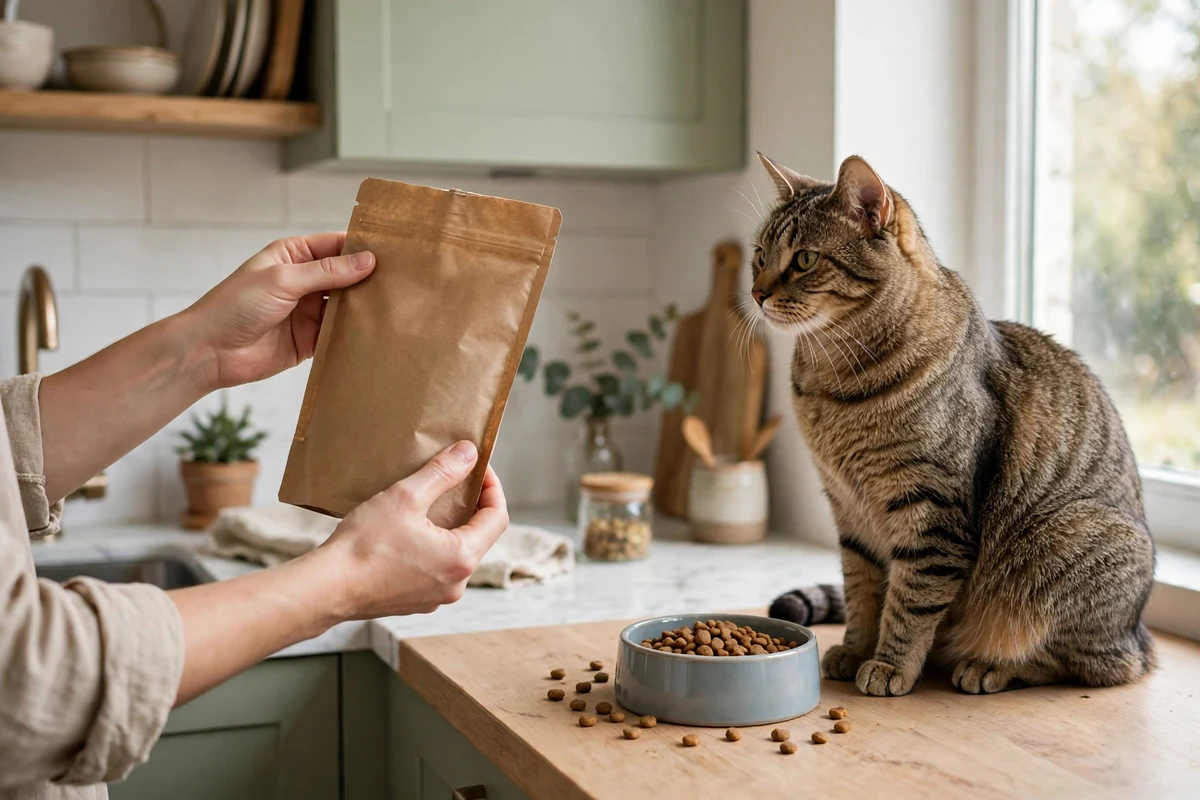
Cat Food Recalls: How to Check and Stay Safe
A recall notice can turn an ordinary bag of cat food into a source of worry in seconds, especially because most recalls affect only some batches, not a whole brand forever. The good news is that checking takes only a few minutes once you know where the right details sit on the packaging and which sources to trust. This guide walks through what a cat food recall actually means, how to check your own food step by step, and what to do if your cat’s food is affected.
This article is general information only and is not veterinary advice. If your cat is ill, or you think it has eaten recalled food, contact your vet promptly and describe the product and the symptoms you have seen.
Key Takeaways
- Most recalls cover specific products, flavours, sizes, lot codes or date ranges, so the details on your own package matter more than the brand name alone.
- Keep the original bag or can, or at least a photo of the lot code panel, because once food is poured into a bin that proof is gone.
- Check official sources first: the regulator’s recall database, the manufacturer’s own notice, and your retailer, in that order of trust.
- If your food matches a recall, stop feeding it, do not donate it, seal it away from animals, and keep the packaging for the retailer or manufacturer.
- A recall is different from a safety advisory. An advisory warns against a product even where no formal recall has been announced, so read the wording of each notice carefully.
- Outside the United States, the regulator and the reporting route differ, so check your local food safety authority and the manufacturer for your country.
What a Cat Food Recall Actually Means
A recall is a removal of a product from sale, or a request to return it, because it may be unsafe or does not meet its label claims. Recalls are commonly triggered by bacterial contamination, foreign material in the food, a nutrient that is far too high or too low, or an ingredient that was mislabelled. A recall does not automatically mean every product from that company is unsafe, and it does not mean a food that was fine last month has suddenly become dangerous. It means a defined set of products, made or sold within a defined window, needs to come out of bowls.
Most pet food recalls in the United States are voluntary, which means the company itself identifies a problem and pulls the product, sometimes at the regulator’s request. A regulator can also order a recall in some circumstances if a company does not act. Either way, the notice should spell out the same essentials: the brand and product name, the flavour and size, the lot codes or date codes affected, the reason for the recall, and what owners should do. If any of those details are missing from a social media post or a forwarded message, treat it as unconfirmed until you have found the original notice.
How to Check Your Cat’s Food, Step by Step
1. Find the identifying details on your own package. Before you search anything, note the brand, the exact product and flavour, the size, the lot or production code, the best by date, and the barcode number (UPC) if one is printed. On cans these are usually stamped on the bottom. On dry food bags they are usually near the barcode, along a seam, or on the back panel. Photograph the panel so you have it even after the bag is finished. If you store kibble in a separate bin, tape the cut out panel to the bin or keep the photo on your phone.
2. Compare those details against the official recall listing. In the United States, the Food and Drug Administration (FDA) publishes recalls and withdrawals in a searchable database, and the American Veterinary Medical Association (AVMA) also publishes pet food recall alerts. Search by the brand and product name first, then check whether your lot code, date code and size fall inside the affected range. A match on the brand alone is not enough to act on, and a different lot code from the same brand is not automatically a reason to panic. It is the combination of product, lot and date that decides whether your bag is affected.
3. Check the manufacturer’s own notice. The company behind the food usually publishes its own recall notice with the full list of affected codes, a contact route for refunds or returns, and instructions for disposal. If the official listing and the company notice disagree on a detail, follow the wider of the two for safety and ask the company or your retailer to clarify. Manufacturer websites and customer service pages are also the right place to check for products sold outside the United States, where the FDA database may not list the same batches.
4. Ask your retailer if you are still unsure. The shop or online store where you bought the food can usually confirm whether the stock it sold came from an affected batch, and many retailers contact buyers directly when a recall covers something they sold. Keep your receipt or order confirmation until the food is finished, since it makes a return or refund much simpler.
5. Sign up for alerts so you hear about the next one early. The FDA offers email alert options, and several veterinary and pet safety organisations republish recall notices. One reliable alert subscription beats a dozen social media groups, because forwarded posts often lose the lot codes, and that is exactly the detail that tells you whether your food is involved.
If Your Cat’s Food Is Recalled
- Stop feeding it straight away, even if your cat seems fine and has already eaten some of it. Switch to a safe alternative, ideally the same type of food your cat already tolerates, and change over gradually if your vet advises it, unless your vet tells you to switch at once.
- Do not donate the food, give it to another pet owner, or put it out for stray or wild animals. Recalled food is recalled because it may be unsafe, and passing it on only moves the risk.
- Seal the remaining food in its original packaging inside a bag or bin that animals cannot open, then dispose of it as the notice directs, or return it to the retailer if the notice asks for that.
- Clean the bowl, scoop, storage bin and any surface the food touched, and wash your hands after handling it. Some recalled foods carry bacteria that can also affect people, so keep children and anyone with a weakened immune system away from the food and the bowls while you clean up.
- Keep the packaging, the receipt and a note of when you bought and opened the food. You will need those details for a refund, a return, or a report.
- Contact the retailer or manufacturer about a refund or replacement, following the instructions in the recall notice rather than a social media post about it.
If Your Cat Has Already Eaten Recalled Food
Do not wait for symptoms if the notice says the food is contaminated, and do not try to make your cat vomit at home. Call your vet, tell them the exact product, lot code and amount eaten, and when your cat ate it, and follow their guidance. Watch for vomiting, diarrhoea, loss of appetite, lethargy or fever, and note when each sign starts, since that timeline helps your vet judge the situation. If your cat seems well, your vet may still want to know, because some problems linked to nutrient errors or contamination develop over days rather than hours. Keep a small sample of the food and the packaging if your vet or the manufacturer asks for it, but only if doing so is safe and the notice does not tell you to dispose of it at once.
Our guide to cat coughing is a useful reminder of how quickly breathing and general health signs can change in cats, and why a prompt vet call beats waiting to see how things develop.
Everyday Habits That Keep You Ahead of Recalls
- Check a new bag or case against the recall listings when you first open it, not weeks later when the bag is nearly empty.
- Keep one photo of each food’s lot code panel on your phone, updated whenever you switch flavours or sizes.
- Inspect food before serving: reject cans that are swollen, deeply dented along a seam or leaking, and kibble that smells sour or rancid, shows mould, or looks discoloured.
- Store dry food in its original bag inside a sealed bin where possible, in a cool, dry place, and keep wet food refrigerated after opening as the label directs.
- Use a clean, dry scoop, and wash bowls daily, since old residue and moisture help bacteria grow even in food that was never recalled.
- Be extra careful with raw diets and treats, which carry a higher contamination risk in general, and keep their preparation away from human food surfaces.
For new owners, our new cat owner starter kit covers the same food continuity principle from the other direction: keep the food your cat already eats for the first week, then change gradually, so a sudden switch never masks a genuine food problem.
What to Do If No Recall Covers Your Food but Your Cat Is Ill
Start with your vet, not the internet. A report to the regulator is still worth making afterwards, because patterns across many reports are often how new problems are spotted. In the United States, pet food complaints go through the FDA Safety Reporting Portal, and the FDA’s own guidance lists what to have ready: the exact product name as printed on the label, the lot number and best by date, where and when you bought it, a description of the problem, and, if your cat became ill, why you suspect the food and what your vet found. You can also report the problem to the manufacturer and the retailer. Keep copies of everything you send, and keep the packaging until your vet or the regulator tells you it is no longer needed.
Frequently Asked Questions
Does a recall mean the whole brand is unsafe?
Usually not. Most recalls name specific products, flavours, sizes and lot or date codes. Check your own package against those details before deciding your food is affected, and do not assume a different product from the same brand is unsafe on the basis of a brand name alone.
Where is the lot code on cat food?
On cans it is usually stamped on the bottom, and on dry food bags it is usually near the barcode, along a seam, or on the back panel, close to the best by date. Photograph it when you open a new bag so you still have it after the food is transferred to a bin.
What is the difference between a recall and a safety advisory?
A recall removes or requests the return of defined products. An advisory warns owners not to feed a product even though no formal recall has been announced for it. Both deserve attention, but the action they ask for, and the refund position, can differ, so read the original notice rather than a summary.
Can I get a refund for recalled cat food?
Usually the recall notice itself explains the refund or return route, through the retailer or the manufacturer. Keep the packaging and the receipt or order confirmation, since both make the process much easier.
How often should I check for recalls?
Check when you open a new bag or case, and keep an alert subscription running in the background for everything in between. That combination catches new notices without turning food safety into a daily chore.
Please note: this article is general information only and is not veterinary advice. If your cat is ill after eating food you suspect is unsafe, contact your vet promptly rather than waiting for a recall notice to appear.