
Russian Blue Cat: The Silver-Coated Aristocrat with Emerald Eyes
There is a particular kind of elegance that does not ask for attention. The Russian Blue has it: a shimmering silver-tipped coat, vivid green eyes, and the faint, knowing curve of the "Mona Lisa smile." It is one of the most beautiful cats in the world, and it knows it, the way aristocrats always know it.
Behind the looks is a cat of quiet devotion and strong opinions about routine. The Russian Blue is reserved with strangers, sometimes vanishing entirely when guests arrive, and then it follows its chosen person from room to room like a velvet shadow. It is said that Russian Blues train their owners rather than the other way around, and anyone who has lived with one will tell you the legend is true.
History
📖 Breed History
The breed's story begins at the port of Arkhangelsk in northern Russia, where sailors encountered striking blue-grey cats sometime in the mid-1800s and carried them to Britain and northern Europe. The breed's first recorded show appearance was at a Crystal Palace cat show in London in 1872, exhibited as the "Archangel Cat", a nod to its suspected home port.
For a time the breed was confused with other blue cats, including blue-coated British Shorthairs and the Chartreux, and dedicated separate breeding only began in the 20th century. Like many pedigreed breeds, numbers collapsed after the World Wars, and breeders used careful outcrosses, including Siamese, to rebuild the gene pool before refining the line back to the classic type. Today the Russian Blue holds championship status with the CFA, TICA, and other major registries: a naturally occurring breed with an aristocratic polish. The blue breed it is most often compared with is Thailand’s Korat, a leaner, silkier silver-blue cat with a devoted, all-in temperament.
Appearance
The coat is the whole thesis: a short, dense double coat in which the undercoat and guard hairs are nearly the same length, so the fur stands out from the body like plush. Each hair is tipped with silver over an even blue-grey base, producing the breed's famous shimmering sheen. The CFA breed standard describes it as "so plush you can write in it." Kittens are born with yellow or yellow-green eyes; the vivid emerald green of the adult develops with maturity. The head is a smooth wedge with prominent whisker pads that create the breed's subtle, signature smile, and the paw pads are a distinctive lavender to mauve. Fine-boned yet muscular, the Russian Blue moves with a dancer's grace on long legs.
Temperament & Personality
Gentle, observant, and deeply loyal, with a formal reserve toward anyone outside the inner circle. A Russian Blue typically chooses one or two "their" people and attaches completely: greeting you at the door, following you around the house, and supervising your work from a nearby perch. Strangers may never see the cat at all.
This is a creature of ritual. Russian Blues thrive on predictable routines, quiet resting nooks, and a calm household rhythm; sudden changes and noisy chaos unsettle them. They are highly intelligent and retain a real playfulness, especially with feather wands and fetch, but they play on their own dignified schedule and then retire to a private spot. Their voice is soft and used sparingly, though they will happily chat back if you talk to them first. Set the routine, respect the rituals, and you will be rewarded with one of the most devoted companions in the cat world.
Care & Grooming
The dense double coat needs a weekly brushing to manage shedding and keep the silver tipping gleaming; it is not a high-maintenance coat, but it is a substantial one. Provide the vertical life this breed loves: tall perches, window seats, and climbing routes for surveying the kingdom. Daily interactive play matters because the mind is sharp: puzzle toys, fetch, and feather wands all earn their keep (store feather toys away afterward, since a determined Blue will shred them).
Russian Blues do not mind being alone during the workday as much as clingier breeds, but they want quality time when you are home. Keep meals measured: this breed trends toward roundness, and a lean Blue is a healthy Blue. A quiet, predictable home with a private sleeping nook is the ideal setup.
Health Notes
The Russian Blue is a hardy, long-lived breed with no extreme breed-specific disease burden, which is part of its appeal. The main health consideration is wonderfully ordinary: weight. These cats love their food and their naps in roughly equal measure, so portion control and daily play are the most important health tools you have. Beyond that, standard sensible care applies: regular veterinary checkups, dental attention, and keeping vaccinations and parasite prevention current. Many Russian Blues live well into their teens.
Best Names for a Russian Blue
A Blue deserves a Russian name with elegance to match the coat. All meanings below are verified in our name database. For more grey-coat inspiration, see our grey cat names, or try the cat name generator.
Frequently Asked Questions
Are Russian Blue cats hypoallergenic?
No cat is truly hypoallergenic, but Russian Blues are considered more allergy-friendly: they are reported to produce lower levels of the Fel d 1 allergen protein, though the evidence for that is mostly anecdotal, and their dense double coat sheds moderately, trapping dander. Allergy sufferers should always spend time with the breed first.
How can you tell a real Russian Blue from a grey domestic shorthair?
True hallmarks are the dense double coat with silver tipping that stands out from the body, vivid green adult eyes, lavender-to-mauve paw pads, and the subtle "smile." Only pedigree papers prove a cat is a genuine Russian Blue; many lovely grey cats are simply grey cats.
Are Russian Blues good for first-time owners?
Yes, for the right household. They suit calm, routine-oriented homes and owners who are home regularly. They are not the best fit for loud, chaotic environments or owners wanting a boisterous party animal.
Why is my Russian Blue shy with visitors?
Reserve with strangers is breed-standard temperament, not a flaw. Most Russian Blues assess newcomers carefully and may hide during gatherings, then reappear the moment the house is theirs again.
Do Russian Blue kittens' eyes change color?
Yes. Kittens are born with yellow or yellow-green eyes, sometimes with green rims, and the vivid emerald green develops as they mature.
How long do Russian Blue cats live?
Commonly 12-15 years, with many living longer into their late teens with good care and a healthy weight.
What two breeds make a Russian Blue cat?
No two breeds make a Russian Blue. It is a naturally occurring breed, selectively bred from a landrace that likely originated near the Russian port of Arkhangelsk, not a designer cross. After the World Wars, breeders did use careful outcrosses, including Siamese in Scandinavia, to rebuild dwindling numbers, and the modern breed was shaped by combining English and Swedish bloodlines.
Do Russian Blue cats like being held?
With their chosen people, yes, on their own terms. The Russian Blue personality is deeply affectionate but dignified: most prefer sitting beside you to being scooped up, and they will politely excuse themselves from a stranger's arms. Let the cat initiate, and you will get plenty of quiet cuddle time.
What are the downsides of owning a Russian Blue?
Honestly: they need routine, sudden household changes unsettle them; they are reserved with strangers and may vanish when guests arrive; they tend toward roundness, so portions must be measured; and once bonded, they expect a lot of your attention. None of this troubles a calm, routine-oriented household, but a loud, ever-changing home is a poor fit.
By Brianna Baxter
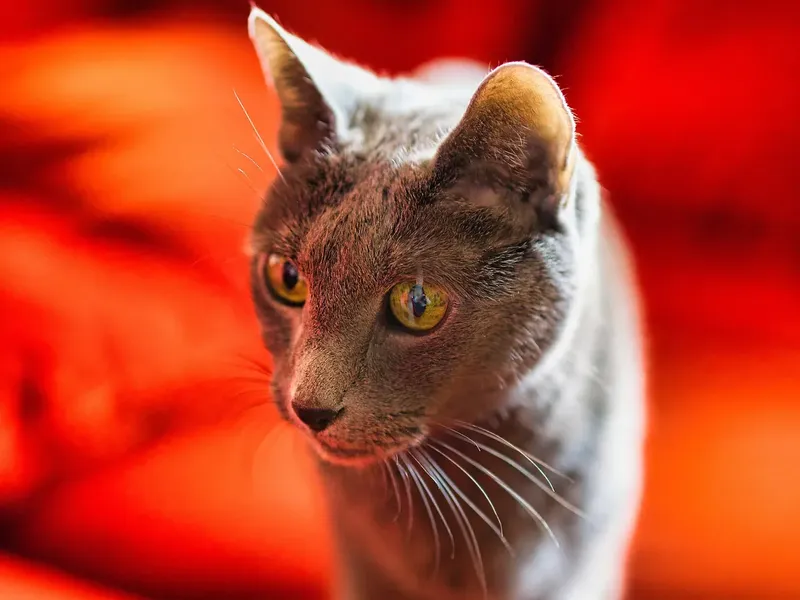
Featured photo: Photo: Chepry (Andrzej Barabasz), CC BY-SA 4.0, via Wikimedia Commons.
The Russian Blue’s longhaired counterpart is the Nebelung, and if you are weighing the two classic blue breeds against each other, see our British Shorthair vs Russian Blue comparison.